The Dogfather
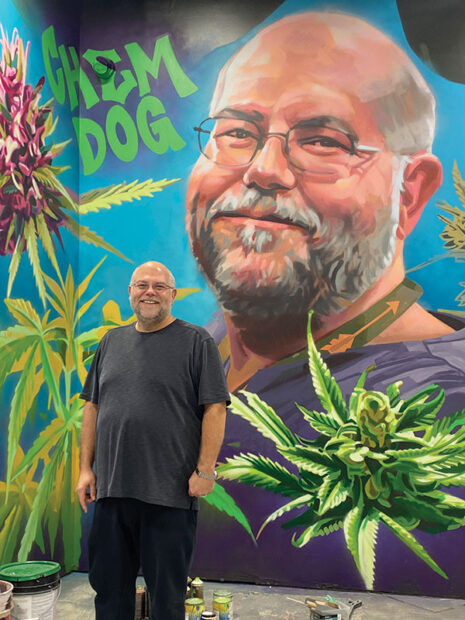
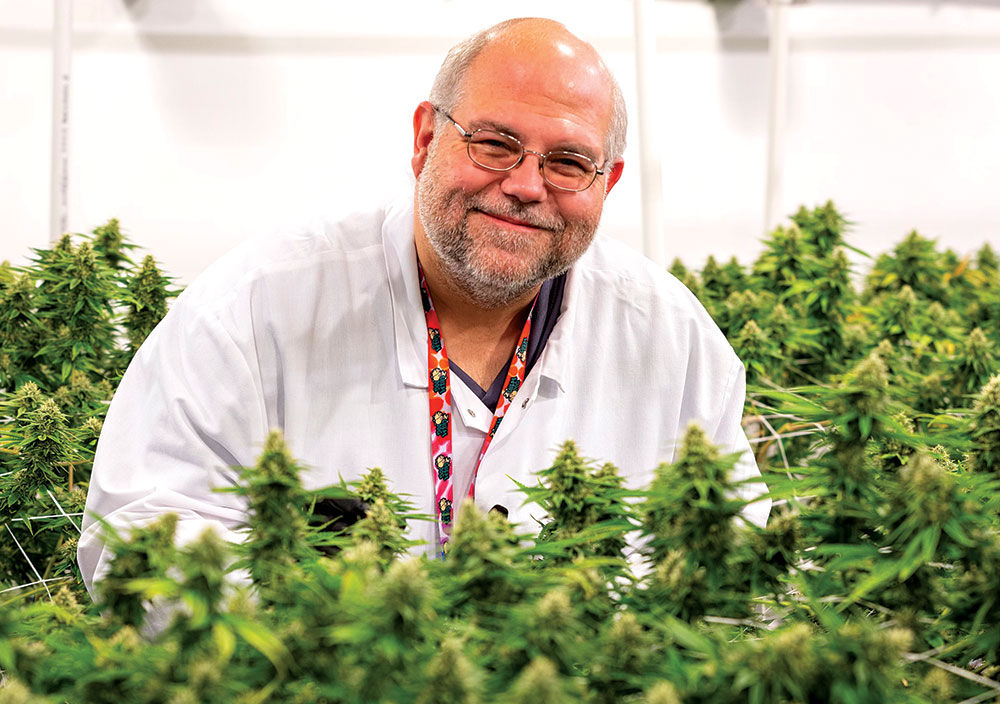
If there were a Cannabis genetics hall of fame, Chemdog would stand proudly alongside classics like Skunk #1, Original Haze and Northern Lights as one of history’s cornerstone cultivars. Remarkably, this gassy hybrid with an intense aroma and cerebral high would likely have faded into obscurity had it not been for a lucky teenager who stumbled upon it in a Grateful Dead parking lot by the name of Greg “Chemdog” Krzanowski.
A Head of His Time
Greg Krzanowski was born on March 19, 1973, in North Hampton, Massachusetts. He grew up in a good family and spent his junior high years racing ATVs … that is, until he discovered Cannabis.
“I was probably around 10 or 11 when the Cheech and Chong movies came out, and for some reason I really loved them,” he said. “I swear that’s what influenced me to get to where I am today.”
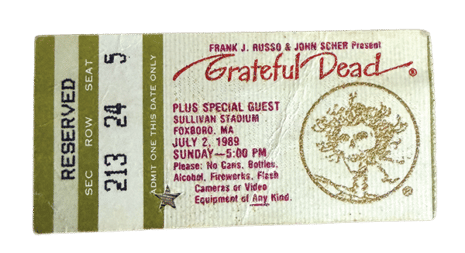
Krzanowski first smoked weed with his stepbrother in seventh grade, but didn’t get high because “it was basically brick weed.” It wasn’t until high school that he developed a true appreciation for the herb, as well as for the Grateful Dead. At 16, he attended his first Dead show — July 2, 1989, at Foxboro Stadium (now Sullivan Stadium) in Massachusetts — and he was blown away.
“After that show, I was hooked … the people, the parking lot, the music, the experiences … how it all made you feel,” he said. “And I realized, holy crap — this is the mecca of freaking good weed!”
High as a Dog
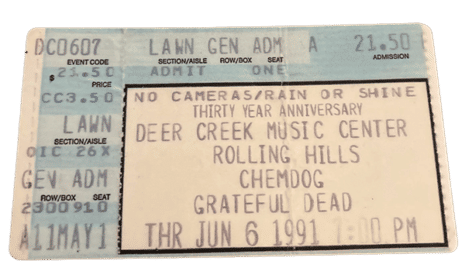
In June 1991, Krzanowski spent some of his graduation gift cash on Dead tickets and followed the tour for the summer. It was at one of these shows — on June 6 at the Deer Creek Music Center in Noblesville, Indiana — that he’d have an encounter that would change the course of his life. For it was at that fateful concert, while cruising Shakedown Street in search of smoke, that he met a couple of hippie dealers from Colorado named Joe “B” Brand and Mike “P-Bud” Nee. They were selling some killer kind called Dogbud — allegedly because it made you “roll over like a dog” after you smoked it — which they also referred to as “Chem Weed” because it tasted so strong that Nee assumed the grower “must have pumped so much chemicals” into it.
“It was the best pot I’d ever seen in my life at that point,” Krzanowski reminisced. “It was so green, it smelled so nice and skunky. Then they packed a bowl, and I tasted it, and it hit me like kryptonite!”
He paid $125 for a quarter-ounce — the most they would sell anyone due to high demand. He was so impressed by the buds that he asked for their phone numbers so he could stay in touch.
Hair of the Dog That Bit You
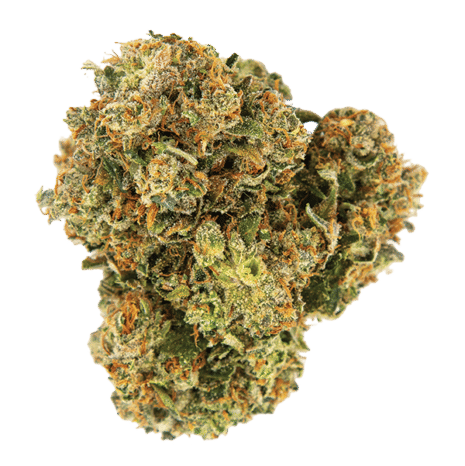
Upon returning home in August, Krzanowski called them and arranged to purchase another ounce of Dogbud for $500. When it arrived in the mail, he was elated to discover 13 seeds in the bag.
“I was so thrilled … I was like, ‘Wow, I think I just hit the lottery,’” he told Cannabis & Tech Today in 2011.
Within weeks, he’d rented an apartment and set up his closet grow — purchasing a small hydroponic setup called Emily’s Garden System and a 250 HPS light from the nearby garden supply store Worm’s Way. He then planted four of the 13 seeds, along with two brick weed seeds. For his new East Coast batch of killer bud, Krzanowski combined its two previous names into one, rechristening it “Chemdog.” One of the Dogbud seeds turned out to be a male, which he discarded (a rookie mistake he regrets in retrospect), along with another dud he tagged “Chemdog B”. By late December, his remaining plants — “Chemdog” (Chem 91) and “Chemdog A” (Chem’s Sister) — were ready to harvest.
Top Dog
At just 18 years old, Krzanowski was now the sole caretaker of one of the most potent and flavorful Cannabis cultivars in the country. Using clones from his Chem 91 mother plant, he began “pounding out” crops of kind bud, some of which he’d take on Dead tours with him to sell.
During these tours, Krzanowski also began buying pipes from glassblowing icon Bob Snodgrass, some of which he’d resell back in Massachusetts. In 1993, he spent two weeks in Oregon studying under Snodgrass, becoming the first glass pipe maker in Massachusetts. Then in 1994, he made his first trip to Amsterdam to attend the High Times Cannabis Cup, where he purchased around $2,000 worth of seeds to smuggle home.
In the late ’90s, Krzanowski moved into a larger space and scaled up his operation. He also honed his breeding skills — stabilizing the Chemdog genetics and developing his own strain, the ill-fated Dog Daze. In 2001, he popped three more of those original Dogbud seeds, producing Chem C (discarded), Chem D and Chem E (also discarded).
As word about Chemdog spread, demand skyrocketed — not just in Massachusetts but throughout the Northeast. Adopting the name of his strain as his own, “Chem” began making periodic runs down to New York City, where he could move his flower fast. Naturally, his first stop was typically the High Times offices, where the staff would often clean him out within minutes.
In the Doghouse
Sadly, Chemdog’s cultivation career came to a dramatic end at around 10 a.m. on August 2, 2011, when 30-35 law enforcement officers simultaneously raided both his home in Southampton and his parents’ house in Easthampton (whose top floor housed his grow, unbeknownst to them). Apparently, the IRS, DEA and state narcotics unit had been watching him for months — likely because one of his associates had turned informant.
“I got ratted on by a guy named Rezdog,” he revealed at last year’s Flower Expo. “He’d gotten Gypsy Nirvana and a bunch of other people in trouble. He’d been to the house and gotten clones, so … that was the conclusion we came to.”
According to reports, police seized 9 pounds of herb and 97 plants with an estimated street value of $150,000. They also confiscated his Winchester .22 caliber rifle and a Tupperware container in his freezer that held his entire seed collection — including the last two original Dogbud seeds.
He was originally charged with cultivation, possession with intent to distribute, possession of a firearm without a federal identification card and tax evasion, which, taken together, could have landed him up to 20 years in prison. Luckily, his lawyer negotiated a plea deal that avoided prison time. In October 2012, Krzanowski pled guilty to possession of marijuana with intent to distribute and three counts of money laundering (he’d made three $800 cash deposits into one of his bank accounts).
“They wanted me to do five years’ probation and forfeit $500,000,” Chem told me. “I said, ‘I don’t have that kind of money.’ But I’d just sold the new house that I’d built, so I had like $310,000 in equity from the house that was held in escrow, and they said, ‘We’ll just take that.’”
On January 14, 2013, he was sentenced to three years’ probation, a $2,500 fine and forfeiture of $300,000. And since 4 pounds of weed were found in the trunk of his car, they confiscated that too.
“They took me for everything,” he lamented. “I had no money, and I had to piss in a cup every month for over a year. It sucked.”
Stoner, Interrupted
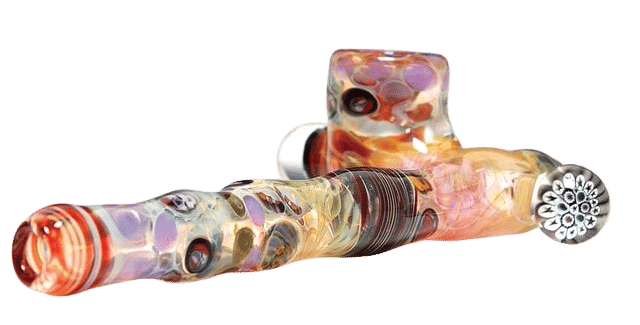
Now 39 and sober, Krzanowski had to start over from scratch — moving into an apartment with his fiancee and son and figuring out new ways to earn a living. Though he couldn’t grow or sell weed, he wanted to keep the Chemdog name alive. So in 2011, he traded me a few ounces of Chem D to design him an official logo, which he then copyrighted and used to produce an array of cool swag. He also rekindled his old passion for glassblowing — relighting his torch for the first time in a decade and cranking out a cavalcade of fantastic functional glassware.
Fortunately, thanks to good behavior, Chem was able to get off probation after just a year and a half, but continued his herbal hiatus for at least another year after. It wasn’t until Massachusetts legalized Cannabis for adult use in December 2016 that he really felt comfortable smoking and handling the plant again.
The Dog’s Pedigree
Thankfully, Chemdog’s genetics lived on through the friends he’d entrusted with clones, such as Montana’s Luck Dog Cannabis Co., Illinois-based IC Collective and NYC’s Top Dawg Seeds (who changed the spelling from “Dog” to “Dawg” to distinguish their genetics from Chem’s original cultivars). Thanks to these breeders’ work with those clones, we now have incredible strains like Motorbreath, Headband, GMO and, most famously, Sour Diesel — supposedly a cross between Chem 91 and Diesel, which itself was allegedly an accidental cross between Chem 91 and either Super Skunk or Northern Lights. Legend has it that OG Kush is also an offspring of Chemdog — a rumor that Krzanowski denies, though he believes they are definitely related. What can’t be denied is the massive impact these cultivars have had.
“I want to say strongly that between the Chemdog and the OG, those two strains pretty much paved the way to contemporary Cannabis,” Chem avers.
As for Chemdog itself, its origins remain a mystery. Joe B said that he procured the original Dogbud from a biker in Crested Butte, and that it was allegedly grown in Oregon’s Camas Valley. But as for its lineage, theories abound: Some speculate that it came from an Afghan landrace; others that it originated from a rare Skunk phenotype; still others — including Chem himself — believe it may be descended from Northern Lights.
We may never know Chemdog’s true origin; what we do know, however, is that it’s become one of the most iconic strains in history. In fact, when bioengineering company Medicinal Genomics decided to map the genomes of Cannabis plants, the first one they analyzed was Chemdog.
Every Dog Has His Day
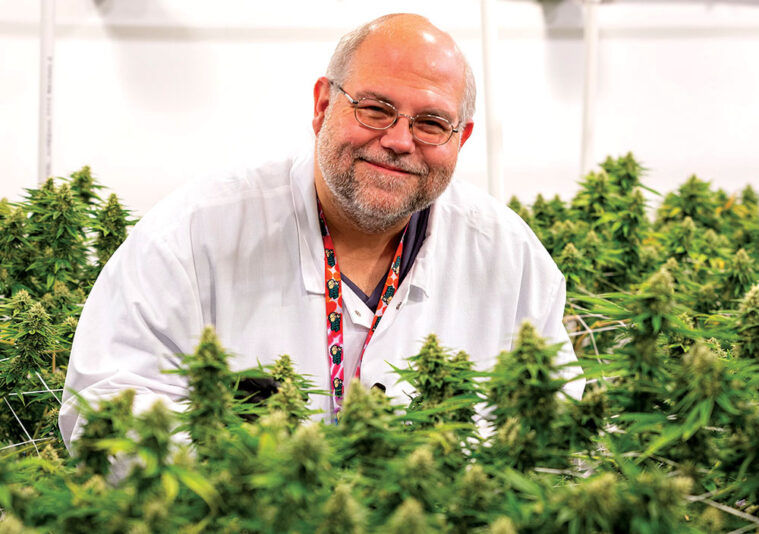
Today, Chemdog serves as director of cultivation at Canna Provisions — growing around 20 of his namesake strains and their descendants for retail sale under the Smash Hits Cannabis brand in his home state of Massachusetts.
What’s more, his Cannabis career’s connection with the Grateful Dead has come full circle: Nate Duval, the local artist who designs Smash Hits’ packaging, also designed concert posters and album covers for the Dead. Jay Lane, the drummer for Dead & Co., has been spotted wearing Chemdog tees during performances. And most exciting, when Jerry Garcia’s family and Dead drummer Mickey Hart decided to launch their own Cannabis brands, both tapped into Dead lot lore to select Chemdog as their first offerings.
Most recently, he partnered with five other legacy breeders to launch Arcana Collective — an organization dedicated to preserving heritage Cannabis genetics and providing them to the public from their authentic sources.
After three decades of hustling, and having his life nearly destroyed, Chemdog is finally enjoying the spotlight with no fear or regrets.
“I think that getting in trouble put me in the position where I am now … to do what I want to do, and do it legally,” he told Cannabis & Tech Today. “I can’t ask for much more.”