When we talk about Cannabis as a wellness product, we often stay in the same sandbox: relief for lifelong chronic pain or the elderly and infirm. It was only recently that we embraced and focused on its benefits to sports medicine as well as daily wellness.
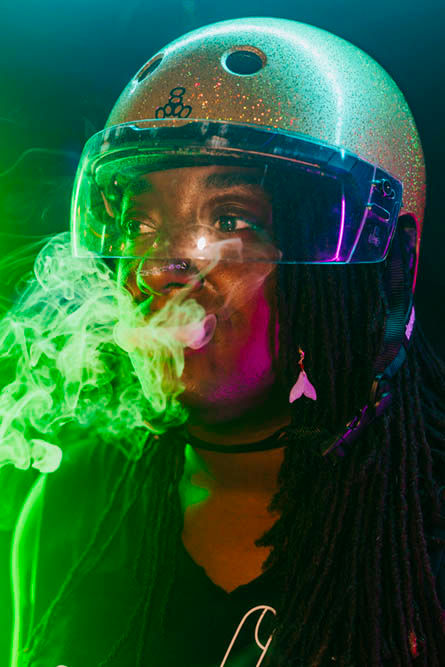
Only in the last decade have athletes been able to come out in support of Cannabis as a method of not just recovery, but part of an ongoing routine for physical and mental well-being. One sport where support for the plant seems to have taken root from an early stage and flourished is roller derby.
What is Roller Derby?
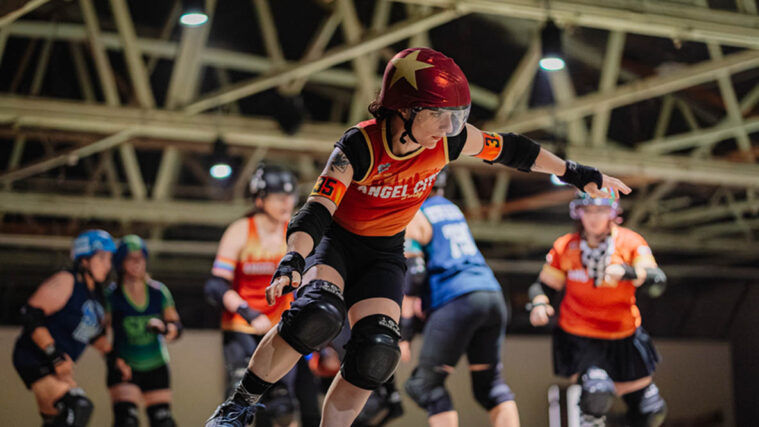
For the uninitiated, roller derby is a fast-paced sport where two teams race on an oval-shaped track. Each game is divided into a series of two-minute “jams” where players form walls to try and block the opposing team’s designated scorer, known as the “jammer,” while trying to help their own jammer through the pack. This player, identified by the star on their helmet, gets a point for every blocker they make it past, creating nail-biting situations where scores can change dramatically at a moment’s notice.
Angel City Derby is Los Angeles’ premier member of the Women’s Flat Track Derby League. A nonprofit organization comprising four different teams of players, Angel City is ranked as the sixth-best team from a list of 546 rosters worldwide. Started in 2004, the Women’s Flat Track Derby Association has grown to become a sport enjoyed by hundreds of thousands of athletes. With its own World Cup and teams in over 50 countries, women’s roller derby is a no-holds-barred, full-contact sport that’s exciting to watch but is undeniably physically demanding.
I’ve watched players skid into the stands at full speed, kiss concrete while taking a moving tackle and make “Matrix”-like jumps through a pileup of the opposing team. I’ve seen the bruises and doctor bills that often come with athletic performance, so it’s no wonder that derby players are well acquainted with CBD and THC.
In fact, roller derby and Cannabis have skated side by side many times. Cheryl Cryer, owner of the Illinois CBD brand Urban Apothecary, has 14-plus years of experience with derby. On the brand’s website, Cryer — who used to compete under the name Crybaby Cryer — said that her company has created products targeted directly to “the demands of this full-contact sport.”
Cannabis-as-sports-medicine advocate, athlete and entrepreneur Bethany Semeiks played with Los Angeles’ Angel City for eight years. Semeiks told a reporter for Sports Cannabis that she had an “ah-ha moment” in 2018 after discovering how Cannabis helped her at night to sleep and feel physically rested. Colorado breeder Cannarado even has a strain named Roller Derby.
Recently, Angel City and Polly Urathang hosted High Roller, a Cannabis-sponsored, consumption-friendly event in Los Angeles, where two teams squared off on a flat track and fans watched a friendly grudge match between 710 Labs and Terphogz. Afterward, when the score was tallied and the skates were off, we asked Angel City if any of their players would be willing to discuss the role Cannabis plays in their wellness routine and what kind of stigma, if any, exists around Cannabis in this sport.
What do the Players Say?
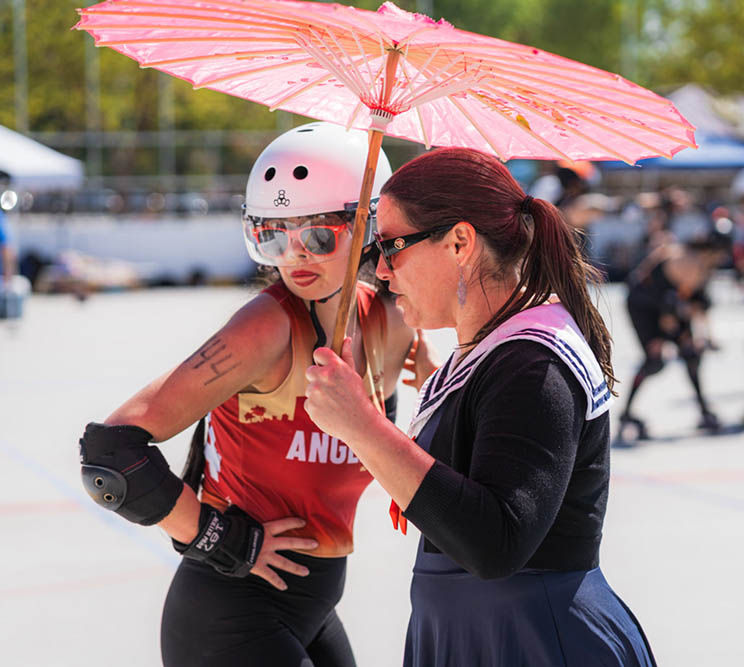
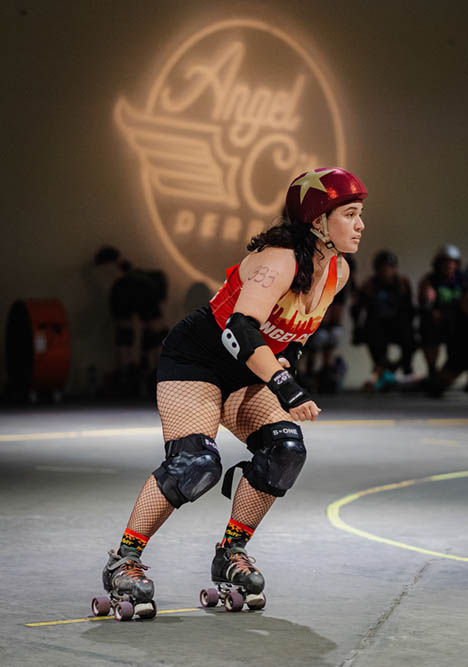
The players who spoke with us all said that while safety is paramount, Cannabis is largely accepted by the derby community as something that helps deal with the bumps and bruises. Cole Train, who plays for Angel City as a blocker, has been in the derby community since 2013. She said even those who don’t smoke, dab or eat edibles likely have some sort of topical or other product for recovery purposes.
LaQuanda Stokes, who plays under the name Hit Me Bruiseton, said she doesn’t see as much of a stigma about Cannabis roller derby, but that people she meets are “often surprised when they find out that I am a stoner because I’m very active.”
Being such a physically demanding sport, many of the Angel City players who spoke with Leaf brought up how they’ve found Cannabis to help them in so many recovery efforts from previous injuries, both on and off the track. Stokes, who also uses Cannabis for ADHD, said that she incorporates Cannabis into much of her routine, finding that topicals, flower and even concentrates are a great way to ease the pain and cool down. “I think it helps me relax,” she said, “especially since my body is hurting most of the time.”
Cole Train told the Leaf that after knee surgery, it wasn’t playing that caused discomfort, but rather more commonplace activities. “I love to take long walks, and for a long time, I felt like my recovery had stagnated and I was never going to fully heal from my surgery. Over the last year, I have been using Cannabis on my walks, and I have found that it helps me to put my knee through its full range of motion, which over time has vastly improved my mobility, and now my range of motion is closer to what it was presurgery.”
While primarily using these products to relieve the aches and pains of the game, these athletes are really no different than your grandma grabbing a roll-on for her hip. “I’ve used just about every topical over-the-counter stuff for pain, but at the end of the day, I would rather choose a more natural way to relieve my pain,” Juggernaut Joey, Angel City’s recruit trainer, told the Leaf.
Juggernaut Joey, a blocker and pivot skater who also suffers from insomnia, takes gummies or the occasional hit off a vape to help them sleep. She said these things are what help them feel more rested and ready to hit the track for a game. But wellness is not just about muscles, Juggernaut Joey said, as they also have a CBD-based facial regimen. “No bullshit, it’s made my skin so much more vibrant,” she said.
More Than a Feeling
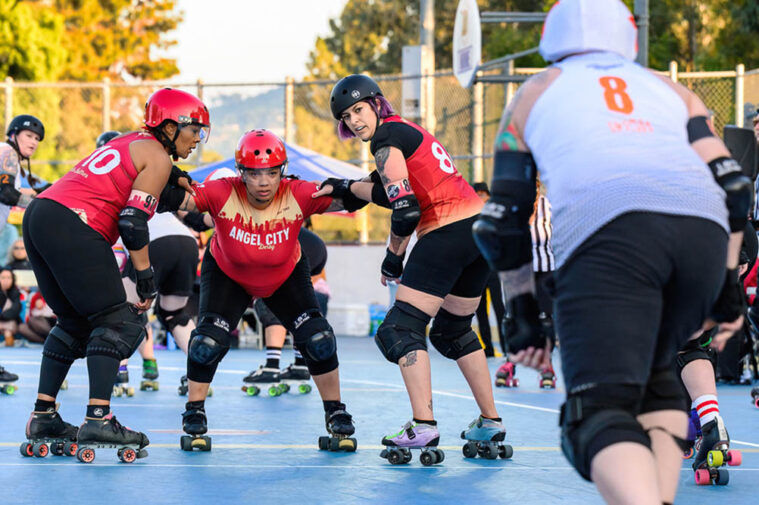
What makes roller derby players different from some of the athletes we’ve talked to in the past is the way they feel like the role of Cannabis isn’t being demonized in their world.
“We understand the complexities of use, diversity of product and multitude of circumstances that vary by person,” Rachel Rotten, Angel City’s director, explained. More than just a veiled acceptance of CBD ointments, a policy like this makes it possible to have a Cannabis-related post-game, post-workout or daily wellness routine without setting a timer on how long it might stay in your system.
While understanding some of the complexities around using Cannabis for recovery, Rachel Rotten made it clear that policy still maintains that once an athlete laces up their skates, they need to be clearheaded and ready to roll.
As we spoke with players about their experiences with the Cannabis stigma, many of them also talked about how they’ve managed to help defy the stigma of the lazy stoner. It seemed like each one recounted a story about how their active lifestyle and achievements in the sport had helped redefine that caricature for their family, friends and co-workers. None of them recounted, however, being denied accolades or advancement because of their Cannabis use or a time they lost a sponsorship for being a stoner.
These hardworking, game-winning machines are an example of what a modernized Cannabis approach to sports can accomplish. As such, roller derby players are leaving clouds of smoke behind them on and off the track and helping tackle outdated ideas of Cannabis, somehow, making you too lazy to lace up some skates, hit the track and live life to the fullest.