Every May, the United States observes Asian American and Pacific Islander Heritage Month, recognizing the vast diversity of people in more than 50 countries across Asia and the Pacific.
Asian culture is far from a monolith; the continent encompasses countless ethnicities, cultures and religions. As a result, every Asian American diaspora experience is unique, further shaped by factors such as generational proximity to the motherland or being multiracial.
One example of Asian representation in Cannabis media came from Netflix’s short-lived 2017 sitcom “Disjointed.” The series followed the employees of a California medical Cannabis dispensary. One character was a med-school dropout, terrified of disappointing her tiger mom while being a weed nerd. Though rooted in familiar stereotypes, legend has it the character may have been inspired by my own experience as a budtender over a decade ago, as my former boss consulted on the show.
For five years, I worked at a medical Cannabis dispensary in Los Angeles while pursuing my nutrition degree. I loved geeking out over Cannabis science and was passionate about my work, yet, at the same time, lived with the constant fear that my parents in Thailand would find out and be ashamed of me.
This was a common thread among many of the Asian American subjects I spoke with. Cannabis remained deeply taboo and misunderstood within their cultures, creating tension between wanting to honor and appease their parents, while also embracing their authentic American selves.
Jerry Chu of Vibe with Chu
vibewithchu.store | @vibewithchu
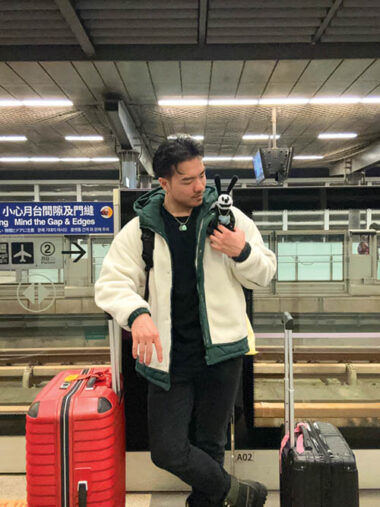
VibewithChu, created by Jerry Chu, has built a massive following through Cannabis-centered food and lifestyle content across multiple platforms. Combining culinary skills, stoner humor and global travel, Chu has documented adventures across 38 countries and counting.
Born in Taiwan, Chu ended up in Torrance, California, at age 10 when his parents unexpectedly returned home without him from what was supposed to be a family vacation. They had hoped that American citizenship and education would create a better future. Feeling blindsided, unable to speak English and struggling to adapt, he found comfort in cooking with his grandmother and in the multicultural food scene around him. Over time, he would adapt to his American life with the help of the hip-hop, R&B and alternative rock music of the early aughts.
In college, Chu joined an Asian American fraternity and began using Cannabis while figuring out his future and dealing with the pressures of cultural expectations back home. In Taiwan, Cannabis remains deeply taboo, classified as a narcotic under the term “dupin”, meaning toxin.
On 4/20 in 2022, Chu launched his stoner cooking YouTube channel despite knowing that his parents would disapprove. He had the vision and knew he had to fulfill it. The gamble paid off.
Today, his brand includes Puff Puff Pack subscription boxes stocked with curated hemp products, accessories and Asian munchies. “Kids used to make fun of my lunches at school,” he laughed. “Now everyone wants prawn chips.”
Derek Fukuhara of High Rise
highrise-agency.com | @highrise.agency | @derekfukuhara
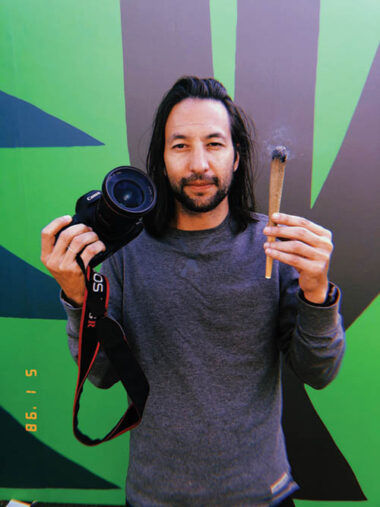
Raised in Orange County, California, Derek Fukuhara transitioned from professional skateboarding into Cannabis media and events. After years of creating content with his friend Erin Coffey, the two launched High Rise Agency in 2019, producing campaigns for brands like STIIIZY, Wonderbrett and Seed Junky Genetics.
Fukuhara’s story is shaped by generational resilience. His father, a “Sansei,” or third-generation Japanese American, was born in an Idaho concentration camp during World War II, where his family was forcibly detained after over 120,000 people of Japanese descent were stripped of their rights and property. Like many families, they rarely spoke about the trauma after returning home to nothing. They didn’t want their children to grow resentful of the country they called home. Fukuhara’s family helped rebuild the vibrant Japanese American community that exists today in Long Beach City, California.
Growing up “hafu”, half Japanese and half white, Fukuhara often navigated spaces where Asians were underrepresented. At the time, he was one of only three Japanese American professional skateboarders. Despite growing up with skaters, his Japanese family was teetotalers, so he didn’t begin using Cannabis until age 20, when it became a tool for reflection and growth.
Influenced by his father, a professional photographer, Fukuhara embraced the Japanese philosophy of “Shokunin”: dedicating one’s life to mastering a craft through discipline and refinement. That mindset helped shape his own editorial photography, including a High Times cover and many cultural stories captured by his lens. A couple of years ago, for his 40th birthday, Fukuhara was finally able to bring his camera to Japan for the first time.
Maha Haq of UCLA CannaClub
cannaclubatucla.org | @cannaclub.ucla | @highmaha
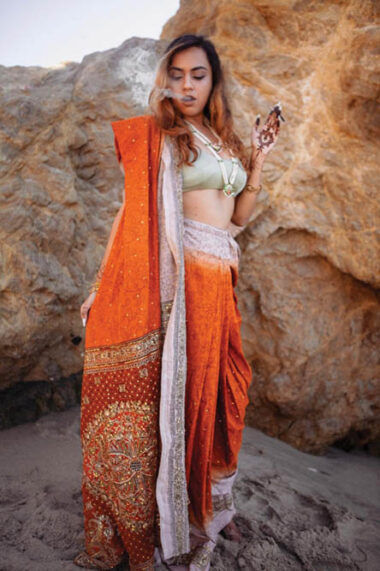
Maha Haq has built a career at the intersection of Cannabis, education and community. As founder of UCLA’s CannaClub, she helped expand the organization to more than 60 chapters across 17 states. Now, she hosts her Twitch channel, HighMaha, consults for Cannabis businesses, works with Los Angeles’ Social Equity Program, and writes for VICE Media. At the center of it all is a commitment to higher education inspired by her Pakistani mother.
Raised by her immigrant mother in a Pakistani Muslim household in Greater Los Angeles, Haq grew up with little Desi representation. At her high school, where most students were Chinese American, she was one of only three Desi students. She found belonging among other Asian American outsiders in a friend group she jokingly called the “Asian rejects.”
When Haq was caught using Cannabis at age 16, her scientist mother responded unexpectedly. Instead of punishing her, she asked Haq to write a research paper on Cannabis. Impressed by the results, her mother later invited her to present at the cancer clinic where she worked. Haq’s mother was more progressive than traditional, so they connected through the language of science, research and community education. Haq would go on to get a Master of Science in Medical Cannabis Science.
At UCLA’s CannaClub, many members were Asian American students seeking a sense of community and acceptance around Cannabis use. In 2022, Haq hosted a “Diwali & Dabs” event, bringing South Asian and Cannabis cultures together in an inclusive space.
Leo Stone of Aficionado Estates
aficionadoseeds.com | @aficionadoestates
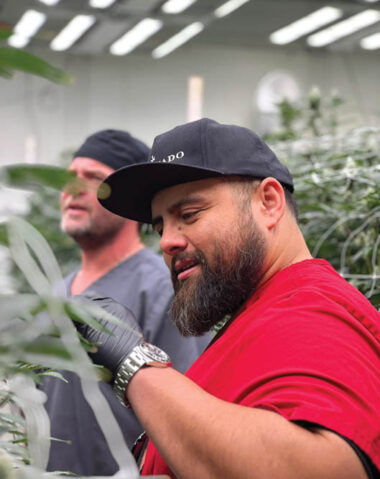
Leo Stone is known for his legendary Cannabis genetics, rooted in Humboldt County, and now expanding into a global hempire. Born to a Filipina mother and American father, he spent ages 7 to 20 in the U.S. naval base community near Yokohama, Japan. Getting ahold of weed was expensive and difficult in Japan at the time, but it would come in occasionally with sailors at port. The mix of Navy-brat life, the Filipino migrant community, and the local street culture shaped Stone’s adaptability, a skill he later relied on in Iraq while in the U.S. Army, and later in the Cannabis industry.
After using Cannabis to manage his PTSD while stationed in Germany, Stone was destined to end up in Northern California’s Emerald Triangle. His parents did not approve of his foray into Cannabis — his father did not speak to him for years. During an era when the world’s best sun-grown flower was cultivated by outlaws in the region infamously known as “Murder Mountain”, Stone leaned into his past combat experience, racial ambiguity and ability to code switch to survive and thrive.
He has won 48 awards over his 20 years of breeding and cultivation. His parents have since been impressed with his achievements, especially after his younger sister Cherry became an accomplished apprentice to the late, legendary hashmaker, Frenchy Cannoli.
As the industry globalizes, Stone has grown far beyond Humboldt. As CEO of Aficionado Estates with operations in New York City and Detroit, and collaborations like the French Connection with Professor Q, he now works internationally. With projects in Canada, Colombia and Spain, plus consulting work worldwide, Stone continues drawing on his global roots to shape the future of Cannabis genetics and cultivation.
Grouping Native Hawaiʻians and Pacific Islanders into the broader Asian American experience can overlook key differences. While many Asian American stories are rooted in immigration and assimilation, Pacific Islanders share histories tied to indigenous roots and American imperialism. Despite growing up within laid-back island Cannabis cultures, outside political and religious forces often worked to suppress access to the plant.
Karlyn Laulusa of Noa Botanicals
noacares.com | @noabotanicalshi
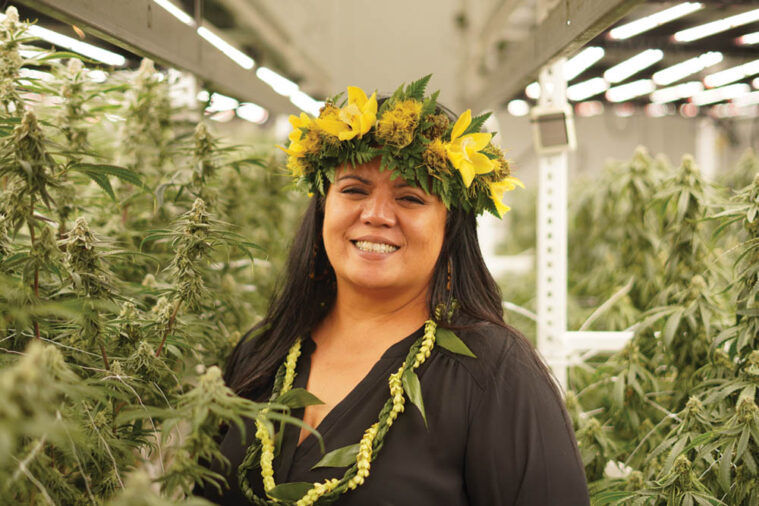
The Hawaiʻian Kingdom was overthrown by U.S. military-backed American plantation interests in 1898 before becoming the 50th state in 1959. Cannabis, locally called “pakalolo”, arrived in the islands around the turn of the 19th century and flourished in Hawai‘i’s volcanic soil, producing legendary landrace strains like Maui Wowie and Kona Gold. Over time, pakalolo became integrated into “laʻau lapaʻau”, Hawaiʻi’s indigenous healing tradition, used for pain, insomnia, post-traumatic stress disorder and depression.
Karlyn Laulusa’s roots reflect the rich diversity of Hawaiʻi itself: Native Hawaiʻian and Samoan, with Filipino, Portuguese, Chinese, Irish and German ancestry. Growing up, her community cultivated pakalolo long before legalization. But the war on drugs hit the islands hard, especially through Operation Green Harvest, when helicopters hunted outdoor grows and federal raids swept Hawaiʻi beginning in the 1970s.
Although medical Cannabis was eventually legalized in 2000, Hawaiʻians still face barriers reclaiming the plant’s cultural and agricultural legacy. For example, state law requires Cannabis to be grown indoors, limiting the potential expression of Hawaiʻi’s unique landrace genetics cultivated in native soil and sunlight.
While she grew up casually using pakalolo, her family initially discouraged her from entering the legal market after the trauma of prohibition. Instead, she built a successful corporate career. In 2024, she became CEO of Noa Botanicals on Oʻahu, with a focus on cultivating “ohana” (family) throughout the industry.
As the first-and-only Native woman CEO of a Hawaiʻian-Cannabis company, Laulusa brings cultural understanding and lived experience to leadership. She is currently a caregiver in the medical program and champions local genetics, celebrates Hawaiʻi’s unique cultural diversity through bespoke edibles and envisions a future where Hawaiʻi becomes a world-class Cannabis-tourism destination.
When Bad Bunny performed at the Super Bowl LX Halftime Show, it was evident that many Americans are unaware that the U.S. has island territories. In the Pacific Ocean, there are three that have Native populations: American Samoa, Guam and the Northern Mariana Islands. Residents are American citizens but are unable to vote for U.S. presidents.
Melchor Manibusan of Guamsterdam
guamsterdam.com | @melchormanibusan
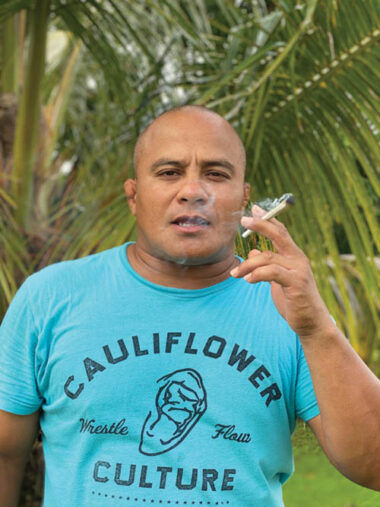
Guam is the farthest flung from the mainland, over 6,000 miles away in the Western Pacific. After becoming a U.S. territory in 1898, the island endured brutal Japanese occupation during World War II before American forces recaptured it in 1944. Today, roughly one-third of Guam is occupied by U.S. military bases. Despite its small size and heavy military presence, a local Cannabis culture flourished, with the plant reportedly introduced through American GIs returning from the Vietnam War with Thai Stick seeds.
Despite the island’s stoner culture, a strong Catholic influence, introduced by Spanish missionaries in the 1600s, initially made Guamanians scared of Cannabis legalization. This was most evident in 2010 when there was a public hearing for a medical Cannabis bill, and only one person showed up (to oppose it). But after horrific abuses came to light in the Guam Catholic Church, Guamanians started to warm up to the potential of bringing in more tourism by allowing Cannabis and casinos.
Melchor Manibusan, of indigenous CHamoru blood, made local history by hosting the first 4/20 party at his shop Coffee Slut when adult-use was legalized in 2019. His community knew he’d be Guam’s Cannabis trailblazer: As a kid, his mother would offer him a joint every day on the condition that he went to school. At $20 a pop back then, those joints weren’t cheap. As Manibusan later suffered Brazilian jiujitsu injuries and a broken neck, he came to appreciate the therapeutic value of Cannabis. Founder of Guamsterdam, a nod to the classic Cannabis capital and his Dutch roots, he aims to create a legacy business spanning cultivation, retail and lifestyle on the island. He also consults with Cannabis operators in the Northern Marianas, another U.S. territory.
For decades, Guam was a paradise destination for wealthy East Asians known as a duty-free shopping haven where fashion houses like Louis Vuitton would release exclusive drops. Today, the streets are empty. Manibusan dreams of growing quality, boutique flower that would draw in visitors, much like those luxury-brand exclusives. He welcomes any mainland operators that meet the five-year residency requirement to set up shop. “It would make us a tourist destination again and create jobs. And if anyone ever comes to the island with ill intentions, we’ll take care of them,” he said with a wink.
Tian Scherer
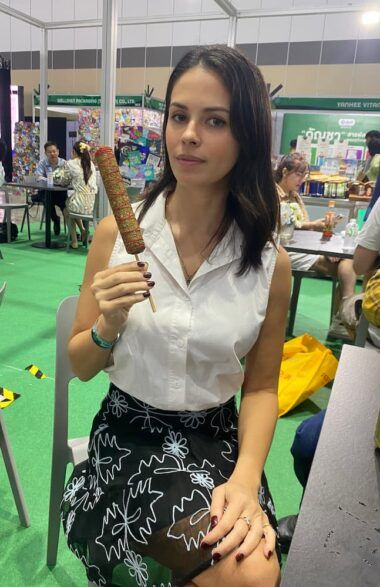
My own Asian American Cannabis story eventually came full circle. At the end of 2020, I repatriated to Thailand, and shortly after, Cannabis was decriminalized. Suddenly, years of American-Cannabis experience found purpose in helping elevate the Thai industry. At first, my mother scolded me for “selling addictive drugs to children,” despite “gancha” being part of traditional Thai medicine. But over time, my parents came around after seeing my educational work and passion for medical use, and trying microdose gummies themselves.
Although the Asian American and Pacific Islander experience is incredibly diverse, one deeply American value connects all of these stories: freedom. The freedom to honor our roots, and the freedom to forge our own futures and live out our American dreams with the Cannabis plant.