The lights dimmed, but no one was sparking up another joint. Instead, hundreds of people closed their eyes. A single heartbeat emerged from the stage, followed by the haunting call of a didgeridoo. Native flutes answered from somewhere in the darkness. Ancient rhythms wove through Portland, Oregon’s Crystal Ballroom like smoke finding every open space. Within minutes, strangers were breathing together, swaying together and elevating their spirits together.
This wasn’t your typical concert; it felt like stepping inside a living ceremony. This is the essence of a Reciprocity Music gathering.
As conversations around psychedelics continue to evolve, a new movement is quietly taking root within conscious music communities. Rather than relying on plant medicines or synthetic compounds, artists are exploring how breath, vibration, ancestral instruments and intentional presence can guide audiences into deeply expanded states of awareness. Increasingly, these gatherings are becoming known as “Prayerformances,” where music becomes prayer, movement becomes meditation and presence becomes the medicine.
Reciprocity Music is helping shape that movement by curating immersive experiences that nourish not only the ears, but the heart, body and spirit. Their vision honors Indigenous knowledge, cultural reciprocity and the timeless understanding that sound can reconnect us with ourselves, one another and the living Earth.
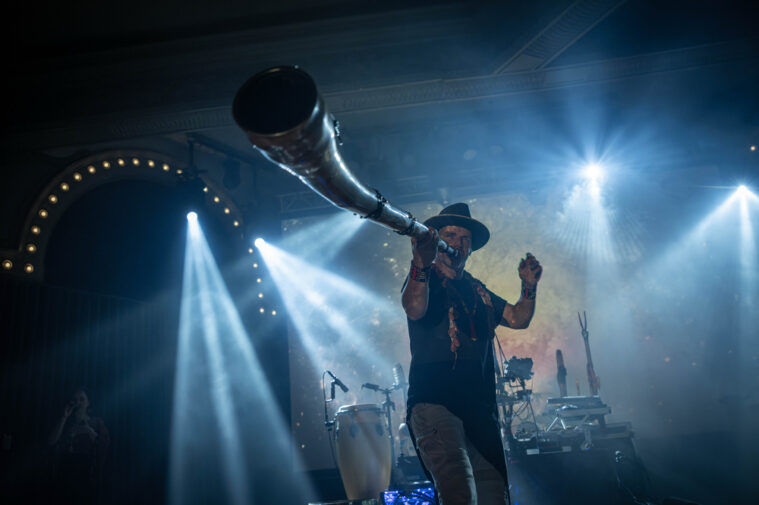
That vision came alive this past Mother’s Day during Poranguí’s unforgettable performance.
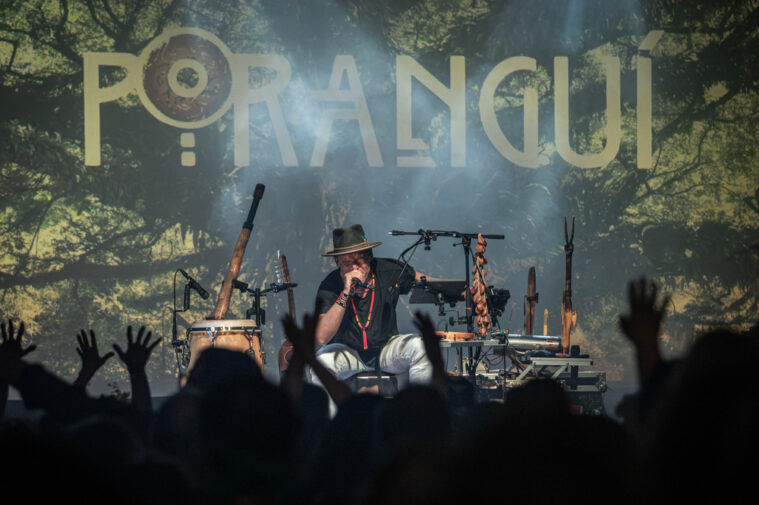
Raised between the cultural traditions of Brazil, Mexico and the American Southwest, Poranguí has earned an international following not simply as a musician, but as a ceremonial guide. Layer by layer, he builds each performance in real time using voice, Indigenous instruments, percussion and looping technology, creating an ever-evolving soundscape that exists only in that moment. His intention is not entertainment but to hold space where healing, presence and connection can naturally emerge.
Poranguí was only one voice in an extraordinary gathering of Indigenous wisdom keepers.
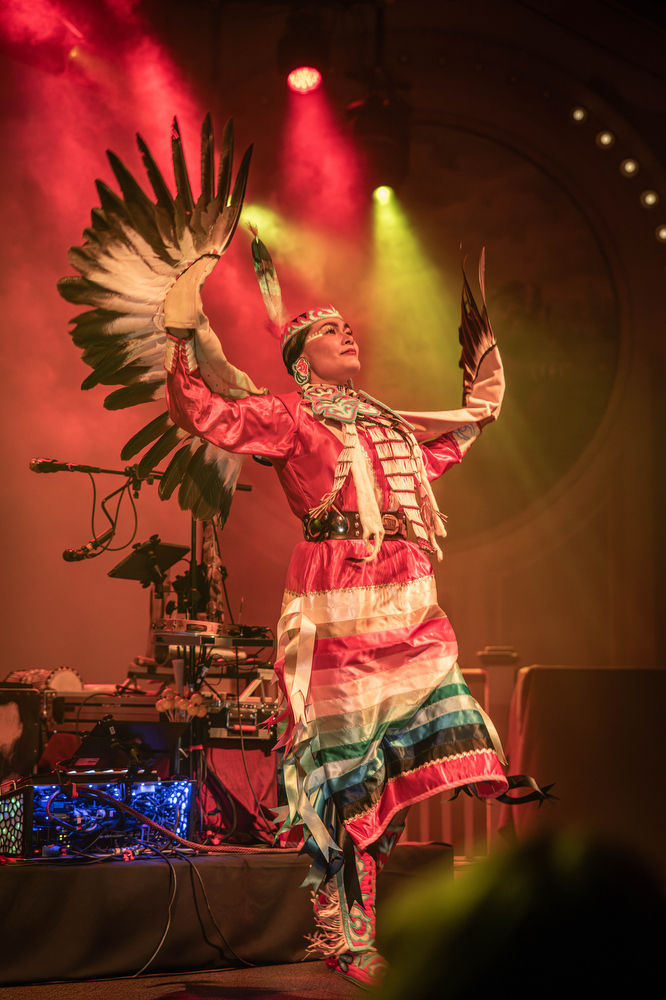
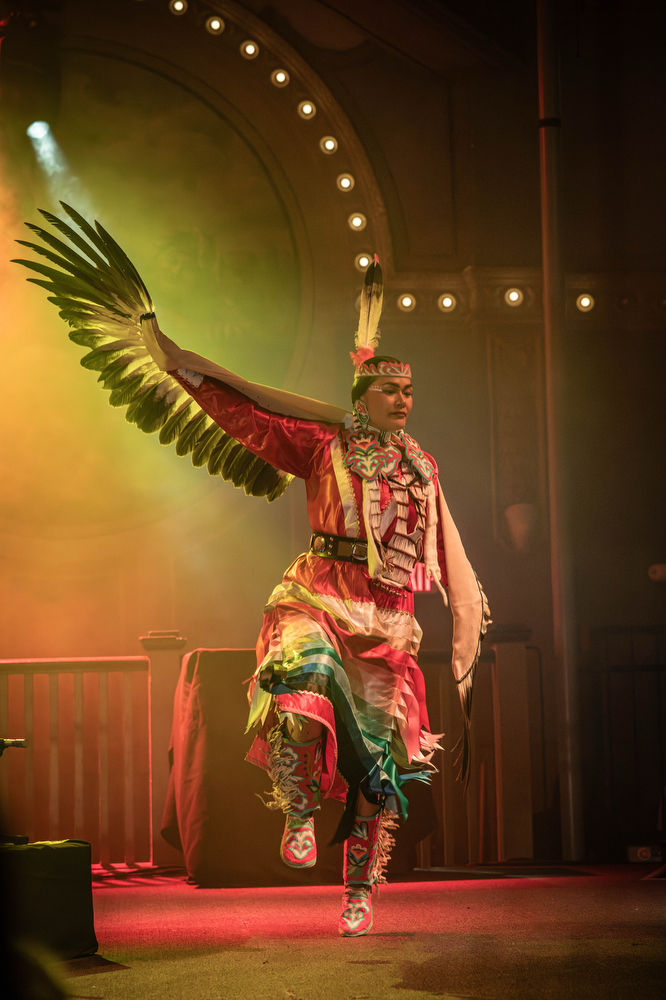
Ten-time World Champion Jingle Dress Dancer Acosia Red Elk carried generations of healing into the room through every prayerful step. The gentle cascade of hundreds of metal cones became an audible blessing, reminding everyone that movement can be medicine. Sisters of the One Drum followed with powerful songs rooted in ancestral memory, their voices and tribal drumming awakening the oldest rhythm we have ever known, the sound that first united us with the living world before we entered it, the heartbeat.
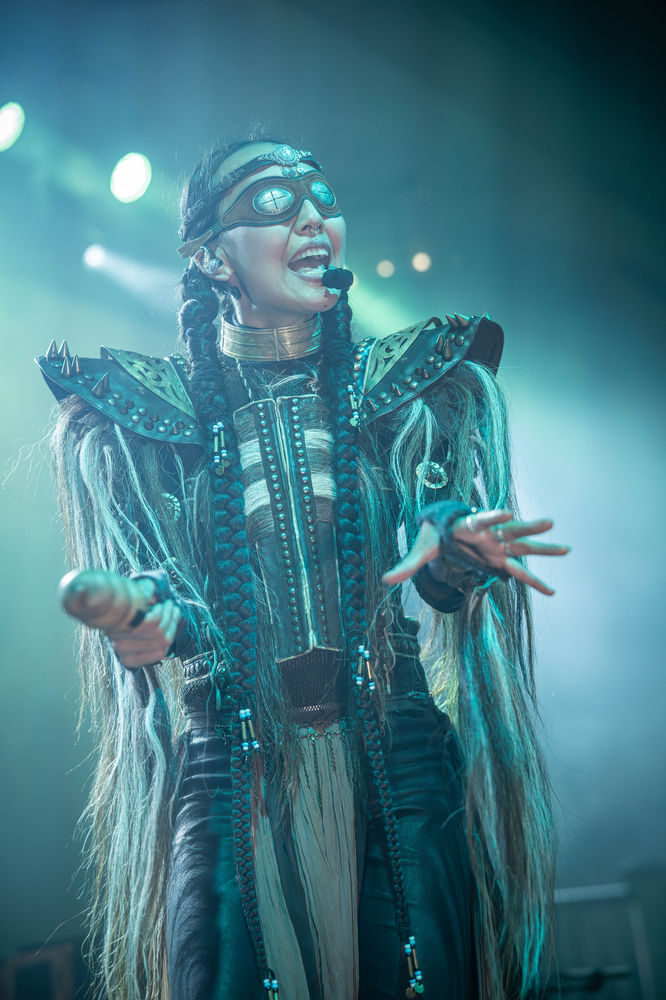
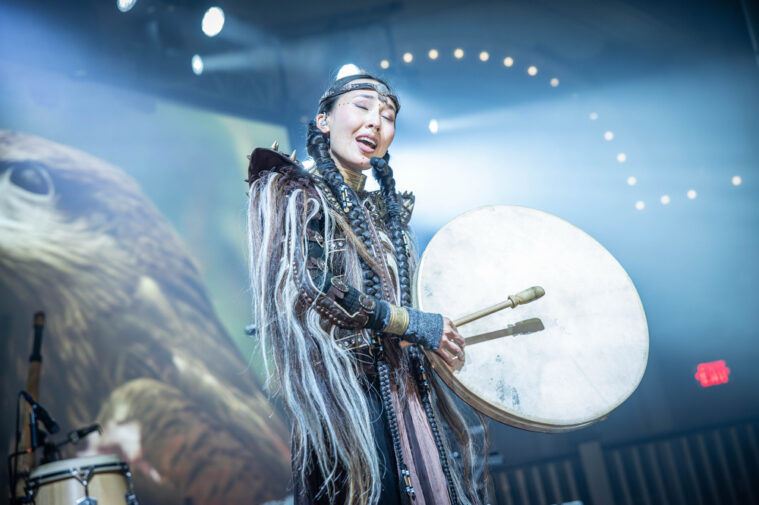
Then came Snow Raven, an Indigenous artist from the Sakha Republic of Arctic Siberia, whose breathtaking vocal expressions drifted somewhere between birdsong, wind and ancient elemental prayer. Her voice seemed to dissolve the walls of the ballroom, lifting the audience into a place beyond language, where emotion became the universal dialect.
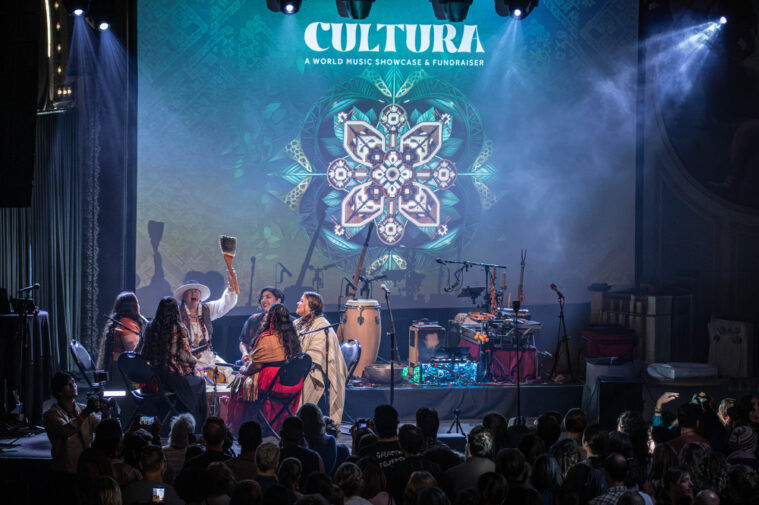
Watching the room became as captivating as watching the stage. Some people stood motionless with tears quietly streaming down their faces. Others danced barefoot with eyes closed, completely surrendered to the rhythm. Couples embraced. Children spun in joyful circles. The invisible line separating the audience from the performer slowly disappeared until everyone became part of the experience.
For me, this was one of the most meaningful Mother’s Day celebrations I have ever witnessed. This was not honoring motherhood with flowers or brunch, but celebrating Mother Earth as our ancestral great-grandmother and the sacred feminine wisdom that has long understood music and movement as healing and ceremonial communion.
Science offers a lens to understand evenings like this.
Neuroscientists study rhythmic entrainment, the tendency for brains and bodies to synchronize with repetitive rhythms. Researchers, including neuroscientist Dr. Daniel J. Levitin, author of “This Is Your Brain on Music,” have explored how rhythm can influence brain activity and social connection. National Institutes of Health studies have similarly examined how synchronized breathing, drumming and collective movement can strengthen feelings of connection and physiological coordination among participants. Across Indigenous cultures, these same ceremonial practices have been cultivated for thousands of years to encourage presence, emotional release and spiritual connection. Whether interpreted through neuroscience, spirituality or both, many participants describe a similar phenomenon: time softens, self-consciousness fades and something larger begins to stir within the collective.
But reducing the evening to neuroscience alone would miss its deeper essence. What unfolded inside the Crystal Ballroom felt rooted in relationship with the Earth’s ancestral memory. Every heartbeat, every song and every footstep became part of a shared offering rather than a performance to consume.
As more people search for healing beyond pharmaceuticals and endless digital distraction, gatherings like these invite a profound question: What if expanded states of consciousness have always been readily accessible, living within the oldest technologies humanity has ever known, our very own breath, rhythm and community prayer?
When the final note dissolved into silence, people lingered, embracing strangers who now felt known. For a few beautiful hours, music had become far more than entertainment; it had become ceremony. Whether you call it resonance, prayer or a psychedelic journey without substances, one truth echoed through every heart in the room. Sometimes the most transformative medicine is not something we consume, OGs, but something that our very own breath surrenders to.