There is something human about our hunger to create. We build, invent, connect and imagine the next frontier before understanding the last.
Now, that frontier is artificial intelligence.
But somewhere between the glowing screens and the promises of a smarter future, we need to pause, breathe and ask an old Indigenous question:
Are we creating in balance with the Earth — or simply taking more from her because we can?
The footprint of AI is anything but virtual. Data centers require enormous electricity, cooling and infrastructure. Lawrence Berkeley National Laboratory estimates U.S. data centers consumed about 176 terawatt-hours of electricity in 2023, or 4.4% of total U.S. electricity use. Its 2025 update estimates data centers could consume 9.5% to 15.3% of U.S. electricity by 2030, with a reference case of 11.8%.
That demand is colliding with a grid that is not designed for a concentrated, rapidly expanding load. A 2026 Harvard Belfer Center analysis describes data-center growth as a challenge for grid reliability, infrastructure planning and consumer costs. In northern Virginia, a 2024 event involving roughly 60 data centers removed 1.5 gigawatts of demand within minutes, requiring emergency grid adjustments.
Then, there is water, the sacred substance every living system on Earth depends upon.
Environmental math is complex. Not every data center uses the same cooling technology, and estimates vary widely. Still, Berkeley Lab estimated U.S. data centers directly consumed roughly 66 billion liters of water in 2023, with higher consumption projected under some 2028 scenarios. Water use also occurs indirectly through electricity generation.
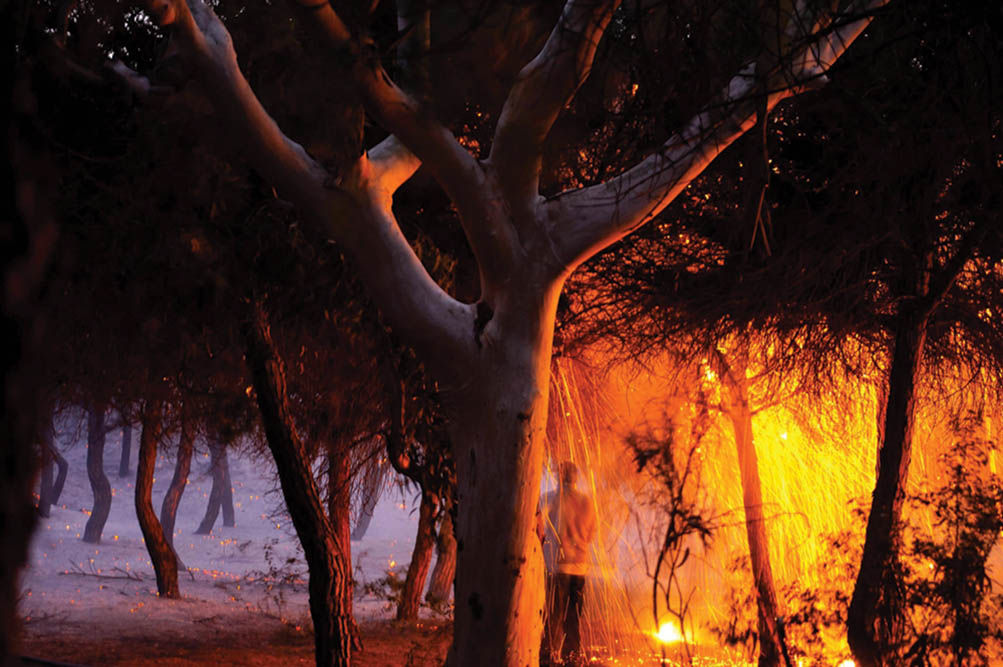
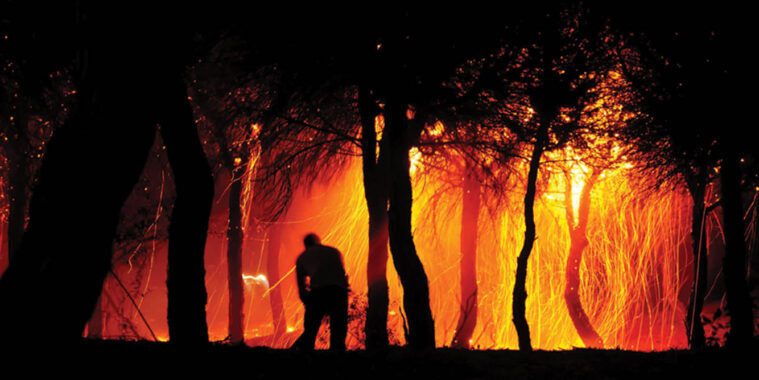
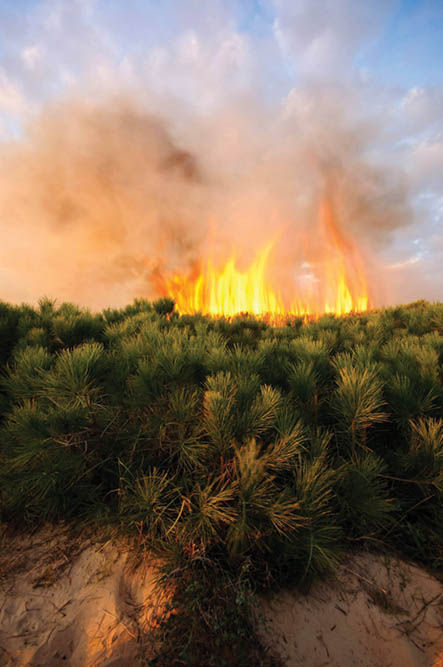
Meanwhile, the American West is already confronting a climate reality of hotter temperatures, prolonged drought and increasing wildfire risk. The National Oceanic and Atmospheric Administration identifies heat, drought and atmospheric dryness as important drivers of rising wildfire risk across the West.
This is where my concern lives.
What happens when ambition outruns ecological wisdom?
We do not have to look far to understand what is already at stake.
Across California, Oregon and Washington, the West has endured wildfire devastation that has made smoke-filled skies, evacuations and burned landscapes increasingly familiar. As forests, watersheds and communities face hotter, drier conditions, the AI boom is eyeing the region for massive new infrastructure. Amazon Web Services has acquired 1,300 acres near Boardman, Oregon, where plans could support a potential 1-gigawatt campus. Google is expanding in Oregon.
In a region where water is becoming an ecological currency, asking how much more we can extract is not a rejection of progress; it is our responsibility.
But questions of water and energy lead us somewhere deeper. Whose land, water and future are we willing to sacrifice for the next tech gold rush?
Across the West, AI expansion is moving into places that are not simply parcels on a map, but ancestral homelands woven into Indigenous identity, ceremony, food systems and treaty rights. Amazon’s Boardman, Oregon, purchase sits within the ancestral landscape of the Confederated Tribes of the Umatilla Indian Reservation, while proposed energy infrastructure near Goldendale, Washington, has drawn opposition from the Yakama Nation over impacts to culturally significant lands, salmon and First Foods.
Calling this simply a battle over “development” feels painfully incomplete.

For Indigenous peoples, this is a struggle over sovereignty, the right to determine what happens to homelands that have endured generations of extraction, displacement and broken promises. What is being measured in megawatts and dollars is also habitat for living wildlife, salmon, medicinal plants, insects, fungi, trees and living groundwater systems.
Grandmother Earth does not recognize a quarterly report — nor does a healthy watershed.
As AI developers search for land, energy and cooling capacity, I propose this question: Is history repeating itself in a digital costume?
Progress cannot mean the sacrifice of Indigenous ancestral grounds.
How much is too much?
As a living organism, a species of Earth, are we approaching the point where convenience, computation and corporate competition begin consuming the very systems that sustain us?
Could continued AI infrastructure expansion create impacts that are extraordinarily difficult to reverse? Is it possible for innovation to advance without asking drought-stricken communities to surrender more water and power?
Indigenous teachings have long reminded us, OGs, that we are not separate from the natural world; we are relatives within it.
Perhaps the next technological breakthrough is not simply building smarter machines. Maybe it is an opportunity to innovate with respect to our Grandmother Earth, who has always provided so graciously, because intelligence without wisdom is just another way to go up in smoke.