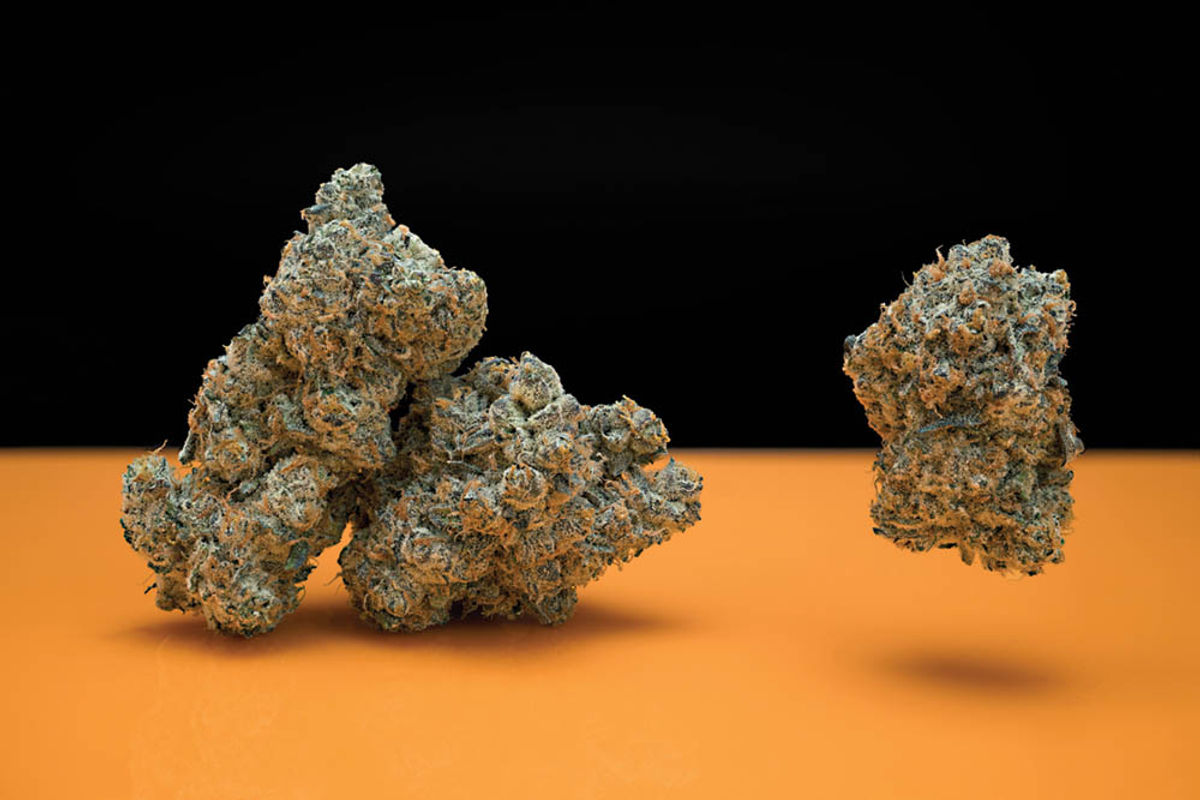
The Crucible is a cross of Dante’s Inferno and Platinum Icing grown by Obseshn. The cultivar was pheno hunted in-house with a goal of finding a plant that highlights the best aromatic components of Dante’s Inferno with an expression distinct enough from other selections on the market. Released only a year and a half ago, the strain has swiftly become a top-selling genetic and a flagship product for the brand.
The flower itself smells like a fruity confectionery, boasting a base of fresh strawberries topped with a helping of heavy cream. When the nugs are broken into, the fragrance of strawberries grows stronger, followed by a dulcet, cookie-doughiness reinforced by the Platinum Icing side of the genetics. The ground product introduces additional undertones of vanilla and the slightest touch of pistachio. In its entirety, the expression is categorically scrumptious — reminiscent of a tarte aux fraises or a strawberry turnover of some sort.
The flavor is similarly sweet and creamy on inhale, with the exhale bringing notes of ripened strawberry that persist on the palate. It’s initially light, possessing an airy, almost gossamer quality that grows increasingly heavy as the flower combusts and resinates. In terms of the consumption experience itself, the flower is delightfully smooth, featuring an effortless draw that’s easy on the lungs and throat.
The Crucible has an effect that’s strong but euphoric, marked by a spacey cerebral feeling that settles into the head after the first couple of tokes. It’s physiologically alleviating, providing some level of pain management along with a general feeling of calmness and relaxation that diffuses through the body. This strain has good potential for medicating, introducing a mild level of sedation without being so overwhelming that the high becomes nonfunctional.
The Crucible is a stellar example of Obseshn’s obsession with producing quality plant medicine. Sharing a name with the Arthur Miller play about witchcraft, fear and mass hysteria, this Strain of the Month is frighteningly good.
This article was originally published in the October 2026 issue of Oregon Leaf.
View our archive on issuu.