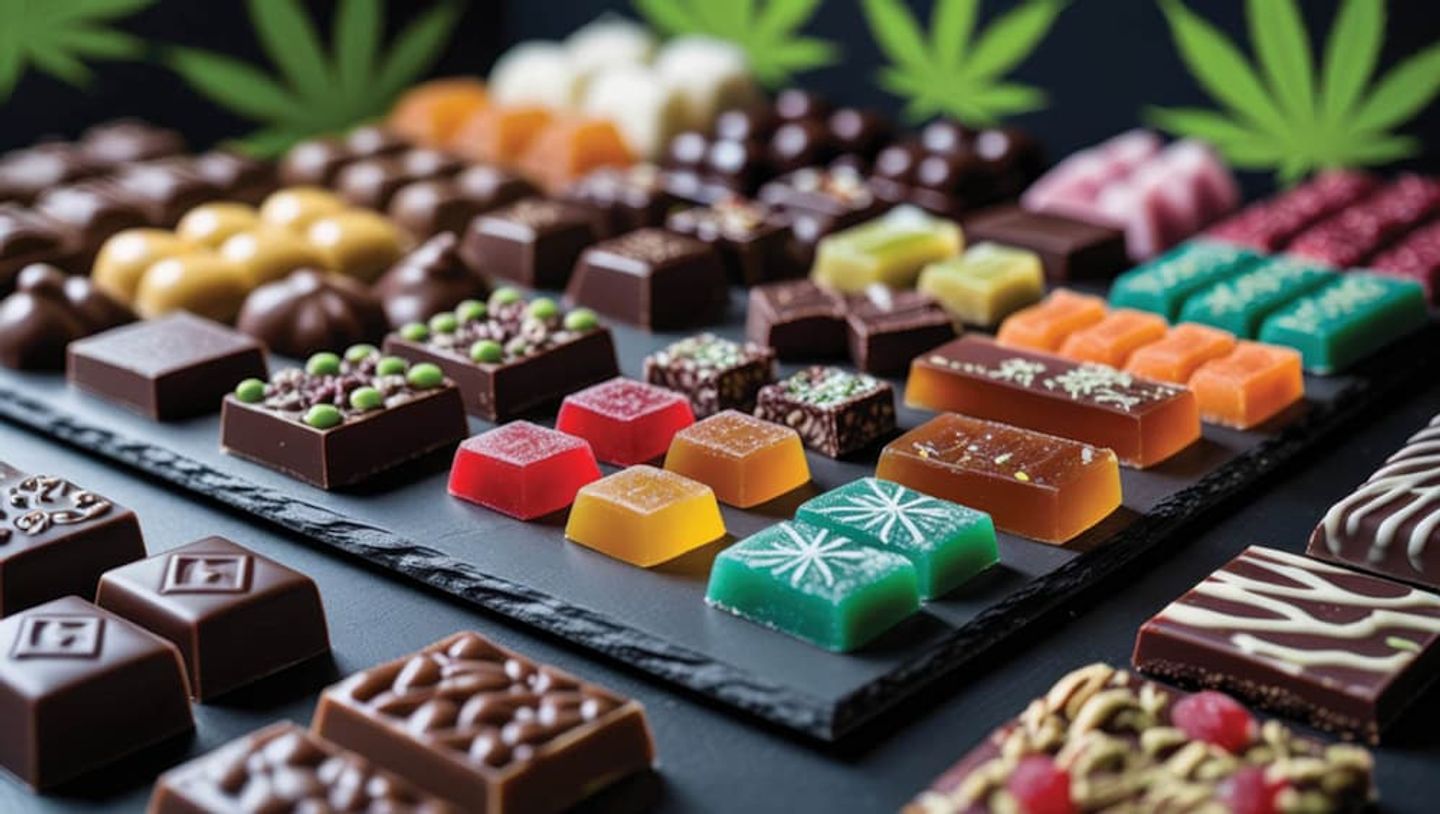
Many Cannabis newcomers who have an aversion to smoking are eager to try edibles instead. But, as any seasoned stoner can tell you, the potency and duration of edibles can be wildly unpredictable; there are endless stories of people trying Cannabis infusions and getting uncomfortably high. I’ve been there more than a few times myself, and the solution to achieving optimal stoniness is, unfortunately, not as simple as counting the milligrams of THC that are ingested.
Unpacking how edibles work is like unraveling a box of cords. When it comes to eating or drinking weed products, it is essential to understand that the way edibles are made is not standardized — and neither are their effects from person to person or even day to day. Cannabis edibles can be a potent medicine that helps ease our mental state and relieve tension in our bodies, but dialing in on the correct dose involves research and practice.
Carrier Ingredients and Nanotechnology
Cannabis is lipophilic, which means it dissolves in fat (lipids), and hydrophobic, a word that describes substances that do not mix with water. Raw Cannabis doesn’t have the same psychoactive effects as when it’s heated through decarboxylation. This scientific process converts the cannabinoids into the active forms that we know best, such as THC and CBD. In creating edibles, Cannabis flowers or leaves are heated and then combined with a carrier — such as oils, butter, glycerin, gelatin or alcohol — to increase the absorption of cannabinoids. Combining cannabinoids with fat makes them easier to absorb and increases the intensity of their effects.
“The best fat to infuse depends on the person,” Vanessa Lavorato, an edibles expert and author of “How to Eat Weed and Have a Good Time,” said. “Everybody has a different metabolism, allergies, tolerances, etc. A lot of people love MCT oil.”
The onset and duration of a high with edibles is also in flux due to how our bodies metabolize cannabinoids. Drinks and tinctures can be absorbed by the mucus membranes in our mouths, which makes the effects come on quicker because they bypass the digestive process. Nanotechnology, which manipulates materials at a microscopic scale, is also being used to create Cannabis edibles that result in quicker onset times. This process wraps cannabinoids in layers of water and fats to make them more readily absorbed or bioavailable.
The Spectrum
Looking beyond which ingredients manufacturers use to activate the cannabinoids within edibles, how potent a gummy, cookie or THC drink might be involves consideration of the type of Cannabis that’s going into the infused product. Cannabis contains many cannabinoids, but it also has other biologically relevant substances such as terpenes, which contribute to the plant’s aromas, flavors and effects. Products that contain all of the components present in Cannabis and do not isolate them down to one element, such as THC, are known as “full spectrum.”
Edibles can be crafted with plant material (leaves and flowers). But because working with this plant material as a base can result in a weedy herbaceous taste that many people do not find appealing, edibles made with Cannabis concentrates — such as distillate, rosin or ice water hash — are more prevalent in the consumer marketplace.
“Concentrates make edibles easy,” Lavorato said. “The hash maker did the work of removing the resin from the plant, then either decarb first or directly whisk the concentrate into a warm fat.”
Lavorato’s book includes a list of concentrates, outlining which are already decarboxylated and explaining how to do so for the ones that are not.
“The cookbook focuses on flower because that is what most people have access to, and it helps to understand dosing to start with a lower potency input,” Lavorato said. “I like to give people options so everybody feels included.”
To create consistent products and completely remove the herbal taste of weed, many edible companies develop products with distillate. Distillate is a purified Cannabis concentrate that removes additional chemical elements of the Cannabis plant, focusing solely on one selected cannabinoid, such as THC or CBD.
I have found that when a gummy contains hash rather than distillate, it doesn’t matter if both contain the same milligrams of THC; the hash edibles are more potent. This is likely because hash is a full-spectrum product. Cannabinoid scientists, most prominently the late Raphael Mechoulam, explain that the compounds in Cannabis tend to work more effectively together than when they are isolated. This phenomenon is known as the “entourage effect.”

The Receptors
Understanding how Cannabis works begins at the cellular level. The plant interacts with receptors found in almost every organ in our bodies via the endocannabinoid system. Endocannabinoids are the chemical compounds we produce internally, and phytocannabinoids are those derived from plants. Both types of cannabinoids bind to chemical receptors to help keep systems in our bodies — like our nervous and digestive systems — in balance.
When we ingest Cannabis, it is metabolized by the liver before it enters the bloodstream. It also transforms its chemical makeup into 11-hydroxy-THC, which is more potent than the delta-9 THC that is created when Cannabis is inhaled.
“The effects of an edible on the human body are different for each individual,” Cannabis cultivation expert Ed Rosenthal wrote on his blog. “It depends on several factors, including weight, experience, hydration, recent food intake, and overall liver condition.”
Our individual physiques and diets are a big piece of the puzzle in understanding how edibles might work. Research shows that those who are on high-fat diets like keto or paleo may feel the effects of Cannabis more, and that these types of diets can be helpful for people with digestive issues, such as irritable bowel syndrome, because of the ways the diets affect endocannabinoid receptors within our gut.
What you’ve eaten before enjoying a Cannabis-infused beverage or snack also affects how strongly an edible feels. Cannabis infusions tend to have a more substantial effect on an empty stomach compared to after a full meal.
Finally, there are unicorns among us. Some people seem immune to edibles’ effects, regardless of how many milligrams they consume. One theory explaining this phenomenon involves individual metabolic differences. It suggests that these individuals may have higher levels of the metabolic enzyme CYP2C9. The idea is that those who have more of the enzyme break down THC faster, which means that they don’t feel the effects of Cannabis when it’s ingested.
Ease Into It
For me, edibles provide a hard reset, as if everything has been powered down, allowing me to disengage from negative thought patterns. Almost all types of Cannabis will make me more introspective, creative and alert, and edibles are no different from smoking Cannabis for me in that regard. What I do experience after taking edibles, however, is a deep night’s rest, likely because they help me stay asleep during the night.
I used to be the type of person who could tolerate extremely high doses of edibles. For a few years, I ingested Cannabis edibles almost every day. These days, my Cannabis consumption habits have slowed down, but I still really value the freeing feelings that an edible can bring on both in terms of my psyche and my physical body. While the process of finding the right dose is always bound to involve a bit of trial and error, the key is to start with a small amount and scale up.