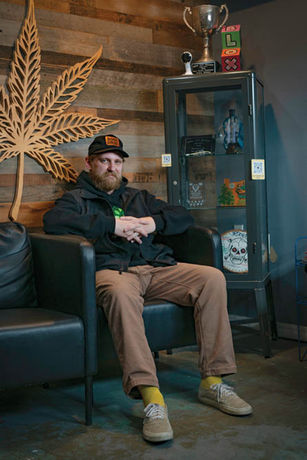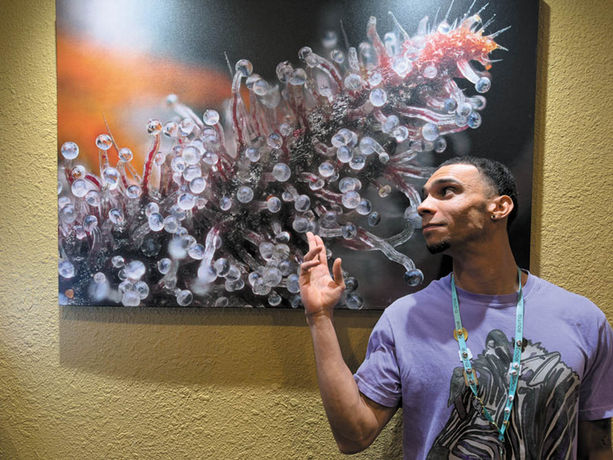
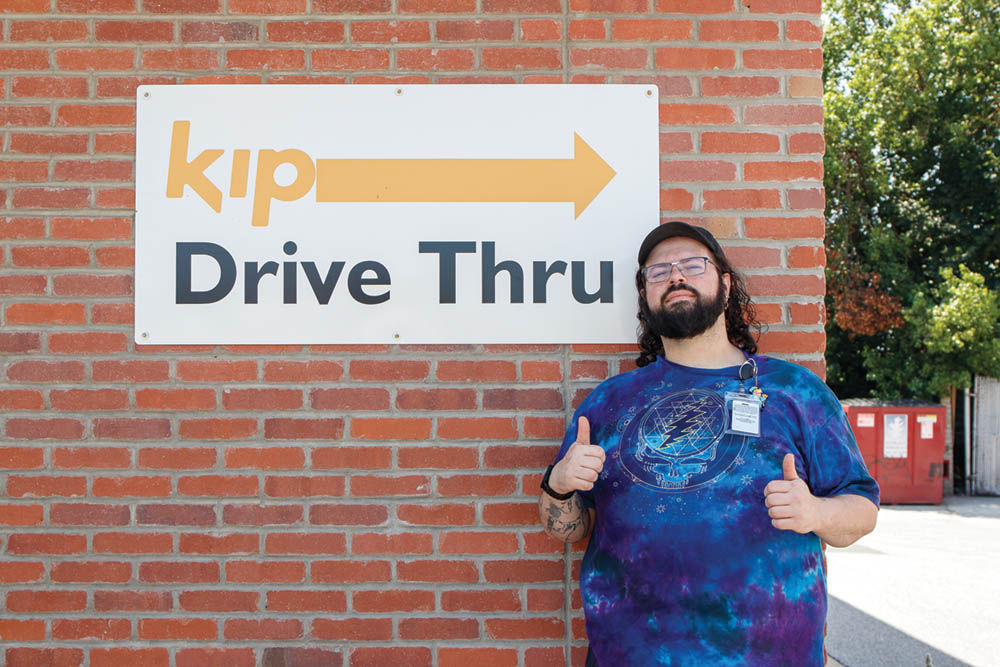
At the age of 5, Elijah Cohen was diagnosed with Asperger’s (now called autism spectrum disorder), and at 10, he contracted Lyme disease after getting bitten by a small tick. Looking back, he said, “It’s funny to think that those two moments would go on to define my life.”
A love for glass art, Cannabis, music and the history of how all these things intermingle has culminated in a deep passion for the plant and its community within Cohen. In June, he celebrated his one-year anniversary working at KIP Cannabis and loves what he does every day.
How did your upbringing shape your view around holistic medicine?
Everything in my childhood was treated holistically before going the pharmaceutical route or anything else. The simple things like using Epsom soaks, arnica gel and honey. All of that led into walking up to my mom at the age of 16 with a bottle of Adderall I was prescribed and saying, “I’m done doing this; I smoke Cannabis because it benefits me more.” She let out a deep sigh and said, “OK, I guess this is happening,” and accepted it. I think she didn’t want to stigmatize it, considering it was such a deep part of her culture, seeing hundreds of Grateful Dead shows.
What role do you see psychedelic drugs having as a major therapeutic benefit in the future?
I think it comes down to dosing, which is a really hard thing that everyone has an argument about. Psilocybin in extracted forms is going to be the closest thing to an exact dosing method for holistic medicine in that world. Cannabis acts almost like a psychedelic as well in high doses and creates a bridge for people to be open to those more intense experiences. Responsible use is above everything else. I took part in a test in collaboration with the MCA (Maryland Cannabis Administration) and the Chesapeake Region Safety Council, where me and seven friends of mine smoked in a room at the CRSC facility and then got tested by cops, sheriffs and paramedics to test our sobriety with certain levels of Cannabis consumption.
Did Cannabis play a role in your love for playing and listening to music?
Not only is Cannabis a creative tool, but it works as a social tool. The amount of musicians I have met in random gatherings through sharing a bowl or some dabs leads to strange, deeper connections. It also influences me as it influences music in general, so I can’t help but tie Cannabis into music interpretation and the artwork surrounding it. I make the joke all the time that if you tried to make a Venn diagram between Cannabis and music, it would just be a circle.
Are you into growing Cannabis personally?
Yes, indeed. I started growing in my closet with some lights when I was 14-16 years old, and I knew basically nothing about it. By the time I was 20, I got myself a tent, better lights, better ventilations, and had the knowledge that so many people were willing to share with me. I think the hardest part is trust in genetics. I’ve had a lot of issues getting seeds from certain companies, and there being a majority of those being duds. Some of these seeds have been improperly stored and sitting on the shelves for four to five years. It’s frustrating, but it’s all a part of the learning experience. When I was 22, I started a breeding project where I made a cross of Lost Cause from Archive Seed Bank with a mystery bag seed I got from a local influencer. After a few runs, I got it relatively stabilized, and every seed I’ve popped from those since has grown into a large bush. I call it Baltimore Harbor Water, looking for a gross name that makes heads turn.
What do you love the most about the Maryland industry, and what would you change?
From what I’ve seen in comparison to other states’ industries, I think Maryland prides itself on education more than other places. Not just through publications like Maryland Leaf, who are willing to put things out there as bluntly and honestly as they come, but also through budtenders who are willing and able to be completely up front with their patients — something I’ve always been able to do at KIP. I do wish the Maryland market was more focused on the genetic side to the plants. I find a lot of labels to categorize things as a general indica, sativa, hybrid marketing plan in terms of effects. Education into genetics would go a lot further when trying to recommend proposed effects to everyone in the industry.