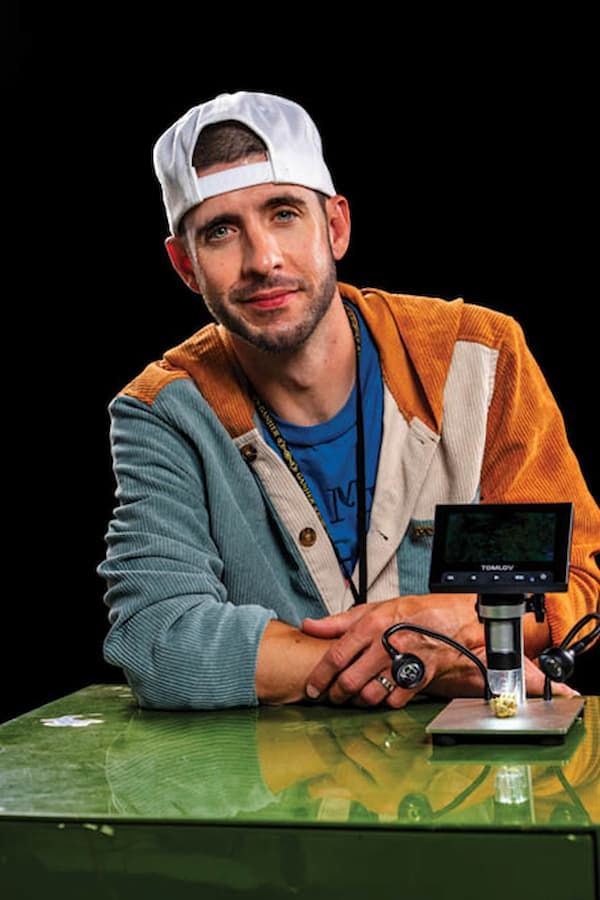
If you have the chance to sit down with Dave Tart (@dtart) in a session, or whenever he’s not traveling, you’re going to leave the conversation with a little nugget of knowledge that you can pass on to someone else. Whatever the topic of conversation — Cannabis science, music, the rhizosphere — Tart is happy to tell a story or help you make sense of something. But to have as much as he does to share, it’s come from an eagerness to learn and tapping into the “excitement of the unknown” to get where he is in his career.
“I’ve had some crazy highs, and I’ve had some pretty deep lows. Each time, I just made a rule with myself: The step could be lateral, but it could never be backwards,” he said.
Growing up in Carroll County, Tart wanted to be a musician, playing drums since he was 4 years old. He played in local and school bands and later enrolled at Towson University to seek a degree in music. When he won tickets for that year’s HFStival and went to pick them up at the radio station, unbeknownst to him, he had literally walked into a new career.
“I play music, but this is my first time in a radio station,” he told the receptionist. He asked for a quick tour. From there, she took him through the station and let him try some line reads to see how he’d sound. She was also in charge of hiring for the station. After impressing her, Tart was brought on soon after to work promotions before working his way to being an on-air talent.
After some time working at the radio station, Tart moved into the Cannabis industry when Maryland started its medical program. At first, he started working at pain management facilities with doctors who would write medical Cannabis prescriptions. With the doctors also prescribing other forms of medicine, Tart became the go-to consultant for patients who were considering Cannabis.
He has been passionate about Cannabis since he was young. He would learn about the plant and pass that knowledge on to others, and he became a trusted source among his classmates in the marching band.
“I had like 200 kids that were all like, ‘I want to try this for the first time,’ and they trusted me,” he recalled.
Later hired to work at Grassroots, Tart was immediately tasked with helping bring the brand to Maryland and western Pennsylvania. With the state’s program still in its infant stage, Tart was part of a small team where he had his hands in a bit of everything, including marketing, handling production duties in their grow and stepping on the floor to be a shop budtender.
“Everything in Maryland we were doing was small batch. We were figuring it out as we go,” he said.
The team became a second family to him, Tart added, as they navigated being bought and merged with Curaleaf and the challenges of being essential employees during COVID-19. Additionally, he became a father to twin girls around the same time.
“We were all equally clueless, and we’re willing to be clueless together,” he said. “I was so concerned about being a new dad, all of those things vanished when I walked in that front door to work.”
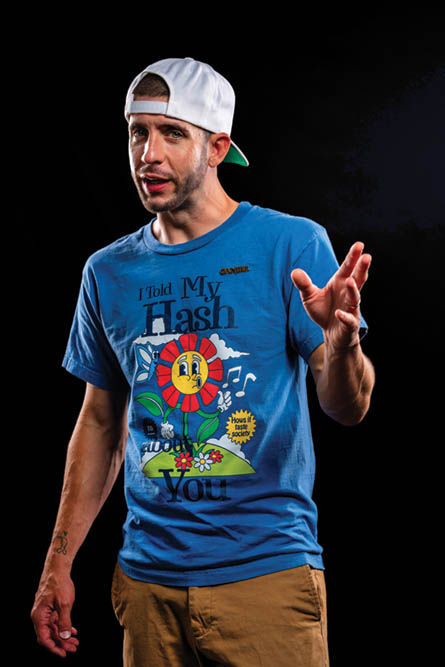
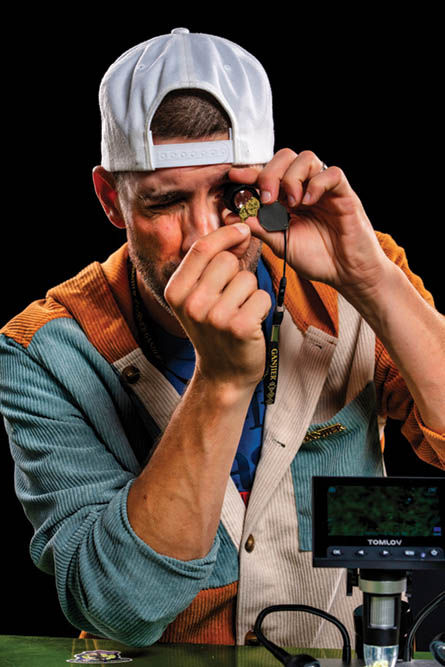
From his time in medical offices up to his current ventures, Tart has considered himself a bridge for delivering people a more educated perspective on Cannabis use and the science surrounding it. But at the same time, he takes the opportunity to learn the habits of the people he’s educating and uses that as another tool.
“I approach it all as I want you to teach me,” he said, adding that, in his spare time, he messages home growers on Instagram about the challenges they’ve had or the seeds they use. “If I thought I knew everything, I would have lost out on all of that knowledge.”
In an effort to broaden the knowledge of the company and his own education, Tart advocated for a business partnership with Ganjier, the Cannabis sommelier certification program. Once implemented, he taught the classes, and after they were finished, he visited the campus in Humboldt County, California, for the in-person training portion before getting his actual certification. After some back and forth between visiting the campus for training and coming home to Maryland, Tart became a certified Ganjier in 2024.
He said, as it relates to the five senses and Cannabis, you can see it, taste it, feel it and smell it, but you can’t hear it. As a certified Ganjier, Tart can help you figure out what the plant is telling you through factors like its genetics and grow practices.
“My goal and my job is to just make you want better and to learn more. But if you don’t, that’s fine, too,” he said. “I’ll meet you where you’re at.”
In addition to creating strain cards that show different properties of Grassroots strains, Tart has been working with Dark Heart Industries to craft genetics and test them to see how well they would grow. He said with the way the testing is conducted, it’s like a “23andMe on the weed,” adding that the collaboration is a “marriage of science and sensory.”
Taking part in a few different career fields throughout his life, Tart often reflects on the parallels he’s seen between the music and radio industries and how they helped shape how he does his job now in the Cannabis field. Playing music has helped with group dynamics, and being a radio personality prepared him to be able to speak to any size of room or audience he’s educating. Up to now, he said, it’s also been about maintaining balance, just like one’s endocannabinoid system is meant to do.
“It was like 21-year-old Dave wanted to be famous on the radio, but now 39-year-old Dave, I just want to be a good dad,” he said. He added that he saw a parallel in working in the Cannabis industry that mirrors his responsibilities as a parent. “I’m in a facility every day with a fragile plant, and that requires nothing but patience, understanding and delicacy.”
While concentrates and flower are what Tart prefers to smoke, he said he often seeks out the “uniqueness” of a strain profile before anything else.
“My preferred profile is gross,” he said, laughing. “I love funk, I love, like, a wet carpet, I love that, man. I love those profiles.” The best strain he’s ever tried, he added, is called Diesel Wreck, grown at Fallen Oak Farm in Humboldt County, comparing the profile to “the tailpipe of a city bus.”
Having spent the last eight years in the industry working in different roles at Grassroots and Curaleaf, Tart said practicing advocacy for the plant is the one role he wants to keep consistent in his career. But in the moment, he said he’s lucky that working with something he’s passionate about can provide for his family and owes a lot of his success to the one “vice” he said he has: the plant itself.
“I’m just very fortunate that this is an industry that, like — you know when you feel like you’re getting to the end of the maze and hit a dead end? You can turn and keep going. There’s a whole new other facet of this I’ve never thought about,” he said.