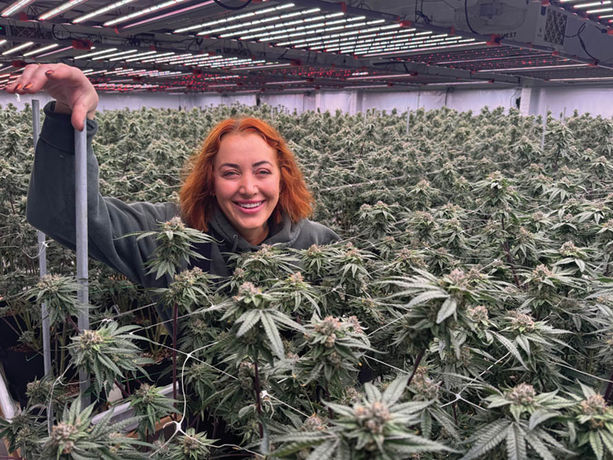
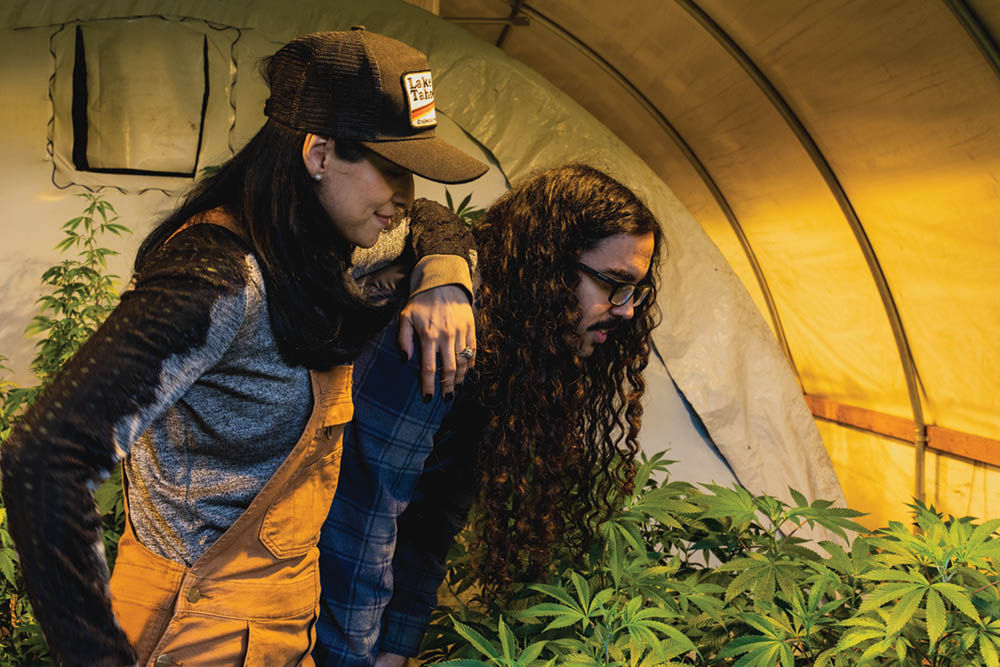
Jason Lampman is the co-owner and operator of State 3 along with his wife, Ana Lampman. With a history of growing Cannabis for medical patients in Portland prior to 2015, the Lampmans moved to a rural, 1-acre property in McMinnville with a dream of running a first-generation farm together. Legalization was impending, and the couple had their first child on the way, so they decided to transition into legal cultivation to help support the future of their family. Since then, they’ve hit the ground running, cementing themselves as one of the most reliable and enduring microtier farms in all of Oregon.
“We joke that we’re not trying to be the biggest farm — we’re trying to be your favorite farm,” Jason Lampman stated.
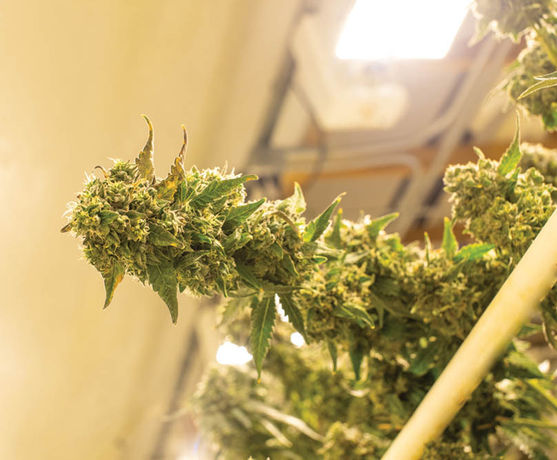
State 3 runs one small outdoor garden and one light-assisted greenhouse, with the rest of the grow space dedicated to an indoor canopy. The output is steady, producing around 5 pounds of Cannabis flower per month, with the remainder of each harvest being utilized for prerolls. The delineation allows the Lampmans to pick the very best nugs out of the batch to sell, while the rest goes to high-quality, handmade joints.
“We create the preroll and then deliver them to the store within 24 hours. We believe that people deserve to have a good, fresh product that we put our best effort into,” Jason Lampman explained.
The farm also does a large amount of breeding and pheno hunting, including strains from their State 3 Classic line, which is focused on bringing old-school genetics — like Maui Wowie, Panama Red and Acapulco Gold — to market.
All Cannabis is grown organically at State 3 and with a level of love that only a mom and pop operation can provide.
“Being a small farm means I can give the plants attention every day. Like I literally touch every plant every day,” Jason Lampman stated.
State 3 utilizes a combination of organic amendments and living soil to cultivate a dynamic grow medium that’s rich in microbial and fungal life. Compost teas with worm castings and insect frass are the main tool for soil enrichment, with a goal of remaining as sustainable and regenerative as possible. Jason Lampman constantly receives questions on what the key to his success is, but Mother Nature herself is the biggest variable at play here.
“Plants have millions of years of evolution to draw on, and I think that we may feel as humans like we can do it better, but I don’t know. I think that nature really always knows better,” Jason Lampman mused.
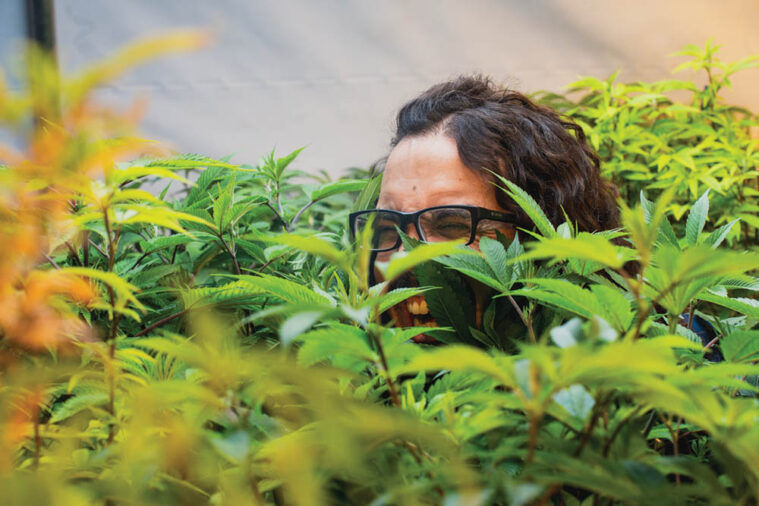
With over 20 wins across various Cannabis competitions — from indoor to greenhouse to prerolls — State 3 certainly seems to have dialed in a formula for achievement. The victories don’t end there either. The Lampman family competes annually in Oregon county and state fairs, where they enter vegetables, chocolate and other agricultural products that have earned them dozens of highly sought-after blue ribbons. The Lampmans’ sons, Kaz (age 8), Arrow (age 6) and Rad (age 4), even won a ribbon for a potato garden that they planted, watered and grew entirely on their own this last year. The kids being award-winning farmers before graduating from elementary school is an impressive feat that truly highlights how much of a family enterprise State 3 really is.
In fact, the biggest motivating factor for the Lampmans is taking care of their familial unit. Despite long days and an almost insurmountable amount of work, the couple puts intentional effort into raising their children right and teaching them important life skills like how to farm.
“I love Cannabis, and I love farming, but I think what I’ve learned out here is that what we’re building is a legacy for our children and the future. Whether they become farmers or not, being able to grow their own food and work with nature is an important skill that Ana and I have decided we want them to be able to know,” Jason Lampman stated.
There are both benefits and drawbacks to operating a microtier farm in the Cannabis industry. Nonscaling testing costs, overreaching regulations and a seed-to-sale tracking system that creates an exponential amount of work for producers “doing it the right way” are just a few of many issues that a farmer has to navigate to survive in the current system.
“There’s a fine line between not being overly burdensome for business but also allowing the state to fulfill their obligation to public health,” Jason Lampman noted. Despite having limited free time, he is actively involved in local Cannabis advocacy and can often be found at hearings and council meetings providing testimony related to his day-to-day experience.
Across his history as a grower, Jason Lampman has always put an unparalleled emphasis on growing quality, clean Cannabis, and that dedication has paid dividends in every facet of the business that he and Ana Lampman have built.
“We survive because people love what we do and want to support our small farm,” Jason Lampman confirmed. “It’s easy to put in the care, the time and all the extra money. It’s all worth it when people want to spend their money to support our family.”