In a world engineered to harvest our attention, concentration has become a sacred act of rebellion.
Every notification, advertisement and doomscroll is competing for one of your most precious resources: focus. Neuroscientists have identified a network in the brain known as the reticular activating system, or RAS, which helps regulate wakefulness, attention and conscious awareness. I think of it as the gatekeeper between the spirit and the endless stream of information flowing through your senses. What you repeatedly focus on becomes what your brain learns to prioritize. The National Library of Medicine describes the RAS as one of the primary systems involved in arousal, attention and consciousness. So, how do we create an environment both internally and externally that supports the RAS for optimal performance?
For the last decade, I’ve been fascinated by what I call the art of concentration. Through meditation, conscious biohacking, intentional habit-building and reconnecting with Mother Earth, I have discovered a handful of practices that support my RAS while consistently elevating my focus, creativity and productivity.
So if you haven’t sparked up yet, this is your cue to puff, puff, pass and journey with me through my 2026 concentration-elevation discoveries.
Meditation as a Lifestyle

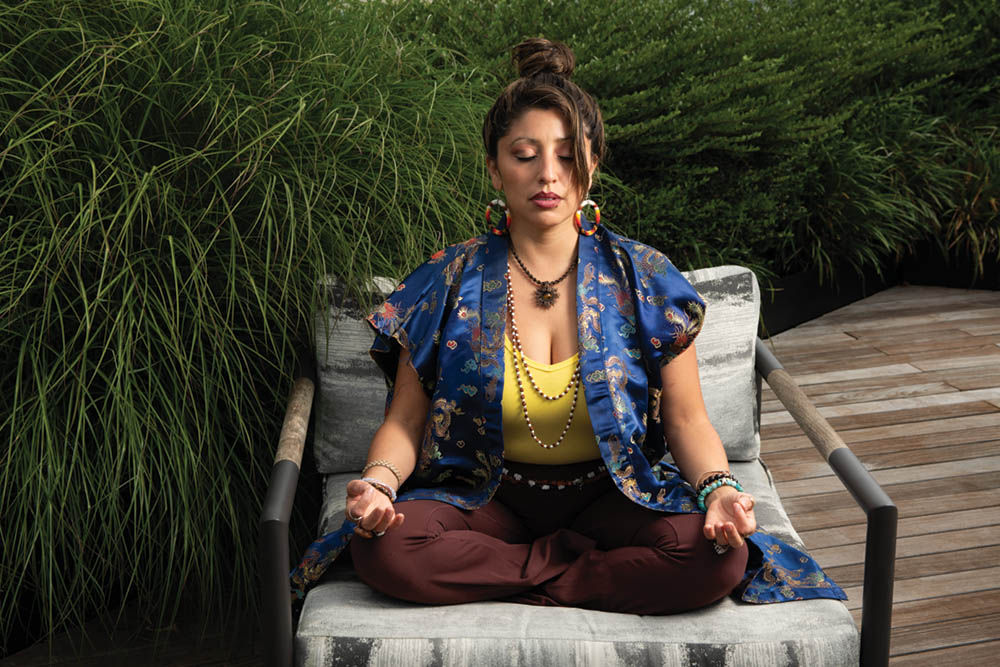
If there is one ritual that has transformed my ability to focus more than any other, it is meditation. Not meditation as an occasional stress-relief tool, but meditation as a way of life. My path led me to Anapana and Vipassana meditation, ancient practices rooted in observing the breath and bodily sensations with unwavering attention. Each time the mind wanders and we gently guide it home, we strengthen the mental muscle of concentration.
Long before neuroscience could measure brain activity, Indigenous wisdom keepers, yogis and meditators understood a profound truth: Where attention goes, energy flows. Modern science is beginning to echo the same message. A systematic review of studies examining long-term Vipassana practitioners cites potential changes in brain regions associated with attention, emotional regulation and sensory awareness. Additional research suggests mindfulness-based practices can improve attentional control and cognitive performance.
My own understanding deepened during a 12-day silent Vipassana retreat. Somewhere between the stillness, isolation and consistent, steady breathing, I discovered that concentration is not something we force. It is something we uncover when we stop feeding distractions.
The daily ritual of Vipassana meditation is something that I highly recommend to every living OG who is interested in self-mastery. For readers who would like to explore this path, donation-based retreats are offered worldwide through dhamma.org.
Methylene Blue — A Fascinating Discovery

One of the most unexpected yet fascinating allies in my concentration journey has been methylene blue, a believed cognitive biohacking tool with a simple liquid tincture delivery.
In hopes of discovering solutions for mi abuelita’s current dementia battle, I was deep into research centered around holistic lifestyle solutions. It was in this research that I first discovered methylene blue. Soon after, I sourced a tincture for daily use. I immediately noticed an increase in mental clarity, stamina and adrenal recovery after long writing sessions.
Originally developed in the 1800s and still used today to treat a rare blood disorder, methylene blue has recently captured the attention of biohacking researchers studying brain energy metabolism and cognitive performance.
The science is still emerging, but a 26-person study published in the journal ”Radiology” found that low-dose methylene blue measurably increased activity in brain regions associated with short-term memory and memory retrieval.
While the findings are intriguing, caution is essential. Methylene blue is a powerful compound, not a casual supplement. Harvard Health Publishing warns that it can interact with antidepressants and other medications, and may cause serious adverse effects when used improperly. Dosage matters. Anyone considering methylene blue should thoroughly research contraindications and consult a qualified healthcare professional before use.
For me, this discovery served as a reminder that focus is not always about pushing harder. Sometimes it is about supporting the biological systems that create clarity in the first place.
Atomic Habits and the Structure of Focus

Few books have upgraded my daily reality more than ”Atomic Habits” by James Clear. Its central teaching is beautifully simple: Extraordinary results are often created through tiny actions repeated consistently over time.
One line hit me like a strong Durban Poison dab, bright and awakening, “You do not rise to the level of your goals. You fall to the level of your systems.”
That insight transformed the way I approach concentration. I began creating environments that naturally support focus — fewer digital distractions, dedicated creative spaces, scheduled writing blocks. Small rituals that tell my powerful brain it’s time to lock in.
The result was worthy of celebration. Focus stopped feeling like something I had to chase. It became the natural by-product of a more intentional life. If concentration is your goal, OGs, consider this book required reading.
Temperature Regulation Therapy and the Wisdom of Mother Nature
My first introduction to deliberate cold exposure didn’t come from a wellness podcast, self-care influencer or biohacker. It came from mi mamá.
Years ago, I spent countless hours working at a computer screen. By midafternoon, brain fog would roll in like the greenroom at a Slightly Stoopid concert, and my energy would crash.
My mother offered simple Indigenous advice: step outside, take off your shoes and place your bare feet on our Earth Mother. The first time I tried it was a cold winter afternoon, and I felt an immediate shift. My senses sharpened. My breathing deepened. My mind awakened.
Today, science may be beginning to explain why. Research from Stanford indicates that exposure to cold or outdoor environments may increase norepinephrine, a neurotransmitter associated with attention, alertness and focus. Additional studies examining cold-water immersion have reported participant improvements in mood, positivity and stress resilience. Of all the natural biohacking practices I’ve encountered, cold exposure remains one of the fastest ways to interrupt mental fog and awaken the senses.
In a culture that profits from distraction, choosing where we place our attention may be one of the most radical acts of self-love available to us. Whether through meditation, conscious biohacking, building better habits or placing our bare feet on our Earth Mother, each of these rituals invites us back into relationship with ourselves. So spark up, breathe deep, touch the soil beneath your feet and remember, OGs, concentration is not just a productivity tool. It is a pathway to presence, creative potentiality and living in harmony with the sacred rhythm of life.