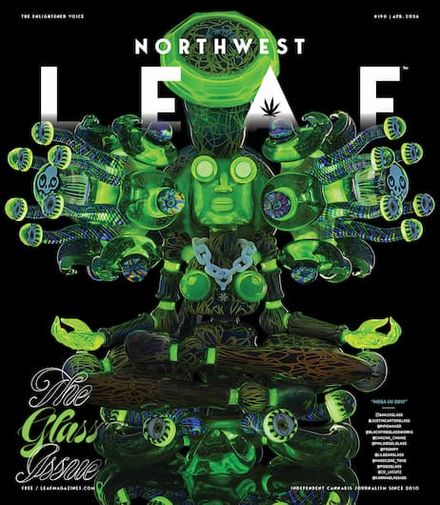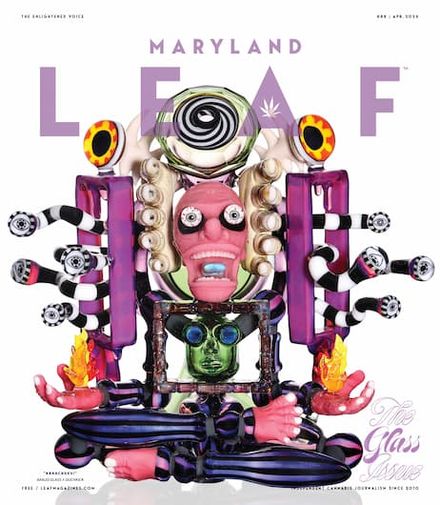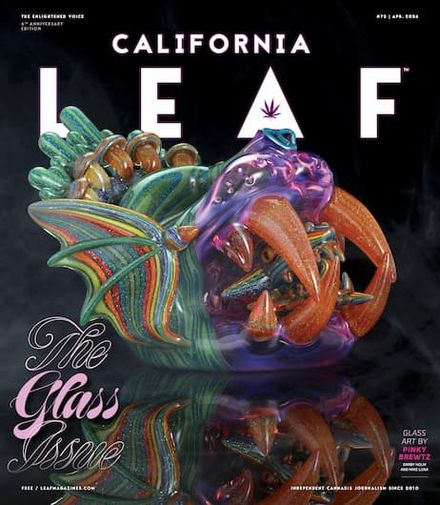
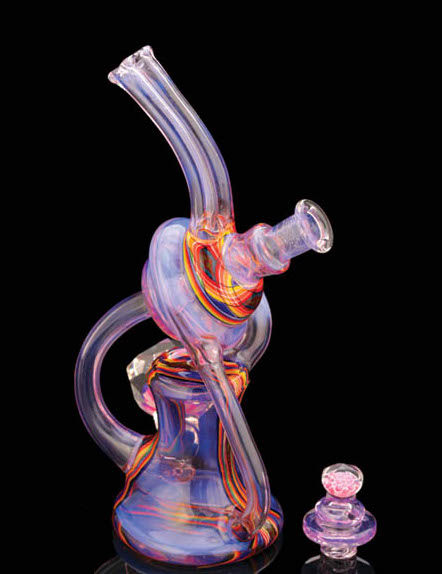
To many hardcore heads, their bong is more than just a piece of paraphernalia — it’s a reflection of their personal style — even a symbol of their stoner status. Sure, joints are great, but there’s nothing quite like a fat rip from a baller headpiece to go from sober to slobber in 4.20 seconds flat. So fire it up, fill that chamber and get ready to inhale the totally tubular history of the bong.
African Origins
Evidence suggests that bongs originated in Africa sometime in the 12th century. In the late 1800s, archaeologists documented how various tribes in Eastern and Southern Africa would smoke “dagga” or “dakka” out of holes in the ground, using bowls fashioned from mud or clay and inhaling through a hollow reed — a primitive apparatus known as an “earth pipe.”
In an article from a 1910 edition of the German anthropological journal “Internationales Archiv für Ethnographie,” (reprinted in the 1975 book “Cannabis and Culture”), a Dr. Moszcik confirmed that the Ngoni, a tribe near the Zambia/Zimbabwe border, used such an earth pipe that utilized water filtration:
“A hollow tube is stuck into one of the pits to act as a mouthpiece and prevent particles of earth entering the smoker’s mouth. “Hemp is then placed in the bowl and kindled. A little water is poured into the duct and the native lies flat or kneels down and inhales the smoke through the water.”
Ethiopian Excavation
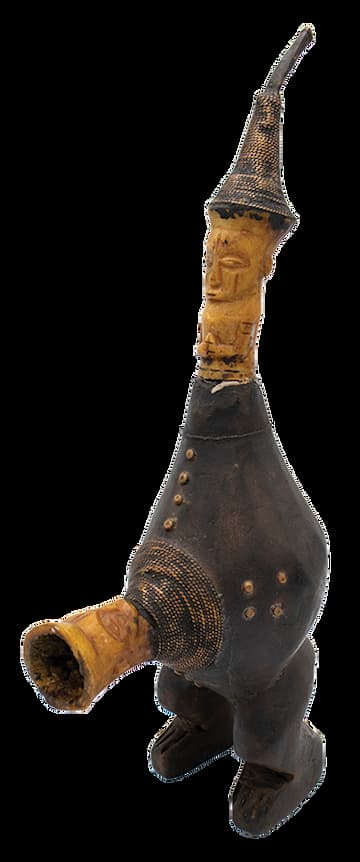
In 1971, Boston University doctoral student J.C. Dombrowski discovered 11 pipes made from animal horns, stone and pottery in the Natchabiet Caves of Lalibela, Ethiopia. Among these were two ceramic pipe bowl fragments dating from between 1,100 and 1,400 C.E. that tested positive for Cannabis.
In his paper “Cannabis Smoking in 13th-14th Century Ethiopia: Chemical Evidence,” archeologist Nikolaas J. Van Der Merwe wrote of the fragments: “Both bowls formed part of waterpipes; an aperture at the bottom of the bowl allows for the attachment of a vertical stem, which presumably descended into a water container.”
Then, in 1945, archaeologist Mary Leakey uncovered a waterpipe crafted from a gourd in Tanzania. This discovery may provide insight into the origin of the word “bong,” as apparently, there lived a tribe in nearby Kenya known as the Bong’om. There’s also a town in Liberia named Bong, which may or may not be connected.
Thai High
Nevertheless, conventional wisdom holds that the term bong actually originated in Thailand as an anglicized version of the word “baung” — a reasonable presumption, considering that the earliest written record of the word bong appears in a 1944 Thai-English dictionary which defines it as “a cylindrical piece of wood with a hole, chamber, or slot; a bamboo waterpipe for smoking kancha, hashish, or the hemp-plant.”
Regardless, the crafting of bamboo bongs is an ancient tradition deeply rooted in Thai culture. As thaibong.com explains: “This is not merely a tool, but a reflection of a way of life, a history, and an art form passed down through generations.”

Silk Road Migration
Thanks to the legendary Silk Road and the East India Company, tobacco arrived in the Orient during the 16th-century Ming Dynasty, and smoking it from blinged-out metal waterpipes became all the rage among royalty and the upper classes. In fact, Empress Dowager Cixi of the Qing dynasty was reportedly so fond of her waterpipes that she was buried with three of them.
It’s also through the Silk Road that bongs eventually made their way to Middle East trading hubs, then on to Europe sometime in the 17th century. With tobacco flowing in from the Americas, some Europeans began using waterpipes to imbibe, but they never became as popular as they were in Asia and Africa. It would take three more centuries (and a countercultural revolution) before the bong would catch on in America.
Coming to America
During the 1960s and early 1970s, many U.S. soldiers fighting in South Asia started smoking Cannabis to help them sleep and cope with the daily traumas of war. It was these Vietnam vets who brought the bong home to America, where they were soon embraced by the weed-fueled hippie movement.
“During the Vietnam War, American GIs on R&R would come to Thailand to kick back and relax for a while before being sent back to fight in the Vietnamese jungles. It was there that they discovered the bong,” explained Thai writer Nuttawat Attasawat. “[Bongs] were smuggled back to the United States, where they became an integral part of American Cannabis culture.”
With the proliferation of headshops over the next decade, bongs grew ever more accessible and popular — becoming the preferred smoking method for countless stoners and a symbol of the counterculture. To meet this demand, some American artists and entrepreneurs began manufacturing a new style of bongs made from ceramics.
Earthworks
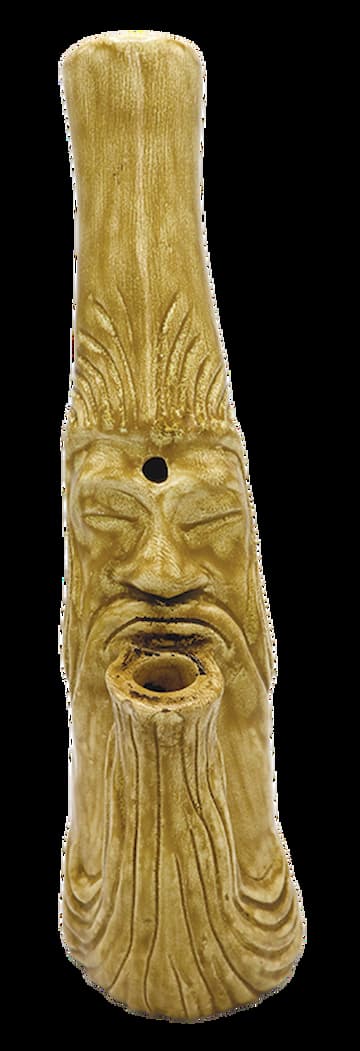
The first U.S. ceramic bong manufacturer was a company called Earthworks. Best known for their iconic “Old Man Bongs,” Earthworks was founded in 1971 by an OG stoner we’ll call Mr. Thomas, since he prefers his real name not be revealed.
“In 1971, newly married and always getting high, I needed to find a way to make some money,” Thomas told World of Cannabis. “So I started Earthworks in a garage I rented, and we began making bongs.”
Within a year, he’d expanded the operation into a 2,000 square foot facility, purchased some used equipment, and hired “30 very friendly stoned hippies” to mass produce his Old Man Bongs. By 1973, Thomas and his team were cranking out about 1,200 a day, which they sold to headshops, sales reps and distributors for $5 each.
Earthworks eventually produced 724,400 of its Old Man pieces, making it the top-selling bong of the decade and a subcultural phenomenon. Old Man Bong clubs began forming all over the country, and the Earthworks factory became a stoner tourist attraction. Thomas even claims he and his crew buried a slew of bongs all around the country.
“There are over 50 burial sites for Old Man Bongs, protected in cypress boxes for future discovery,” he told WOC. “I believed then that we were making something that quite possibly would be found by archaeologists thousands of years later.”
Sadly, Thomas’ bong empire ended in 1983, when he sold the company and quit Cannabis. Now retired and in his 70s, he hasn’t smoked weed in over forty years.
The Slyme Factory
Another popular 1970s ceramic bong maker was a zany artist from Missouri named Jim Rumph.
Inspired as a child by Mad magazine, sci-fi books and fantasy artists, Rumph became an underground illustrator and graphic artist during the 1960s before switching to ceramics in the ’70s. Operating out of Southern California, his companies, Mind Circus and Slyme Factory, began selling fantasy-themed pottery, drinking vessels, and yes, bongs.
To the mainstream, Rumph was best known for his movie character mugs, such as E.T., King Kong, Superman, and his highly successful Star Wars series. But for the counterculture, it was his cadre of whimsical fantasy-themed bongs for which he’s revered. From skulls and snakes to dragons and demons, Pegasi and unicorns to wizards and topless maidens — Rumph’s sword-and-sorcery smokeware were some of the most sought-after stoner collectibles of the era.
Graphics vs Graffix
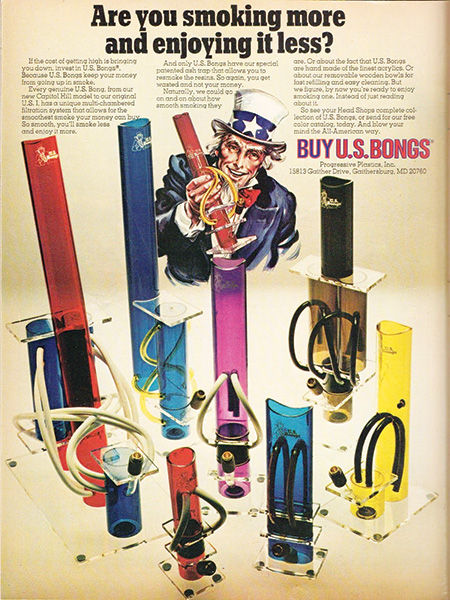
Around the dawn of the 1980s, a new material for making bongs emerged: acrylic. Compared to waterpipes of the past, acrylic bongs were cheaper and more durable. Pioneers of this plastic paraphernalia included US Bongs from Rockville, Maryland (allegedly the first to feature pull-out downstem carbs) and a Milwaukee-based company called G.Graphics.
Founded by a stoner named Todd Galanter, G.Graphics bongs originally consisted of a tin can filled with concrete and a PVC tube with a hole drilled in it for a metal stem. Eventually Galanter shifted production from his basement apartment to a warehouse and upgraded his materials. Though mostly sold only at local headshops in Wisconsin and Illinois, G.Graphics bongs became extremely popular in the greater Midwest. Nevertheless, Galanter appears to have shut the company down in 1990.
But by far the most well-known bong manufacturer of that era was a brand whose name sounded suspiciously similar to Galanter’s: Graffix. Any American who was getting high in the 1990s is undoubtedly familiar with Graffix’s iconic jester skull logo and most likely found themselves choking up a hit from one of their long, colorful tubes at some point. Graffix was founded in 1988 in Tucson, Arizona … but beyond that, there’s shockingly little information available about this iconic, enigmatic brand.
The Glass Menagrie
In the 1990s, borosilicate glass established the new standard for smokeware thanks largely to “Godfather of Glass” Bob Snodgrass. Snodgrass and his early apprentices — such as Jason Harris (Jerome Baker), Chris Shave of JAH (Just Another Hippie) Creations, Dan K, and Cam Tower — went on to found the functional glass industry as we know it today. In fact, it was allegedly Tower who first crafted what we now consider the classic bong shape — a bubble-like base with a long, straight tube — out of a single, solid fused piece of glass. (See Cannthropology April 2021 and April 2023).
These boro bongs have enabled myriad new innovations, such as fuming (aka color-changing glass), cooling ice catchers, smoke-diffusing percolators and multi-chamber recyclers. Over the past three decades, glassblowing has become the art form of choice for many Cannabis lovers who create and collect mind-blowing heady works of functional art worth thousands of dollars.
Keep Calm and Bong On
Despite their artistic value, bongs are still classified as drug paraphernalia by the U.S. government under the Controlled Substances Act, and are therefore federally illegal to import, export, sell or transport across state lines.
To get around this law, headshops have historically posted signs stating that their smokeware was for “tobacco use only,” and forbade use of the word “bong” in their stores. Unfortunately, that didn’t stop the Justice Department from launching Operation Pipe Dreams in 2003, driving many bong makers and retailers out of business. Luckily, this beleaguered industry has made a triumphant comeback over time. Today, with Cannabis legal in so many states, paraphernalia sales are permitted under state law in much of the country and estimated by several market research firms to be a $73 billion market.
After nearly a millennium, the humble bong has proven itself to be more than just some clever contraption for getting high — it’s an enduring international artifact of humanity’s heritage, and an ever-evolving symbol of Cannabis culture that continues to bring joy to millions of stoners around the world.