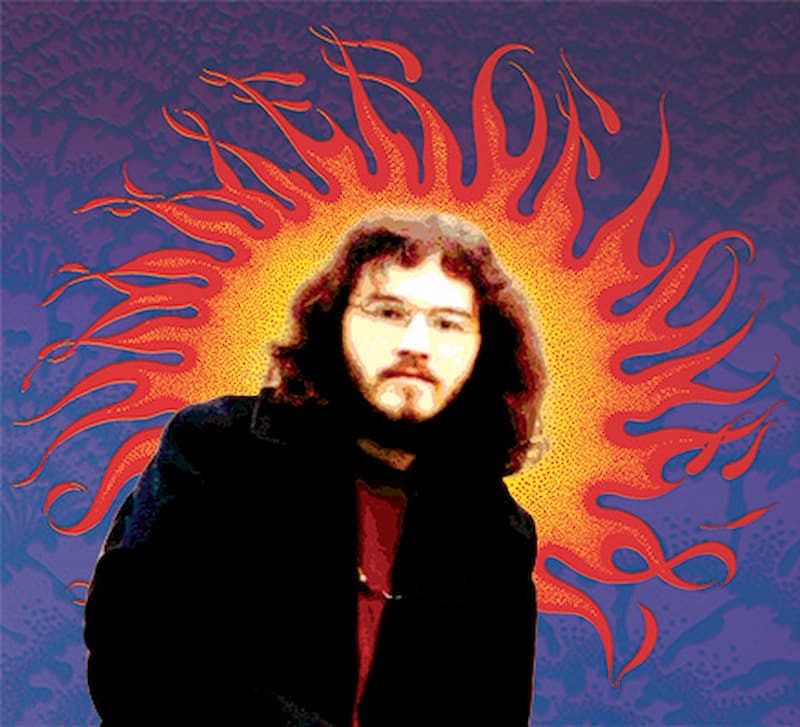
The Mighty Mouse
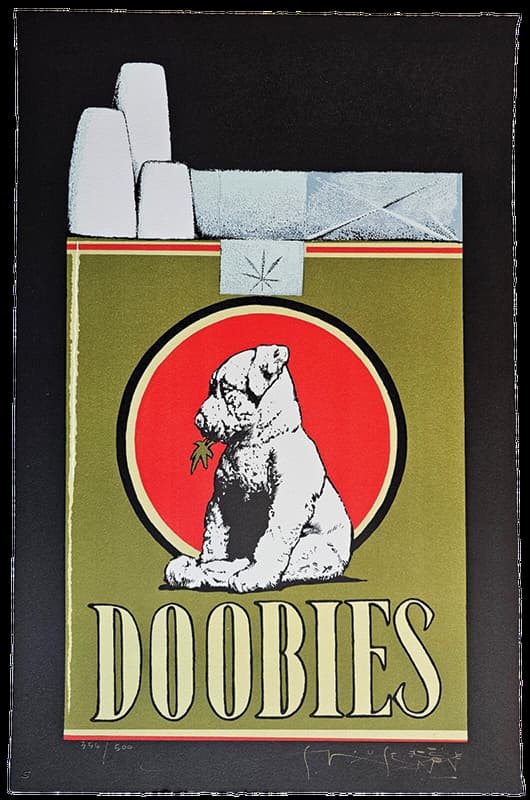
From the hot rod circuits of Detroit to the acid-soaked streets of Haight-Ashbury, Stanley Mouse has spent the past 70 years helping to define the psychedelic, rock and pop culture aesthetics. As one of the so-called “Big Five” of 1960s poster art, Mouse designed some of the era’s most iconic rock posters and albums — establishing himself as one of the most prolific and influential artists of the 20th century.
Early Years
Growing up in Detroit in the 1950s, Stanley Miller became infatuated with muscle cars, Motown and Mad magazine. As the son of a Disney animator, he also mastered drawing and airbrushing at an early age. In middle school, he was always doodling in class (mostly monsters, hot rods and cartoon rodents), earning him the nickname “Mouse.”
After being expelled from high school for graffiti, he attended the Detroit Society of Arts and Crafts. There, at the adjoining Detroit Institute of Arts museum, he first saw paintings by Degas, Picasso and Van Gogh and thought to himself, “Someday, I’ll be able to paint like them.”
The Mouse and the Rat
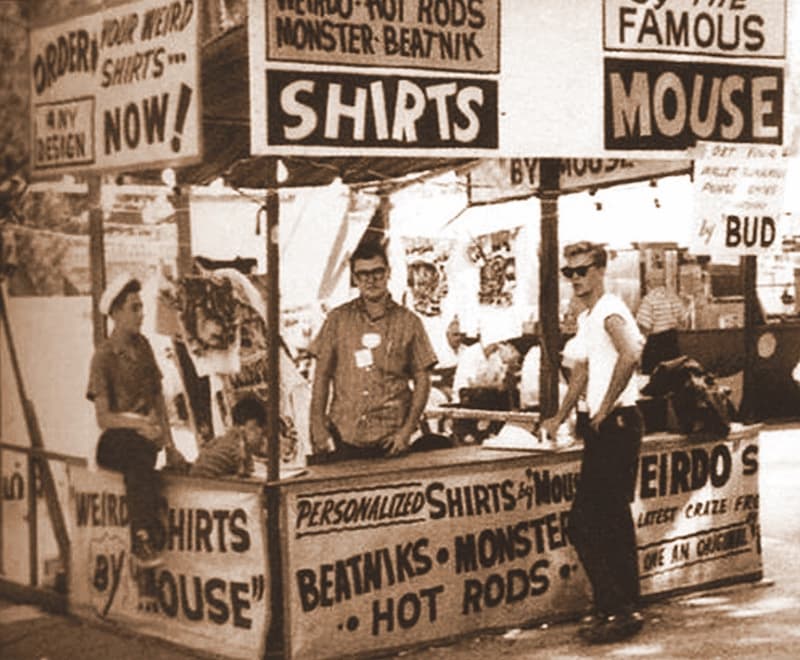
As a teen, Mouse spent weekends smoking weed and painting shirts at car shows, drag races and state fairs. It was at one such race that he met his notorious frenemy, hot rod artist Ed “Big Daddy” Roth. The two often traded digs while working alongside one another: Mouse allegedly calling Roth “Bigg Fatty,” and Roth calling him “Rat Fink” — the name later used for Roth’s signature character, which Mouse accuses him of plagiarizing.
“He stole my mouse image,” Mouse complained to Seconds magazine in 1997. “He took a bunch of my catalogs back to L.A. and had his artists copy all my stuff and they created Rat Fink out of my characters.”
Mouse eventually dropped out of school to tour with the hot rod circuit. By 1960, he’d opened his own studio, and by 1963, he’d established his own company, Mouse Studios. In 1964, he partnered with Monogram to produce plastic model kits of some of his muscle car monsters. But by then, LSD and anti-war protests had made their way to Michigan, beckoning Mouse westward.
“I started to dabble with psychedelics and was searching for the next evolvement of my skills,” he told the Haight Street Voice in 2017. “San Francisco called to me like a siren out to sea.”
Bayward Bound
In 1965, Mouse drove to San Francisco, where he became immersed in the psychedelic scene almost immediately — attending house parties where everybody was tripping. Unfortunately, he got drafted and had to return to Detroit, but got out of service by taking “huge amounts of LSD” before meeting with the draft board.
By the time he’d returned to the Bay in June 1966, those house parties had evolved into big concerts. To promote these shows, the organizers plastered trippy posters all over the Haight. It was those posters by artist Wes Wilson that inspired Mouse to switch from hot rod shirts to rock posters — an ambition quickly realized thanks to fellow artist and hot rod fan Alton Kelley.
The Family Dog
A self-taught artist raised in Connecticut, Kelley relocated to the Bay in ’64 after allegedly driving up from LA with 22 pounds of Mexican weed in his trunk. He and some friends began hosting psychedelic dance parties as “The Family Dog Collective.”
“We figured we had to do something other than deal pot, ’cause it was a dangerous business,” Kelley chuckled during a Q&A with Mouse at a 2000 Rock Poster Society event.
In February 1966, promoter Chet Helms began booking weekly shows at the Avalon Ballroom, featuring bands such as Jefferson Airplane, the Grateful Dead and Quicksilver Messenger Service. For each event, a local artist would design a promo poster — and this is where Mouse came in.
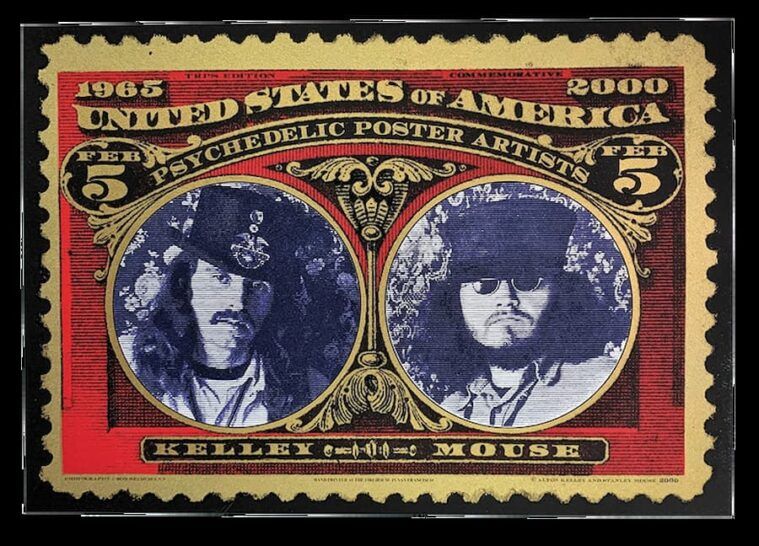
After first meeting in 1965, Mouse and Kelley quickly became buddies, and in June 1966, Kelley brought him into the Collective. The combination of Kelley’s ideas and Mouse’s drawing skills proved to be a powerhouse partnership. Thus began one of the longest, most influential collaborations in art history.
Big Brother & The Zig Zag Man
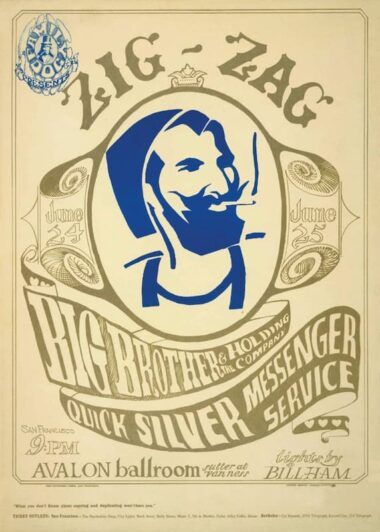
Helms also managed Big Brother and the Holding Company, who began practicing downstairs at Mouse’s studio — an old horse-drawn firehouse in the Lower Haight. It was at one such rehearsal that they first auditioned Janis Joplin. For Joplin’s debut at the Avalon on June 24-25, Mouse and Kelley designed a poster using an image that every stoner recognized: the Zig Zag Man.
Luckily, the rolling paper company viewed the posters as free advertising and never took legal action. But that wasn’t the only legal action they were worried about — they also feared it might draw heat from the police.
“We got really paranoid,” Kelley confessed in a 1989 interview. “We figured, ‘Oh no — now they know we smoke dope!’ And we took what little pot we had and flushed it down the toilet.”
Poster Boys
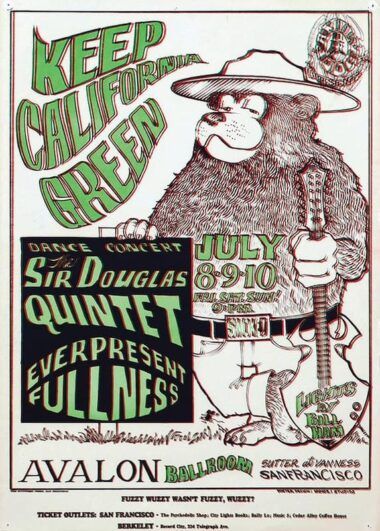
Nevertheless, two weeks later, they did another pot-themed poster: the “Keep California Green” poster featuring a stoned parody of Smokey Bear that was deliberately printed off register, making the image appear blurry to simulate being high.
Over the next year, Mouse and Kelley continued to churn out weekly concert posters, working side by side for hours on end. When not in the studio, they were often at the public library, scouring the art section for ideas.
“Stanley and I had no idea what we were doing. But we went ahead and looked at American Indian stuff, Chinese stuff, Art Nouveau, Art Deco, Modern, Bauhaus, whatever,” Kelley told the SF Chronicle in 2007. It was during one such library visit that they discovered an image that would become their most iconic poster of all time.
Skull & Roses
In the fall of 1966, Mouse and Kelley were seeking inspiration for a poster to promote a trio of Grateful Dead shows at Avalon. While thumbing through a book of 12th-century Persian poetry, they stumbled upon an illustration of a skeleton surrounded by roses and knew they’d struck gold.
“We saw that skeleton and said, ‘This says Grateful Dead all over it — we have to use this!’” Mouse told Rolling Stone in 2022.
Unfortunately, the book was too valuable to check out, so Kelley sliced out the page with his pocket knife. They then copied it, colored it and added the lettering. Alternately referred to as “Skull and Roses,” “Skullfuck” and “Bertha,” it’s now regarded as the most valuable concert poster ever made.
Iconic posters like these secured Mouse and Kelley’s place alongside fellow legends Wes Wilson, Rick Griffin and Victor Moscoso in what became known as the “Big Five” of poster art.
Bye, Bye, Bay-Bay
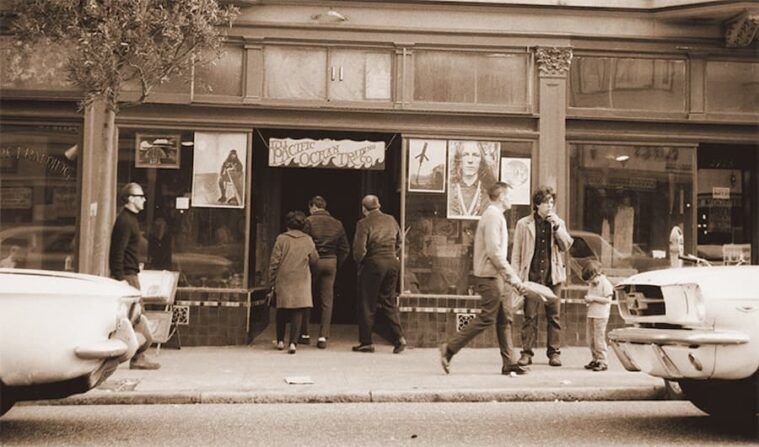
In early 1967, Mouse and Kelley opened a headshop on Haight called the Pacific Ocean Trading Company (POT Co., for short). At first, they enjoyed watching the throngs of hippies parade past their storefront, but before long, the Haight was so overrun that it became insufferable.
“Those first years — ’65, ’66, ’67 — it was really a great neighborhood … Everybody knew everybody. It was really fun,” Kelley told SF Gate in 2007. “By 1968, it had pretty much gone to hell with all the religious nuts coming, the politicos, the junkies, dope dealers … Then everyone got out of town.”
“The San Francisco scene and hippie culture died,” Mouse lamented to Phillips auction house in 2025. “There was racial strife on the streets and it was dangerous to be walking down (Haight) Street. So, I left.”
Mouse’s final impetus to leave came in late 1968 via a phone call from overseas. “Eric Clapton called me and asked, ‘Do you want to come to London to paint my Rolls-Royce?’” Mouse recalled to Phillips. “I said, ‘I’ll be right there.’”
Mouse spent a year in London helping design the cover of Clapton’s “Blind Faith” album and working with the Beatles and Nova magazine.
Album Cover Art
Mouse returned to the U.S. in August 1969 to attend Woodstock with Kelley, after which the duo spent some time working with a studio in Cambridge, Massachusetts, called Intermedia.
“They finally asked us to create a Jimi Hendrix album cover. We worked really hard on it and airbrushed a beautiful scarab,” Mouse told Phillips. “But just as we finished the artwork, (Jimi) died.”
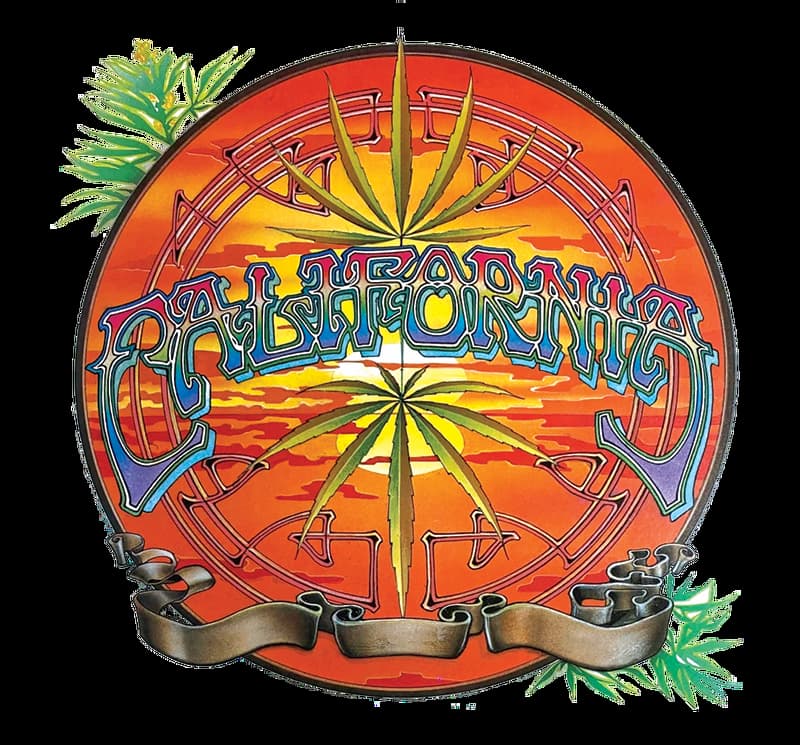
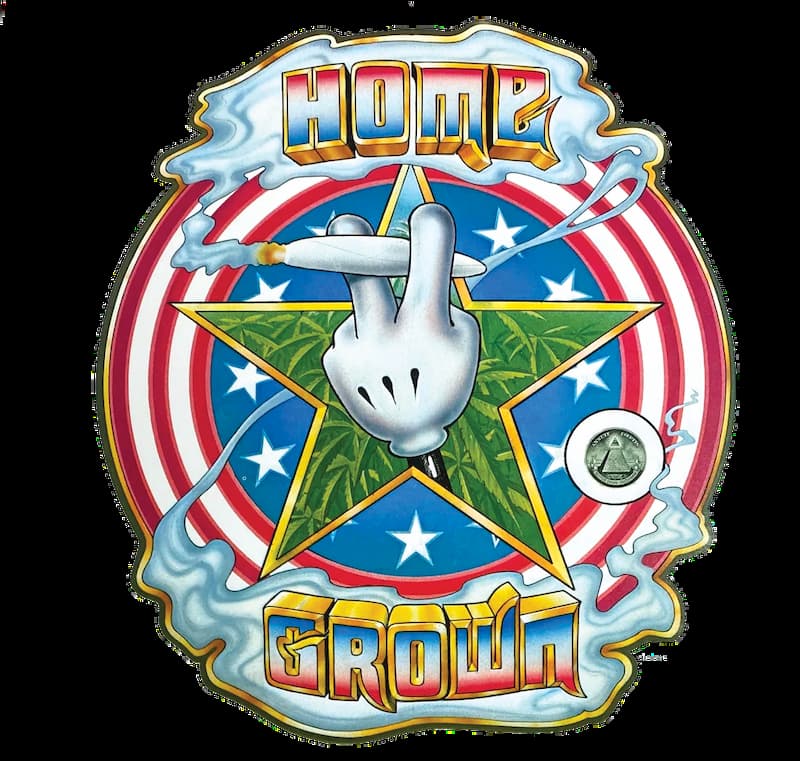
In 1971, he and Kelley returned to California, settling in San Rafael. There, they allegedly borrowed $500 from the Dead to start a new venture, The Monster Corporation. Throughout the ’70s and ’80s, they produced numerous calendars, T-shirts and album covers, including Styx’s “The Grand Illusion,” Steve Miller Band’s “Book of Dreams,” Jerry Garcia’s “Cats Under the Stars” and Journey’s “Departure,” using the scarab art from that unfinished Hendrix album.
While their official partnership lasted around 15 years, the pair remained close friends and collaborators until Kelley’s untimely death on June 1, 2008.
Grateful To Not Be Dead
Mouse himself nearly died in 1993 — slipping into a coma when his liver gave out. He was in desperate need of a transplant, but he didn’t have insurance, and the procedure cost over a quarter million dollars. Fortunately, several bands he’d worked with — including the Dead and Big Brother — pledged to help cover the costs. Thanks to their support, Mouse was able to get the transplant.
“They stuck a nineteen year old liver in me and I woke up and said, ‘Let’s go and get a beer,’” he joked to Seconds.
Mouse had another health emergency three years ago when he suffered a “debilitating stroke” and was “unsure if he will regain the ability to draw again,” per his June 26, 2023, Facebook post. “With all the love, support and physical therapy, I should be on the road to recovery,” he posted the next day. “The outpouring of love has been astounding. Thank you everyone.”
Forever Grateful
Over the past few decades, Mouse’s work has only grown in popularity. In June 2015, Soft Skull Press published “California Dreams: The Art of Stanley Mouse” — a compendium featuring 240 works from his storied career.
His art has also been featured in numerous gallery shows — most recently, in the Haight Street Art Center’s new “Forever Grateful” exhibit that opened last month. The exhibit, which features “Bertha” and even a Mouse vending machine, runs until Sept. 20 before relocating to Golden Gate Park’s Hall of Flowers until Oct. 25.
Now 85, Stanley Mouse stands as one of the last two surviving members of the Big Five and an immortal icon among the psychedelic, hot rod and rock music communities.
“With his mix of irreverent humor, outlandish images, fearless freehand, bold lettering and inflammatory script, Mouse has drawn on the very same resources that also feed the heart of rock music,” the Casterline|Goodman Gallery wrote of him. “Musicians only play rock and roll. Mouse draws it.”
And for that, Mr. Mouse, we are forever grateful.