Evidence Changing Minds in D.C.
In 2021, psychedelic researcher Albert Garcia-Romeu said the next five years of clinical data could help convince leaders at institutions like the National Institute on Drug Abuse and the National Institutes of Health that psychedelics had legitimate medical value.
Five years later, the Johns Hopkins University scientist believes that evidence has begun to do exactly that.
“Did it hold up? It sure seems like it has,” Garcia-Romeu said, pointing to comments from Nora Volkow, director of the National Institute on Drug Abuse, during a recent presentation at the American Psychiatric Association’s annual meeting in San Francisco.
“If I can’t change my views based on evidence, then why do science at all?” Volkow said while discussing psychedelics.
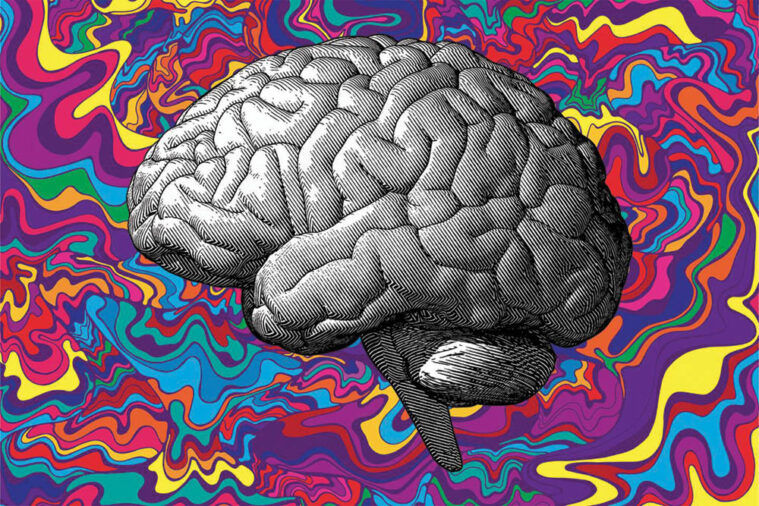
For Garcia-Romeu, the shift represents the result of years of researchers building evidence one study at a time. Early psychedelic trials often involved small groups of 12, 15 or 24 participants. Today, studies are expanding to include 80, 100 and even several hundred participants, incorporating stronger controls and larger datasets.
“There’s a lot more to be done, but I think we got over a big hump,” Garcia-Romeu said. “The first hump was to simply get the money to do these small studies. Then the next hump was to collect enough data in controlled clinical trials and to see if this data still holds up.”
As the evidence continues to accumulate, Garcia-Romeu believes psychedelic medicine is approaching a pivotal moment.
“Once we get that level of accumulation of data, this is where you reach the tipping point,” he said. “These could truly become new medicines in the next one to two years.”
After 14 years studying psychedelics, Garcia-Romeu said it has been remarkable to watch the field move from small research projects in Baltimore toward a much larger scientific effort.
“We’ve got the potential to move from our little studies here in Baltimore to doing them nationally or all over the world,” he said.
Oregon Psilocybin Program Enters its Next Chapter
Nearly three years after becoming the first state in the nation to launch regulated psilocybin services, Oregon is now revealing the challenges of turning psychedelic access into a functioning industry.
More than 30 licensed service centers and hundreds of trained facilitators now operate across the state, offering supervised psilocybin experiences that typically cost between $1,000 and $3,000 — a price point that remains one of the program’s biggest barriers to access.
Advocates continue to push for expanded affordability and broader availability, while regulators focus on refining standards, training requirements and public safety measures.
California Study Offers New Window Into Psilocybin’s Effects

Researchers at the University of California, San Francisco and Imperial College London found that a single dose of psilocybin produced measurable changes in the brain that lasted up to a month.
Published in Nature Communications, a peer-reviewed scientific journal that showcases research across the natural sciences, the study followed 28 healthy volunteers who had never taken psychedelics, using EEG, MRI and other imaging techniques to track changes before, during and after a 25-milligram psilocybin experience.
Researchers found increased brain “entropy” — a measure of varied neural activity — during the psychedelic experience, which was linked to greater psychological insight and improved well-being one month later. The findings provide new clues into how psilocybin may create lasting therapeutic effects for conditions including depression, anxiety and addiction.
Johns Hopkins Explores Psychedelic Therapy For Veterans
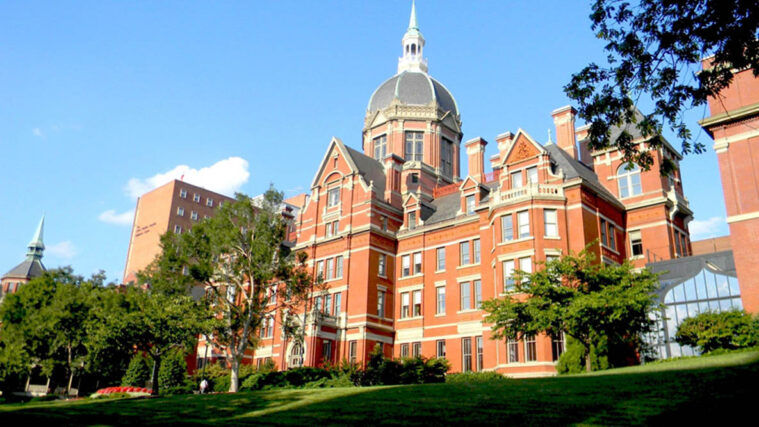
At Johns Hopkins University in Baltimore, Maryland, researchers are examining whether psychedelic-assisted therapy can help veterans living with post-traumatic stress disorder through the PAM-VET study.
The Phase I clinical trial is exploring supervised sessions combining MDMA and psilocybin, alongside psychological support, to evaluate changes in PTSD symptoms and quality of life among military veterans.
The work comes amid an ongoing search for better treatments for trauma-related conditions, with nearly 6,400 veterans dying by suicide in 2023, according to Department of Veterans Affairs data. Researchers hope studies like PAM-VET can help determine whether psychedelic-assisted approaches may offer new options for veterans who have not found relief through traditional treatments.
Massachusetts Eyes Northeast’s First Regional Psychedelic Therapy Pilot
Massachusetts could soon become the first state in the Northeast to authorize a regulated psychedelic-assisted therapy program.
Earlier this month, the House approved H.5576 with overwhelming bipartisan support, creating a five-year pilot allowing up to three licensed mental health clinics to provide supervised psychedelic-assisted therapy using naturally occurring psychedelics.
The proposal now heads to the Senate before potentially reaching Governor Maura Healey’s desk. If signed into law, H.5576 would make Massachusetts just the second state in the nation to establish a state-authorized framework for psychedelic-assisted care, following Oregon’s pioneering psilocybin services program.
During the pilot, participating clinics would collect treatment and safety data to help lawmakers evaluate patient outcomes, regulatory safeguards and whether the program should expand statewide.
Big Pharma Makes Biggest Psychedelic Bet Yet
Psychedelic medicine reached another milestone this month as pharmaceutical giant Eli Lilly and Company announced plans to acquire AtaiBeckley in a deal worth up to $3.8 billion. The acquisition would give Lilly access to BPL-003, an intranasal formulation of the psychedelic compound 5-MeO-DMT currently in late-stage clinical trials for treatment-resistant depression.
Long viewed as the domain of small biotech firms and academic researchers, psychedelic medicine is now drawing investment from one of the world’s largest drugmakers — a signal that major pharmaceutical companies are increasingly recognizing commercial potential in psychedelic-assisted therapies, provided clinical trials continue to demonstrate safety and efficacy.