
Cannabis has a long history of bringing people together in memorable ways. Hollywood has captured such adventurous friendships in comedies like “Cheech and Chong,” “Pineapple Express,” “Half Baked” and countless others. But sometimes, reality can be stranger than fiction.
For Dr. Alexander Dix, one friendship that evolved from the Maryland Cannabis community carried him considerably beyond the space. It carried him to the moon.
Dix spent $5,000 to send his own Cannabis-inspired artwork into space, an ode to his friend Erick Gravel, a Maryland Cannabis photographer whose work Dix admired and whose generosity became part of Dix’s own Cannabis journey. Gravel died in January 2024 after a lengthy battle with Stage 4 lung cancer.
Dix is not exactly a casual Cannabis enthusiast. A clinical pharmacist who moved from Ohio to Maryland in 2018 specifically to enter the emerging medical Cannabis industry, he has spent years working directly with patients, educating pharmacy students and serving as clinical director for dispensaries across the state. His interests extend into psychedelics, plant medicine and alternative approaches to healing.
Dix’s path into Cannabis began while he was still in pharmacy school. During a trip to South America, experiences with ayahuasca and San Pedro cactus profoundly changed his outlook.
“I came back to finish pharmacy school with the attitude of ‘I’m going to do exactly what I want to do, I’m not going to follow the traditional path,’” Dix said.
After graduating in 2017, Dix worked as a clinical pharmacist while communicating with Cannabis companies. A year later, he accepted an offer to become clinical director at a Baltimore dispensary and has been working in Cannabis ever since. It was through that work that he met Gravel.
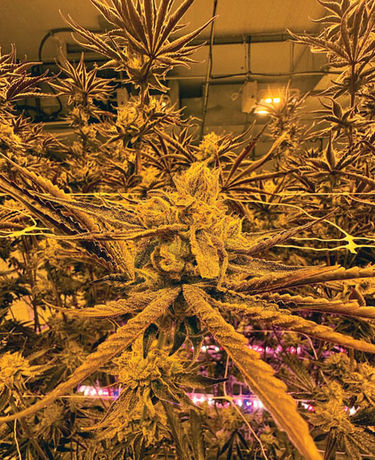
Dix was working at his first Maryland dispensary when he encountered the photographer, who operated a smoke shop about 2 miles away with a business partner. Gravel, whose social media handle was MDGreenery, photographed Cannabis flower and concentrates for calendars he sold at dispensaries around the state.
“He was a really big guy in the Cannabis community,” Dix said.
Gravel was also a patient at Dix’s dispensary. When Maryland began allowing home cultivation, Dix bought seeds from him. Gravel gave him several other strains as gifts, including Black and Blissful, obtained from a local grower in Baltimore County.
“We had a pretty good relationship,” Dix said.
Dix remembers helping his friend access RSO at the dispensary, where he was pursuing the Rick Simpson protocol while battling cancer. After Gravel died, the friendship stayed with him. So did the seeds.
Dix had also begun collecting nonfungible tokens, unique digital records that can be used to establish ownership and digital authenticity of a digital or physical item. For Dix, they were less about speculation than collecting, and one of them suddenly took on a different meaning.
He had one idea in mind.
“I always thought, you know what? Like, I have no purpose in keeping these NFTs,” he said. “I envisioned myself auctioning the one with the leaves because that was the strain that he sold me.”
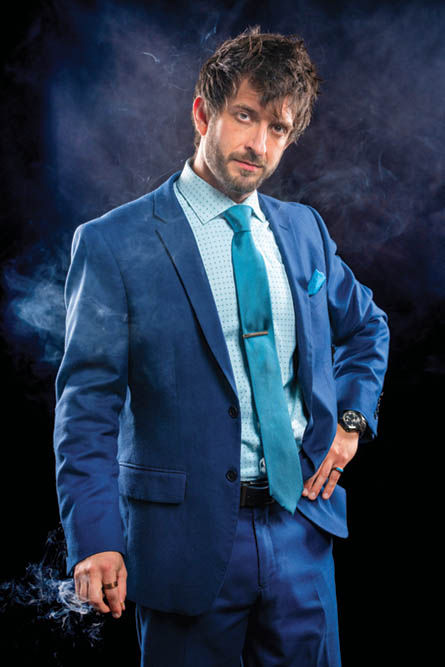

The photograph was of Black and Blissful, the strain Gravel had given him. Dix imagined selling it and giving part of the proceeds to Gravel’s family.
It was an idea born from grief, but another of Dix’s interests would take that impulse in a stranger direction: off Earth.
Dix had been fascinated by space since childhood. Growing up in Cleveland, he built model rockets through the Adventure Guides program and remembers second and third grade as a time when rocketry was a huge hobby of his. He once imagined becoming an astronaut.
Years later, when an opportunity arose to send digital files to the moon, Dix saw a chance to combine that old fascination with another lifelong interest: Cannabis.
He created “Medicine on the Moon,” a digital artwork made on an iPad with Procreate. The image depicts a green medical cross on the lunar surface, with Earth hanging in the distance.
“The intent behind that was to not only educate everyone on Earth about Cannabis as a medicine and how to use it intentionally, but to take those same lessons and take them into outer space,” Dix said, alluding to his work being of potential benefit to extraterrestrial life — a belief he holds to be true.
Dix’s submission joined other digital files on Copernic Space’s first moon mission, which launched aboard Firefly Aerospace’s Blue Ghost lunar lander in January 2025 and reached the lunar surface in March. What actually made the journey was surprisingly ordinary: digital files stored on physical-memory hardware. The blockchain token intended to represent the artwork had not yet been minted, raising a strange question: What does blockchain add to something that has already traveled 240,000 miles and landed on the moon?
Dix isn’t a blockchain expert. His interest began as a hobby and grew from the possibilities he saw for Cannabis.
“I actually thought NFTs were the stupidest fucking thing when they first came out,” he said.
Then something changed.
“The collectable aspect made NFTs fun for me,” he said.
For Dix, the appeal is not simply owning a digital picture. His work educating pharmacy students helped expose him to another potential use for blockchain. He took students on weekly tours of Cannabis growers, processors and testing laboratories, where he learned that testing data, including THC, terpenes, heavy metals and pesticides, could potentially be altered by a human being.
That raised questions about provenance and trust.
Dix imagines Cannabis products carrying QR codes linked to certificates of analysis, with blockchain providing a permanent record of that information. He also envisions digital collectibles tied to Cannabis products, giving consumers something to collect while learning more about the strains they buy.
It is a decidedly Dix-like vision: part pharmacy, part Cannabis culture, part technology and part playground.
And if he gets another chance to send something to the moon?
“Fuck yeah,” he said. “I would love to take it further.”
For the boy who once built rockets in Cleveland, the journey to the moon fulfilled an old fascination. For the man who lost a friend, it became something more. A photograph, a handful of seeds, a friendship that began in the Maryland Cannabis community and somehow ended up 240,000 miles away — a friend with weed is a friend indeed.