Tastes Like Home
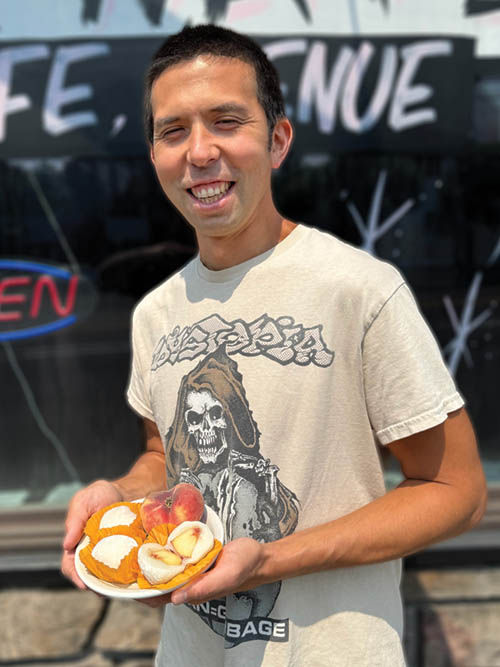
Tomomochi is a Portland-based pop-up known for serving Hawaiian and Japanese-inspired goodies like vegan mochi, haupia pie, pickled mangos and mochi doughnuts. Operated by Camden Tomomatsu, the venture was started as a way to recreate some of his favorite childhood foods from growing up in Hawaii.
“I’ve been doing it for about 3 1/2 years,” Tomomatsu explained. “I just kept getting this idea every time I went to an Asian summer market where people were vending their goods — like it would be so cool if someone was serving mochi like in Hawaii.”
Hashing Out Skills
Tomomatsu’s experience in the food industry — and in processing ice water hash with Cannabis companies like Nelson & Co. Organics — has lent itself surprisingly well to making treats like his signature daifuku fruit mochi.
“Hash actually taught me how to make the bean paste really well because it’s the same process,” he said. “Meshing beans that are cooked tenderly, then you get them out of their skins and filter the water so all the fine protein particles fall to the bottom. … It’s like washing and making hash, but out of beans.”
Parallels between solventless processing and mochi making are present, from the discernment in sourcing of fresh inputs to the dialing in of moisture levels in mochi dough or freeze-dried hash.
“When I’m making hash, washing and determining what needs to be going on, it’s a lot like line cooking for me,” Tomomatsu noted. “It’s really similar in the fact that things need to happen in a certain time, you need to be able to smell or feel the difference, you might need to pivot.”
Sweet Summer Daifuku
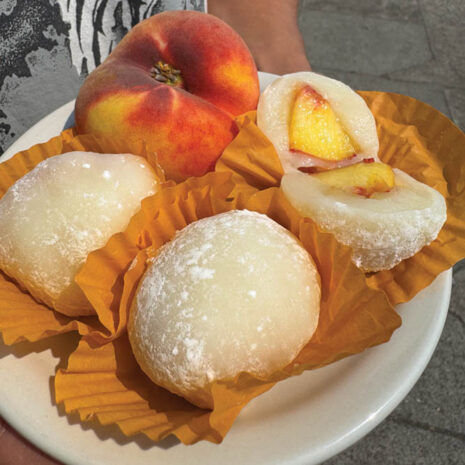
Traditional daifuku is made from a rice cake (mochi), bean paste and a sweet item (fresh fruit, in this case). Tomomatsu utilizes coconut milk and coconut fat to make his mochi, meaning his treats are vegan and gluten free.
“Today, we have donut peaches; this year’s been great for donut peaches,” he noted. “I like to have white bean paste for summertime fruits. It’s a little bit lighter and goes well with most summer fruits.”
Formed into small spheres of dough, the outside of the mochi is as soft as a pillow with a squishy, malleable texture. The smell of fresh peach mingles with the subtle starchiness of the rice flour, coalescing into a mouthwatering fragrance. An initial bite unleashes an explosion of flavor from the filling, with the ensconced juice of the donut peach flooding the taste buds in succulent nectar. At its core, the daifuku is light, tart and sweet, personifying the taste and feeling of summer in every luscious nibble.
The textural balancing act and depth of flavor complexity highlight Tomomatsu’s craft in turning deceptively simple ingredients into elevated works of edible art.

Popping Up in Portland
Tomomochi can be found popping up in a variety of places, from Lan Su Chinese Garden to Portland State University, but Tomomatsu is most frequently at Black Water bar, a home base for his culinary creativity. He also partners with restaurants, like GrindWitTryz, and local organizations, like The White Lotus Foundation and Asian Pacific American Network of Oregon, so it’s not uncommon to find him vending at street markets, cultural fairs and Cannabis events around Portland. Check his Instagram to see where he is and what he’s serving up.
Tomomatsu encourages readers to get out in the community and share some food culture.
“Buy local fruit. Ask people questions. Connect with the people that grow food,” he urged. “You’re going to learn more about where you live, about the things that give you nutrients, and you’re just getting a better experience.”