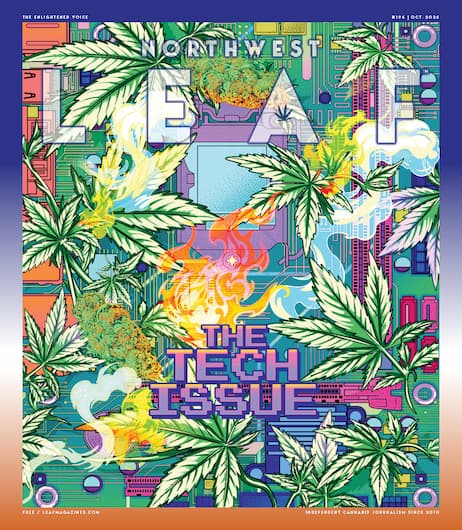
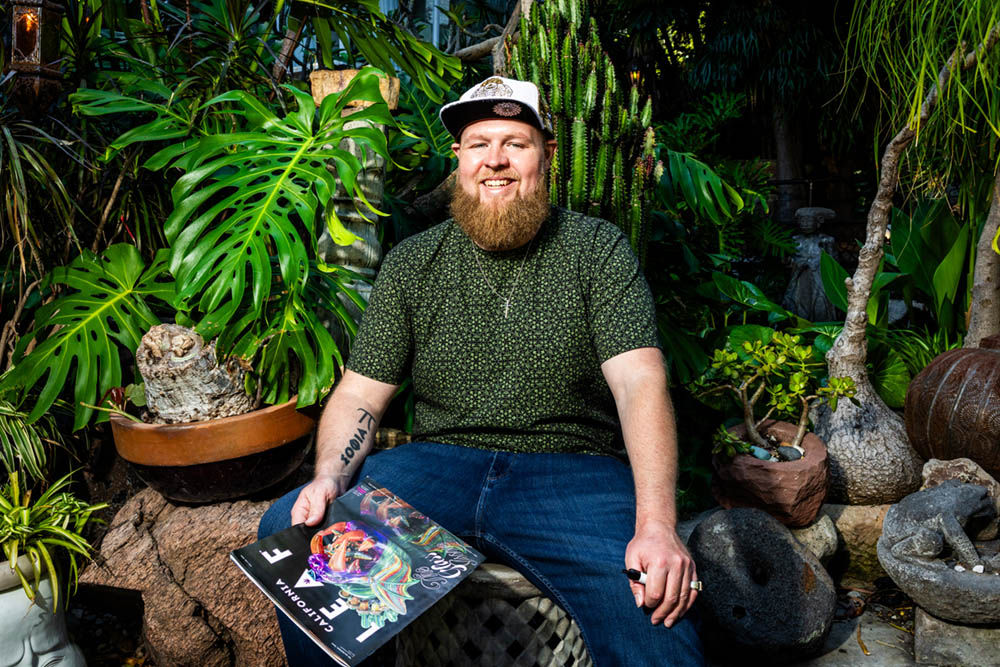
Thanks for picking up The Tech Issue of the Leaf!
In my fourth-grade year of elementary school, I was selected for a pilot program that integrated technology into the classroom. Our group of 12 students selected from fourth, fifth and sixth grades shared a classroom where every desk had a computer, optional homework was self-reported and there was very little traditional teaching.
This was the late ‘90s, when having a computer lab in the school was a big deal, and our classroom of kiddos learned how to write HTML, build websites and repair and maintain servers and the computer lab, all without structure or the regular rules of an elementary classroom.
Our teams built websites for a competition; mine was on sharks, and I’ll never forget the excitement of joining a livestream (before that term existed) to watch the awards. The amount of hope for technology, for education, for the future of humanity was so high at the end of the millennium. That single pivotal year taught me to embrace tech, although I probably would be much wealthier if I’d chosen to pursue ways to write code instead of ways to make gravity bongs in my later educational days.
Today I read headlines about Ukraine winning the world’s first naval drone battle or see the demonic goat drone by Satyress that will be armed with an array of weapons, and I can’t help but feel like we have failed technology. Or perhaps, it has failed us.
The pursuit of better has built Western society, capitalism has lifted the entire world’s living standards, and generally, life on Earth is safer and easier than it has ever been, from the First World to developing nations.
But that’s not what the media zeitgeist says. The captured mainstream propaganda wants us living in fear, dividing ourselves and giving the government more control over our lives. We’re building our own AI cages, our own “Matrix,” and we’re voluntarily ushering in an era of complete control.
We don’t realize it, because Waymo is only on a few streets right now, but the tech-surveilled robotic revolution has already come. Imagine Flock cameras and goat drones enforcing the coronavirus lockdowns? This is the reality in China, where a social credit score integrated into phones determines whether someone can take a train or plane. Or in Britain, where 60,000 people have been arrested in five years for social media posts — tracked down and thrown in jail while recorded rape and sexual offense cases in the UK have reached historic highs.
Imagine a world where weed wasn’t legal yet, or the current day where psychedelics are still illegal, and how these tools might be used against the gifts God gave us to enhance consciousness, spirituality and community. We must unite as a species who share one planet, and resist the techno-takeover before it’s too late.
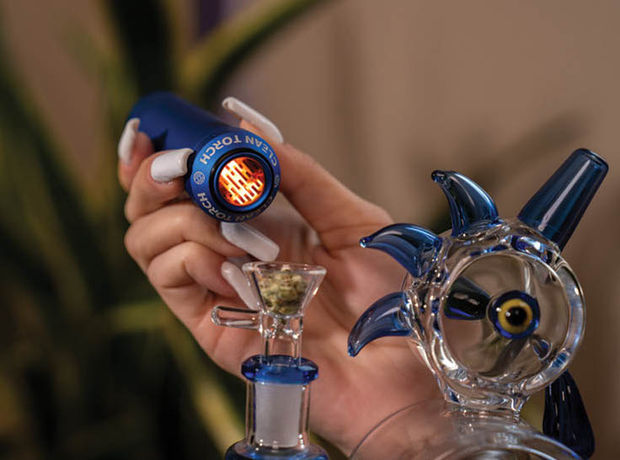
There’s only one place where tech is really making lives better, and that’s in the weed world. We don’t have robots serving us dabs (yet), but the newest e-rigs are pretty sweet. Maybe someone can serve Peter Thiel a face melter, then instead of trying to bring about the end of the world, he and the rest of our billionaire overlords can get to work making the world a better place.
The same plant that I believed could change the world in 2010 still can, but we’re running out of time. After all, you can’t smoke or eat an AI-generated image, but an AI data center will consume anywhere from 300,000 gallons of water per day in a small town to 5 million gallons in a big city. This water is contaminated with chemical additives, high mineral concentrations, thermal pollution and PFAS (forever chemicals), and is pumped right back into our ecosystem.
In the end, future generations will surely lament that we could have watered a lot of plants instead.