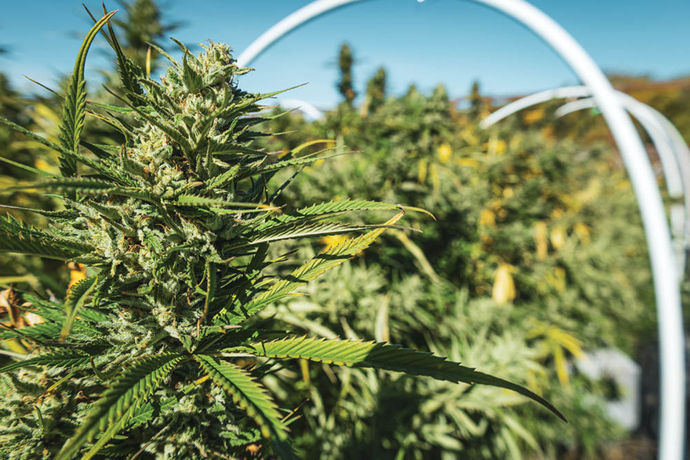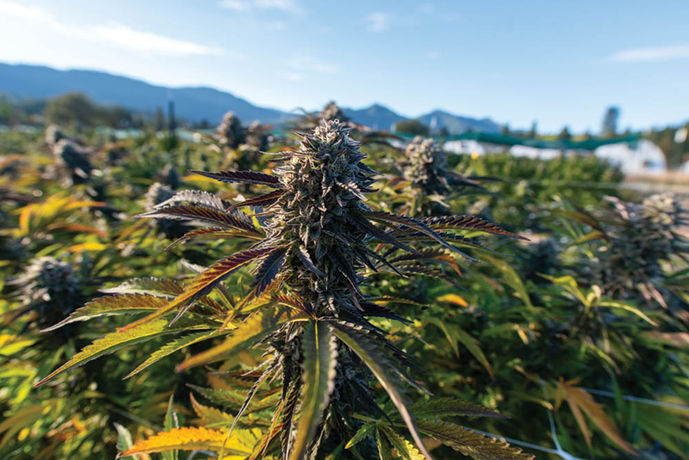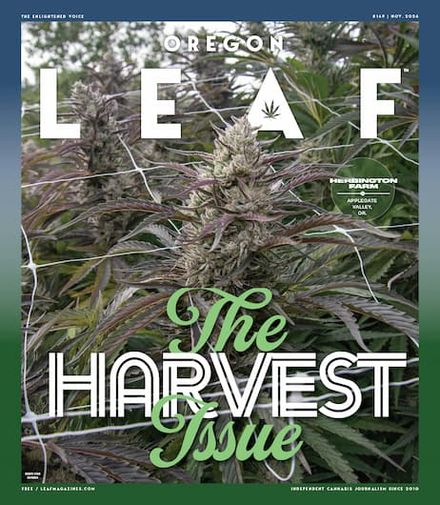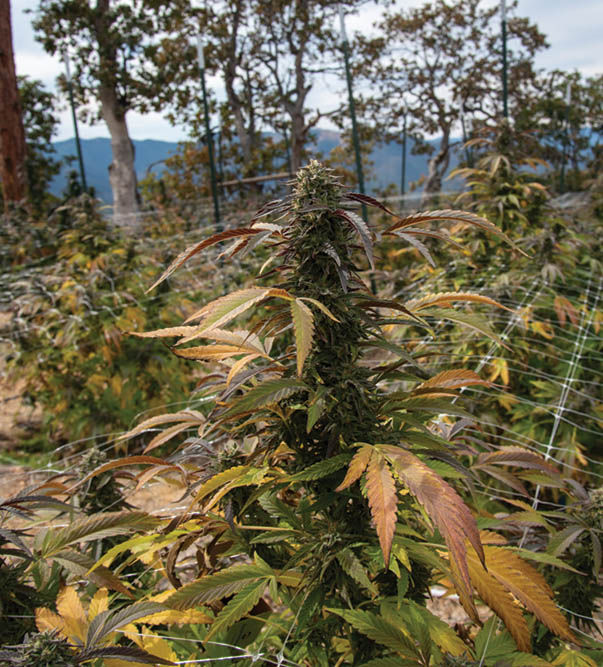
Rising high above the rolling hills of Southern Oregon’s Applegate Valley, a living-soil garden is perched on the literal mountain’s edge, thriving in a microclimate that’s more than just a name; it’s a vision of sustainable craft Cannabis.
All outdoor gardens are picturesque, but few are set in as unique a setting as Ridgeline Reserve. Climbing the dirt roads to the farm pushed our truck and trailer to the limit. Then we got in a farm truck for the real steep climb, squinting at the back of the front-seat passengers’ heads as we crawled up a serious grade to reach the ridge. Other than power for cameras and pumps to move water, the raw ridge hasn’t been landscaped or altered in any way. The areas where plants thrive in dirt were cleared naturally by fire and storms, as evidenced by the trees interspersed with Cannabis plants.
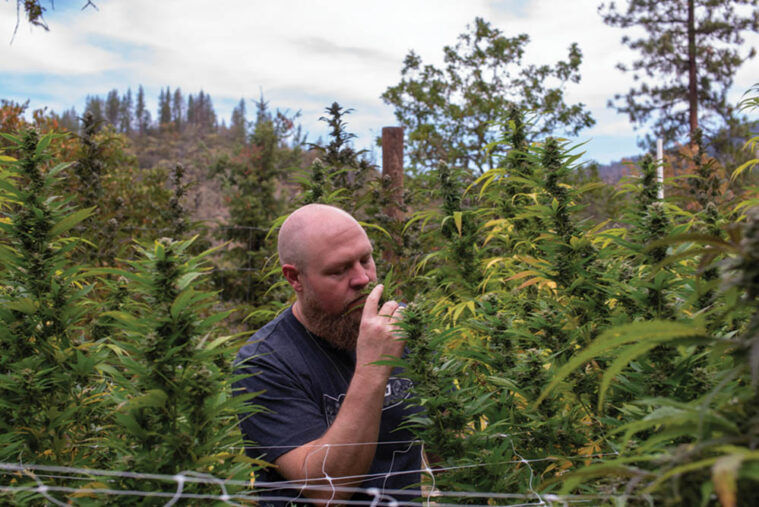
The soil is loaded with natural minerals like gold and dissolved quartz, with a significant herd of wild deer roaming over the 100-acre property, their presence seen on a few nibbled plants from a gate being left open. But instead of being angry, it’s all good vibes with fauna and flora on the ridge — except for squirrels, for which a high-pitched alarm is triggered whenever we enter or leave a garden area. For owner and lead grower Mike Friedlander, preserving the natural environment is equally important to using the bounty of sun and soil to earn a living.
“Cannabis is a tool that can be used to open people’s minds, to be more in tune with nature and what they put into their body. This plant is medicine; it’s the truth,” Friedlander said passionately in an interview with the Leaf. “I’ve studied a bit of plant science. We want to use sound horticultural processes and look out for the environment, to minimize our carbon footprint. We use solar panels for the majority of greenhouse electrical use, sourcing locally for compost and worm casting, using organic inputs, trying to minimize the amount of heavy metals that we introduce into the soil and have a good understanding of what’s going on in the soil in different stages of the plant’s life.”
Staying in tune with the plants from planting in spring through summer and into fall is a months-long process of watching, adjusting and repeating.
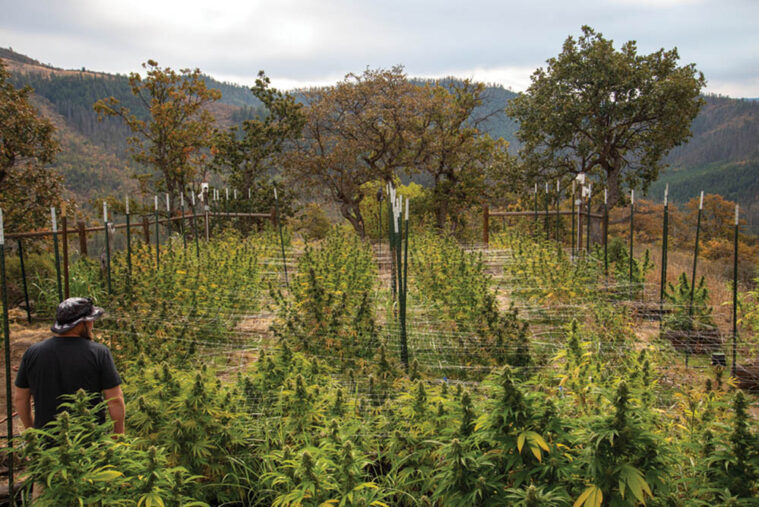
“We search to elicit the response we are looking for, and get the plants to senescence without overloading them. With the right microclimate, we have a broader spectrum of varieties and can cast a broader net of strains and genetics, which gives us a variety of flavors for our rosin production. The regional advantages also allow for a late growing season, with plants on the upper ridge staying in the dirt until Thanksgiving,” Friedlander said.
While being atop a ridge might seem exposed to the elements, it actually acts in the plants’ favor, creating a unique environment for outdoor Cannabis.
“We’re in the rain shadow of the easternmost peaks in the Applegate Valley, so kinda like Rogue Brewing does hops in the rain shadow of Mount Hood, we’re in this micro-rain shadow. This region is good for depping and certain cultivars, and longer-flowering strains prefer it up on the ridge where they get all-day light. There are temp inversions at the end of the season, and so particular topography causes a heat dome atop the ridge that keeps it warm late into the year and helps elicit the response that we’re looking for, which is late light and a long season.”
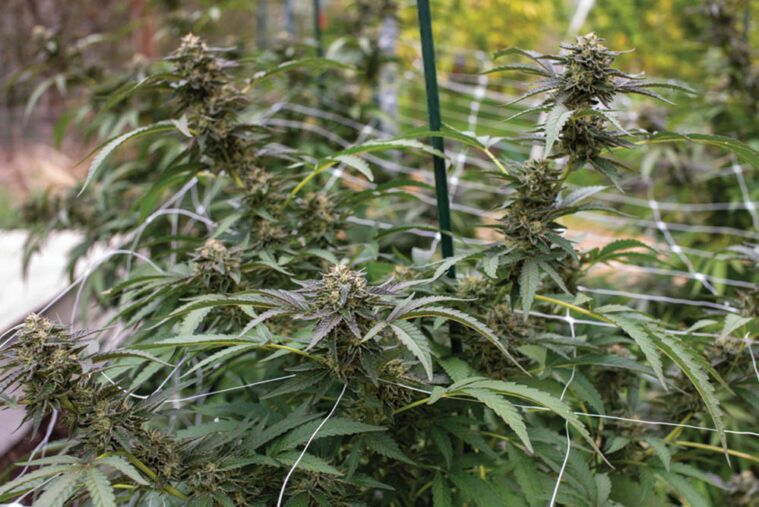
Growing in multiple places on the property allows for different cultivars to shine, be moved or be cut season by season, depending on which environment they like the most.
“We have a nice greenhouse, and the upper and lower ridges, so we can look and determine what part of the property is best suited for that cultivar,” Friedlander explained. “I’d like to think that getting to know each plant is important. Certain strains I’ve been running for 10 years, and we’re only getting better at understanding their needs and how they want to be cultivated, and what their life cycle looks like. Where they’re planted, how they’re planted, planting density, how they’re supported and trestled and what water and their needs for irrigation are. Plus, understanding the plant life cycle and nutritional needs, because each strain is different.”
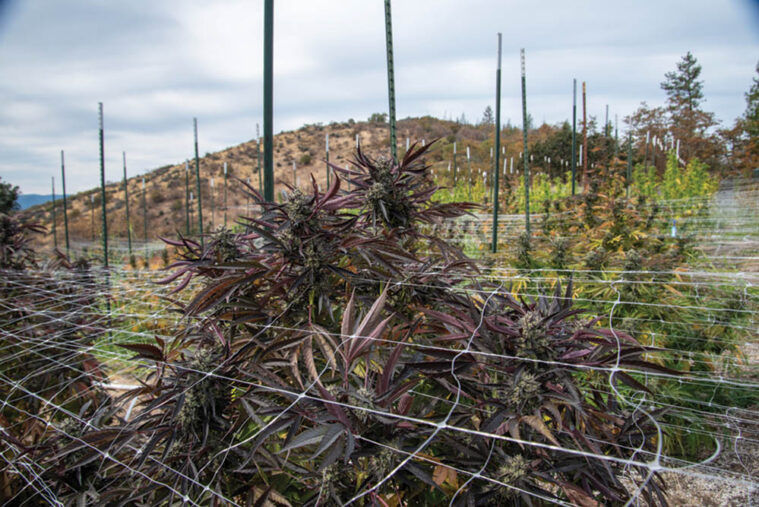
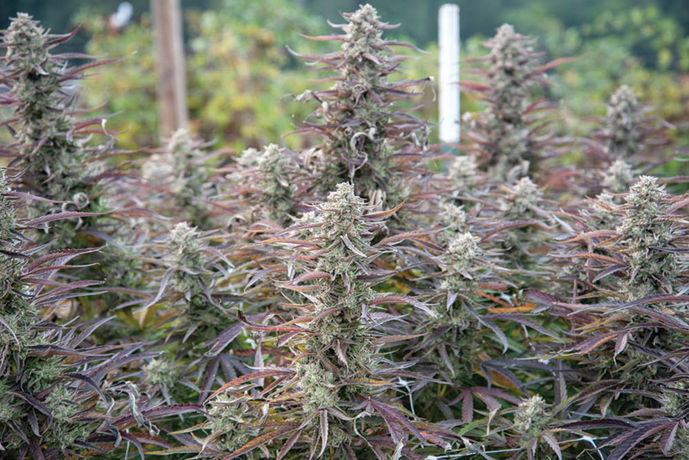
While the ridge can support monster trees, this year, the Cannabis plants are all small-to-medium height by outdoor standards. With less surface area to grow, the plants are sticky and shiny with terps, with sweets and sours and gassy-funky deliciousness filling the air in each row.
“Less weed is probably better weed, oftentimes. We’d like to think that more can be done just as well; it doesn’t tend to work out that way. It seems people are trying to fix a wheel that isn’t broken by growing indoors. Why are we trying to manipulate and change how the plant grows, when we can do better and be more in tune with the plant, hone our craft and be content with what we can get out of it instead of trying to push it too hard? That’s where things get out of balance, trying to do too much,” he pontificated while looking off into the distance. “Outdoors is how Cannabis was intended to be done. Nothing can outdo what has existed for thousands of years, and the flora and fauna and the influence on the plants grows the best medicine.”
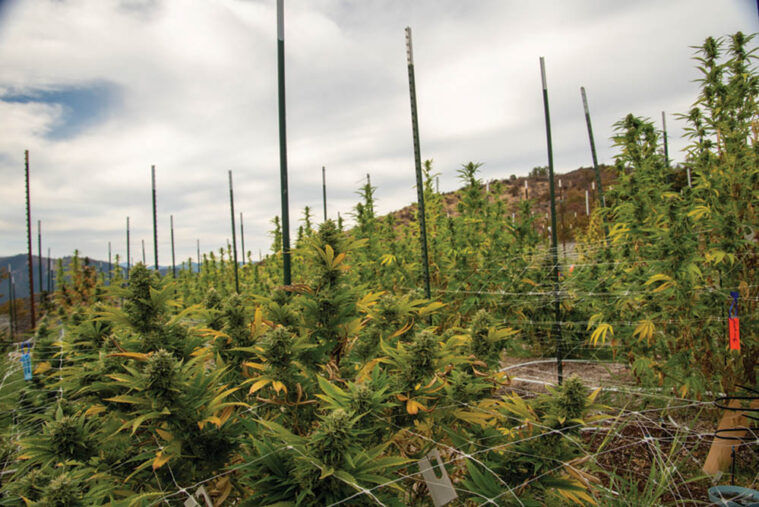
Friedlander stopped and looked off into the distance, and from his dusty truck to full sun gear protecting his skin from the rays that feed the plants, it’s clear he’s spent a lot of time on the ridge, caring for his flock of strains, loving each one as a good shepherd does.
“It’s hard to use a one-size-fits-all and get the plants to express themselves in the best manner that we’re looking for. We want to get really terpene-rich, exceptional Cannabis, and that takes dialing in each cultivar,” Friedlander shared. “Being here for 13 years, I’m just starting to tap in here into what the plants want here on the property, and I’m sure there’s so much more to learn. And that comes from being content, not complacent, but not overzealous. You have to learn from others and how they work with this plant, and the more you can glean and take from that, the better that you can formulate your own recipe for success.”