The early October sun illuminated the cloud billowing around Eric Martin’s tanned face, making it hard to tell the difference between the smoke and the wisps of hair sticking out from underneath his Most Wanted hat.
“Hey, here we go,” Martin said, pausing in place and sharpening his senses. First, there was nothing. Then came the faint “thup, thup, thup” of the most hated birdsong in Northern California. We all froze, craning to listen.
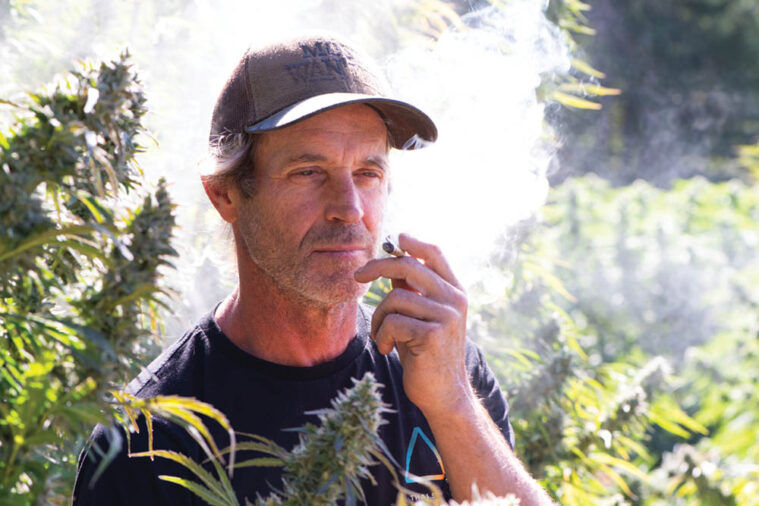
After a moment, his shoulders relaxed, and he took another pull from the joint.
“That’s the Coast Guard, though,” he said.
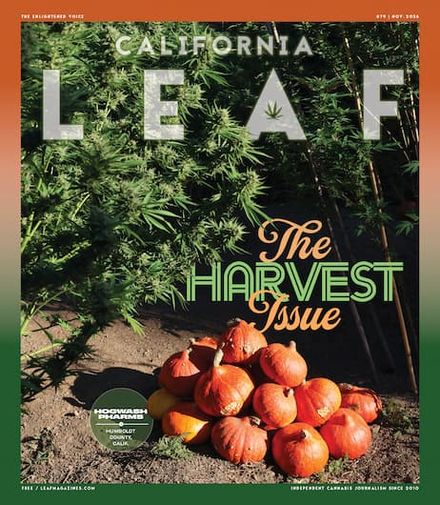
It was a sequence that unfurled multiple times on that fall afternoon at Hogwash Pharms, on the property where Martin has lived and cultivated for more than 30 years with his partner, Jill McClure.
Now in their 50s and seeing the erosion of integrity in the industry, Martin and McClure have created the Most Wanted brand to preserve and celebrate the heritage, history and craft of more than half a century in Southern Humboldt and the Emerald Triangle. Theirs is the story of Humboldt Cannabis, of bootstrapping, homesteading renegades and outlaws. It’s the story of hiding from helicopters and fighting for a way of life.
A Sprout
Martin moved up to Humboldt County from Huntington Beach with his parents when he was 11 months old.
“They wanted to move us out of what they saw coming, as far as the city culture, and took us up to the country where there was about 200 inches of rain a year. It all started with my mom selling 3 pounds of weed in a rainstorm and starting the family enterprise, back in 1973,” Martin said.
He points into the distance.
“We lived literally right on the other side of that next ridge,” he said. “We had several properties around that area where we were actually cultivating plants, pretty large volumes of plants. And that’s where my dad started the bulk soil business. We were selling bulk soil at the top of our driveway, and we were growing lots of weed all over the property, too, which seemed like it drew a little bit of attention. And then by ‘80, ‘81, he started the garden supply on the Sylvadales Gardens property, which became a lot more work for me and my brother because we were indentured to making the family homesteads work, and that dream of living in the country come true.”
Resilient Teens
By the early 1980s, Martin and his brother were basically handling all major labor on the grow.
“My dad would drop us off with our little hip sack, and we’d have a little jar of peanut butter and our clamp tool and some couplers and some different things to be able to fix broken water lines,” he said.
It was an American pastoral upbringing, if you don’t count the gunships.
“This was ground zero for the fucking war on drugs when they first came in,” Martin said. “The first military gunships by Vietnam air pilots in the early ‘80s that came across the farm … here they come with a belt-fed machine gun hanging out the window, all dressed in camo, and you’re just a little kid. What in the fuck is that?”
Martin gestured in front of us at the close airspace just over where one of the Martins’ fields sits now.
“It was right here, right here, not way over there flying by,” he said, emphasizing the extreme close proximity of the airborne war machine. “Looking at you with the fucking machine gun. You’d more than feel it. Back in the day we used to grow big plants, and we’d throw the hay on them, and we’d take all the cut straw, and we’d throw straw over the top of them, and they’d just look like these big straw piles, and then we’d hide in them, and the helicopters would come over, and fucking start blowing the straw off and they’d fly away. We’d get back up and throw more straw over the fucking weed to kind of cover it up and break it up so it wasn’t just so bright green, and we’d hide back under the plants in the hay piles, under the helicopters.”
Hiding from militarized law enforcement came with a side of constant guarding against trespassers of all kinds.
“You’re setting booby traps as a young kid because that’s just how the culture was kind of metamorphosing in the early ‘80s. … Guard your shit and don’t talk about your shit. We weren’t allowed to have friends over unless they were the direct next-door neighbor that lived a mile away on their own properties. … My dad would have those Vietnamese military ground sensor probes, so they pick up acoustic vibration, like raindrops or quail walking. And he’d set those, and they’d come to a short-band radio at the house from the garden sites around the properties. And you’d hear deer, and it would be this little ‘beep, beep, beep, beep, beep, beep,’ and it would come through the radio. And every patch had a different sequence of beeps that it would have. And we’d have a graph where we’d listen to the beeps and be like, ‘Oh no, that sounds like rain.’ You would learn how deer walk. They take a few steps and then they pause, they listen, and they take a few more steps. Humans: step, step, step, listen, step, step, step. They’re kind of a little bit like deer, but they have two less feet. So there’s a little less ‘beep, beep, beep.’”
In Full Flower
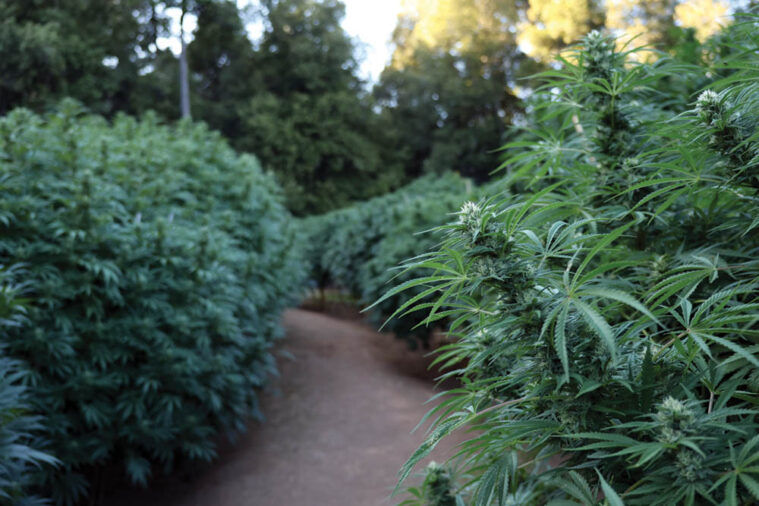
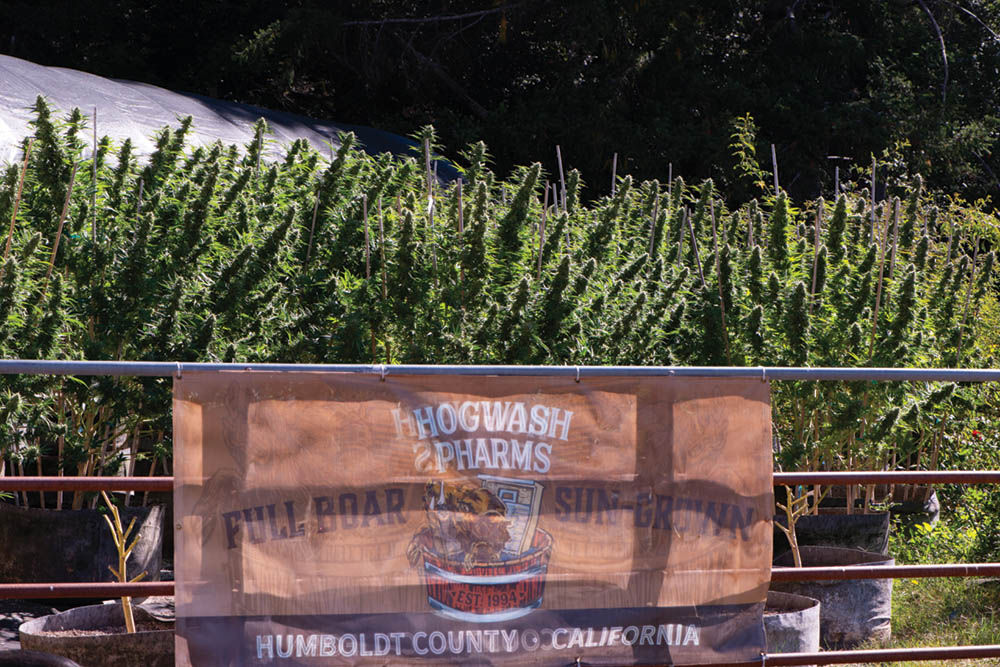
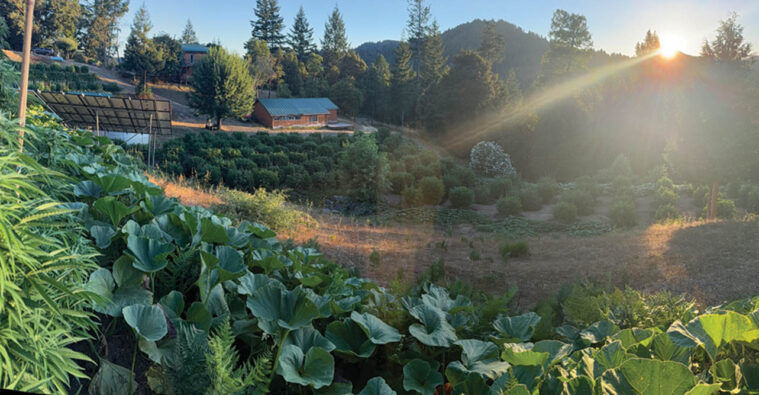
Looking around Hogwash Pharms, you wouldn’t guess that it all grew from such adversity. The property is a labor of love, sprouted from Eric Martin connecting with McClure, who moved in with him during the 1993-94 season and started building a life powered by the plant.
Coming from a liberal arts education peppered with political protests, McClure offered a counterpoint to Martin’s history on the farm.
She graduated high school in 1985, and after a year in Santa Cruz, decided to come back to Humboldt to grow weed.
“My goal was just to get my own homestead,” she said. “And then eventually, yes, a couple years later I met Eric, and he was like, ‘Oh, I’m building a house. I have property here. You can have this patch over here. You can grow, and you can grow on this other patch with my land partner’s girlfriend.’ So that first year in ‘94, I had my own patch.”
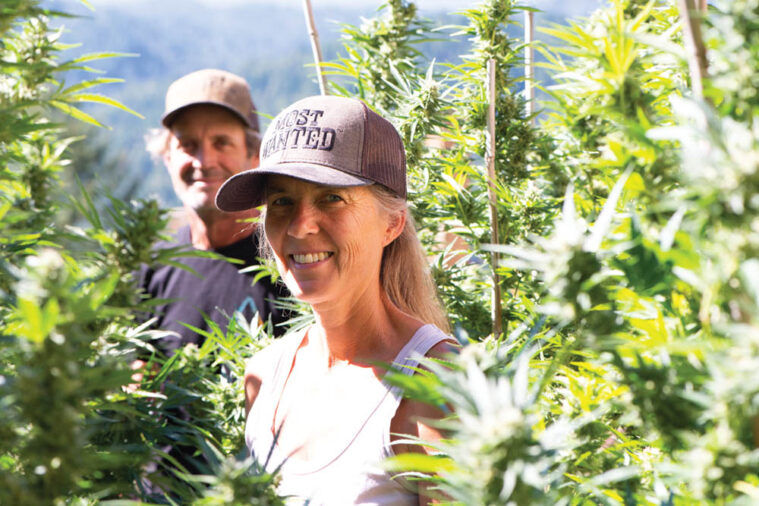
In the years since, the two have learned everything there is to know about building and maintaining their farm, from construction to electrical, to maintaining the roadways leading to the remote, hard-to-reach property.
They spent two years collecting the river rock to construct their hardscaping, stairway and patio fireplace outside their main house.
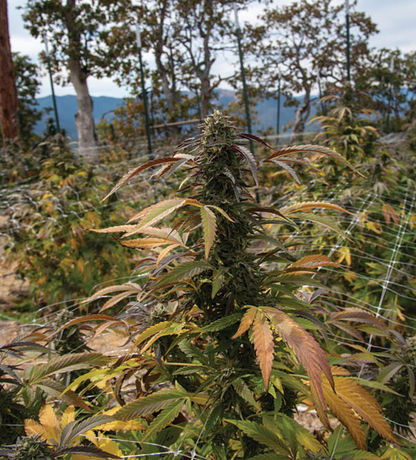
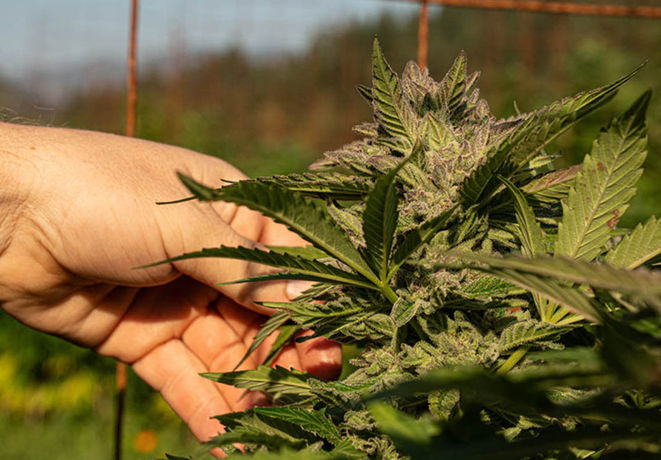
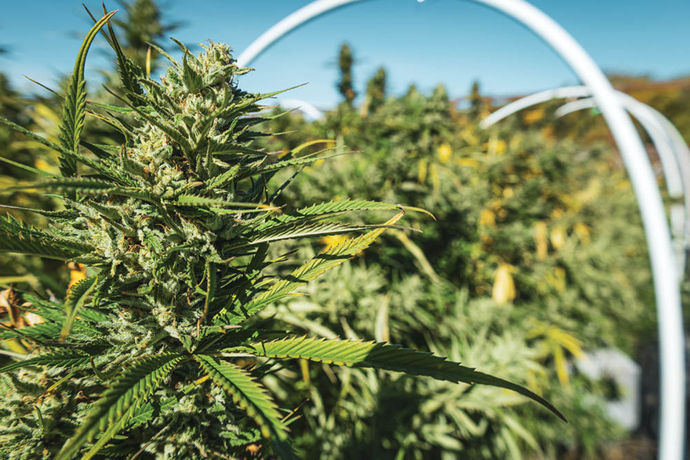
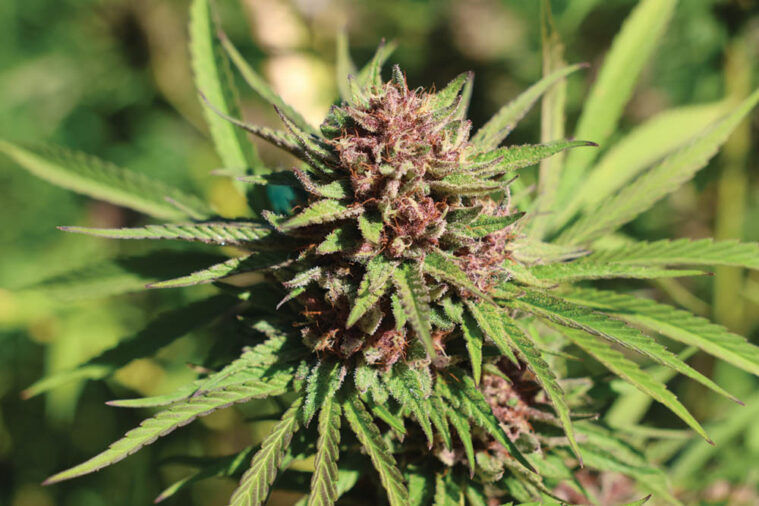
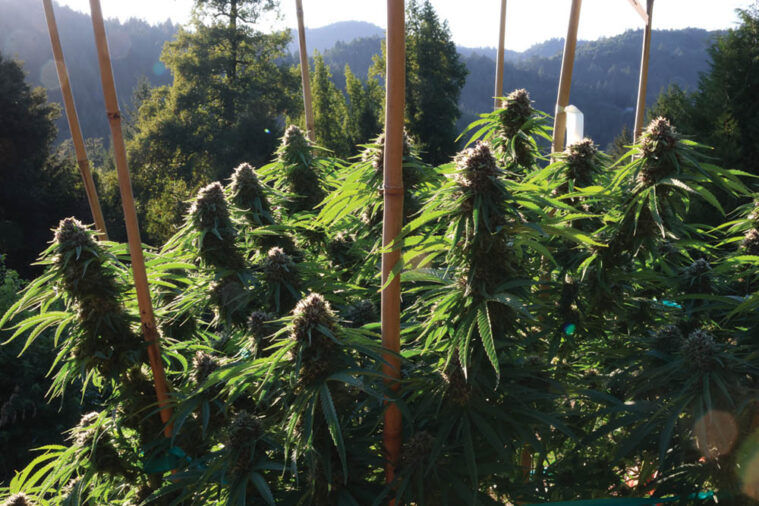
Their three primary grow sites comprise the majority of 22,000 square feet of grow canopy, where they recently harvested around 40 strains to take to market from the 2026 season.
It’s a far cry from the harsh landscape of the overt drug war. Now they battle market realities and industry regulators who could fine them, or worse, for a misplaced slip of paper.
Though on that harvest-time afternoon in early October, it’s easy to tell they don’t plan on going anywhere. Martin took a beat, surveying the entire valley from the front deck of one of the many houses he built with his own hands.
“This is what I call the million-dollar view of the billion-dollar industry,” he said. “These are the hills of Southern Humboldt.”