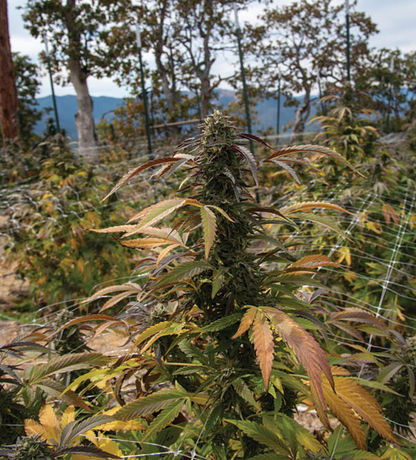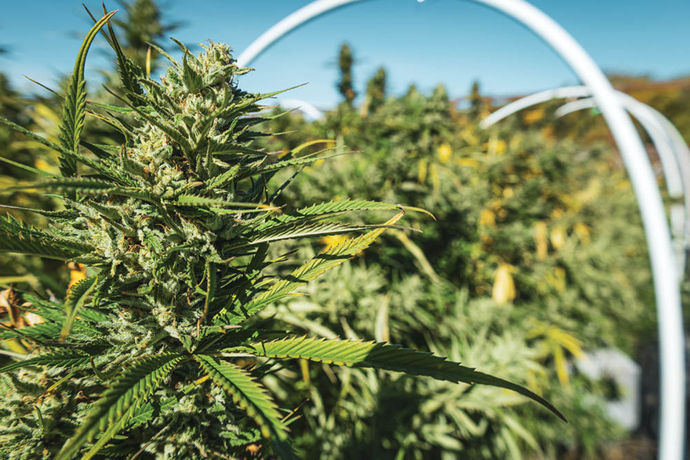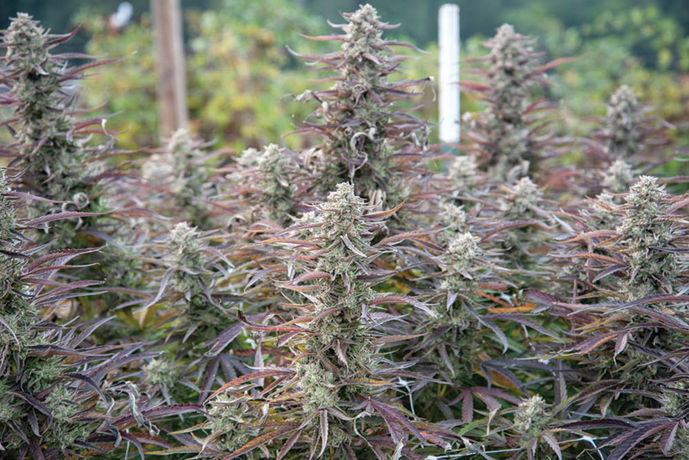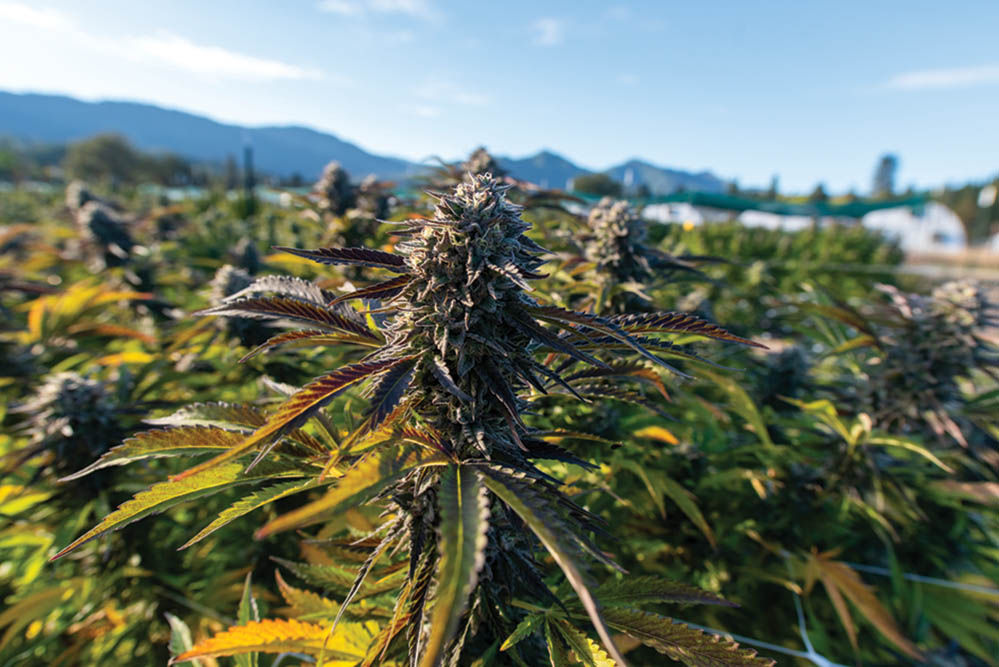
The aroma of thousands of fresh Cannabis plants rises in the late afternoon sun, painting golden air with terps in a cacophony of gases, sweets and sours that delight the senses as cows moo and grasshoppers chirp in a magical place worthy of the name Shangri-La Farms.
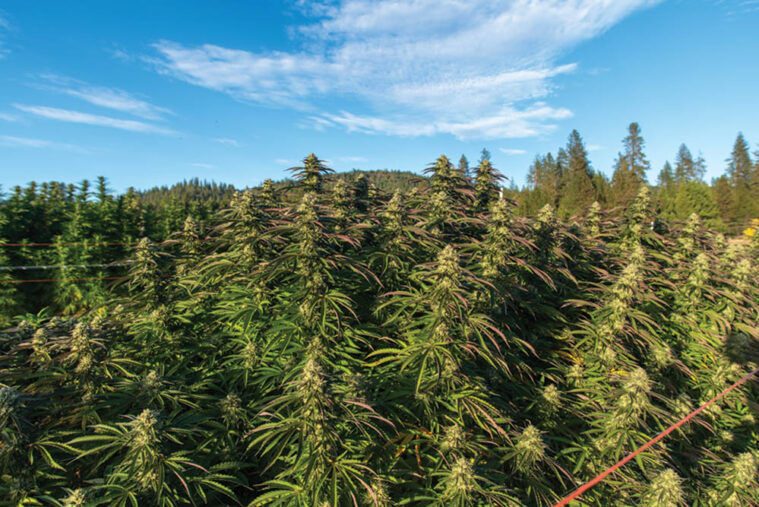
Fall in Southern Oregon is what postcards are made for, with long, sunny October days that do equally well for grapes and long-flowering Cannabis cuts. The name Shangri-La pays homage to a fictional utopia in the Himalayas from James Hilton’s 1933 book “Lost Horizon,” where plane-wrecked survivors find a mystical valley that provides long life, peace and plenty. On a farm growing craft outdoor Cannabis in living soil, raising pure-blood Japanese wagyu beef and other livestock and squishing amazing rosin, the secret to peace, happiness and longevity might be closer than we realize.
For owner Frederick Szkotak, living with the land and plants is the fuel that keeps his engine running full speed on a farm that gets worked year-round. He and Lead Grower Ryan Burkholder have been growing in the native soil since 2016 in medical, shifting to recreational in 2021.
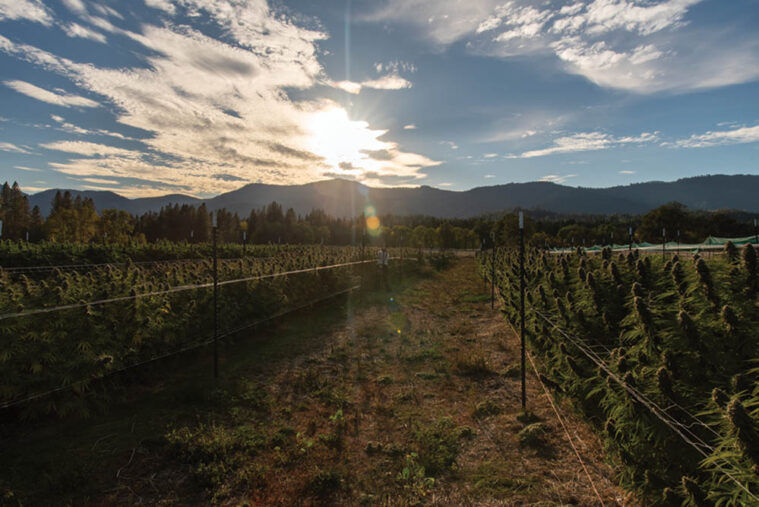
“Nine months a year of late nights and early mornings — that’s where it gets proven. The panic when there’s smoke rising over the hill — it’s not for the weak, but we love it. I couldn’t be doing this if we didn’t care about it,” Szkotak said passionately. “We all know the market isn’t what it was 10 years ago. I bought my first ounce for $400; now that’s what a pound goes for!”
The farm covers over 40 acres, with sections leased out for animal grazing and the farm’s own Japanese wagyu herd. The outdoor garden is itself an acre plus greenhouses for light-dep crops, and it’s immaculately clean for a farm. Growing Cannabis outdoors starts with popping seeds in winter, planting the selects or preparing clones from mothers in spring and working all summer and fall to grow plants that take the better part of a year from start to finish. Then it’s time to harvest and freeze the plants, prepare for processing and plant additional cover crops that will feed the cows through the winter. It’s true that work on a farm is never finished, except for the day.
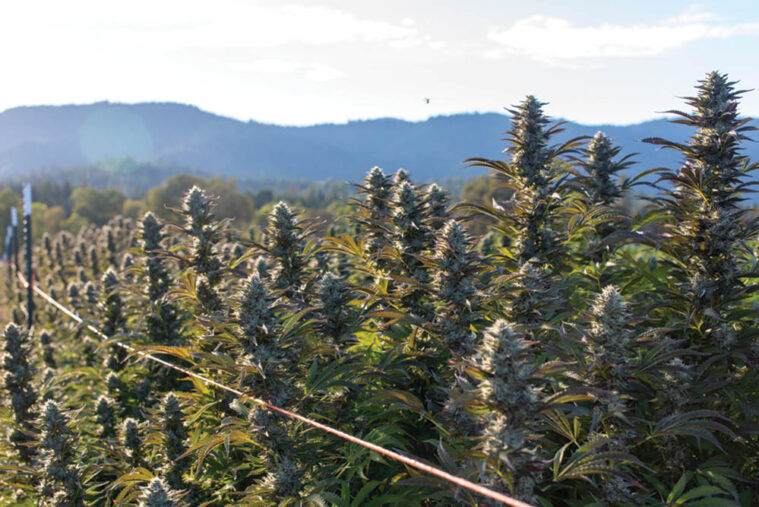
“We have 32 rows, 16 beds, there’s probably 40 strains out here,” Burkholder said. “I’m a big fan of our R&D row; that’s what keeps it exciting for me. In the main field, Orange Starburst 76 and Indigo both have an amazing terp profile, and Zello from Umami Seeds with Z-Skittles-candy terps. Out of this whole field, about 30% will go to flower, and the rest will be fresh frozen for processing.”
Once the plants are ready, the best tops are hung and cured in a huge, environmentally controlled barn to be sold as buds, while the rest of the flower is immediately frozen in a giant walk-in cryogenic freezer the size of a small apartment. The farm works with toll processors to wash the hash, and now Shangri-La is selling its own finished packaged products as a stand-alone brand. The subfreezing environment keeps the terpenes and trichomes fresh and ready for processing, allowing the farm to continue releasing product throughout the year and share material among different processors to keep the selection varied and balanced.
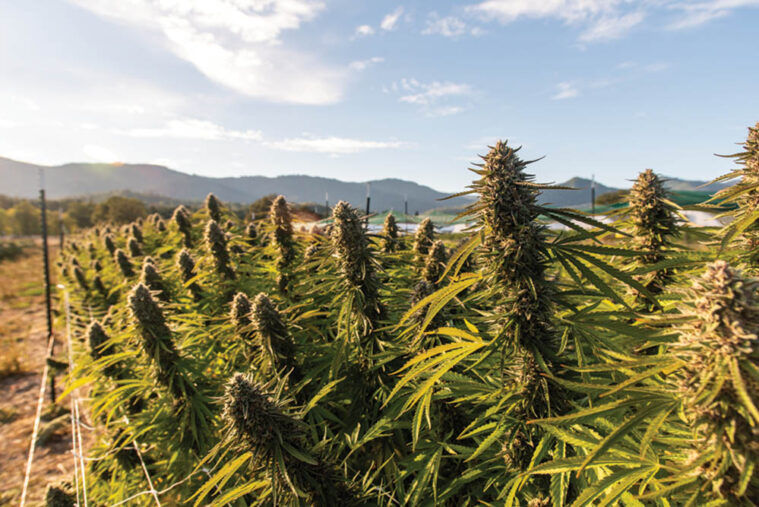
“Five years ago, we were only growing five to 10 strains per season of flower, and it got boring and repetitive. Now, with the hash rush, we get to grow specific plants and drop three to five new flavors every month, and we have at least 40 flavors in production just for hash,” Szkotak shared excitedly. “Our organic-style living soil inputs are perfect for hash, and turning the fresh frozen into rosin is our saving grace.”
Growing outdoors for a season is almost like a football game coming down to the two-minute drill. All the preseason work, the first three quarters, it all comes down to a successful harvest, which is like needing to throw four back-to-back touchdown passes.
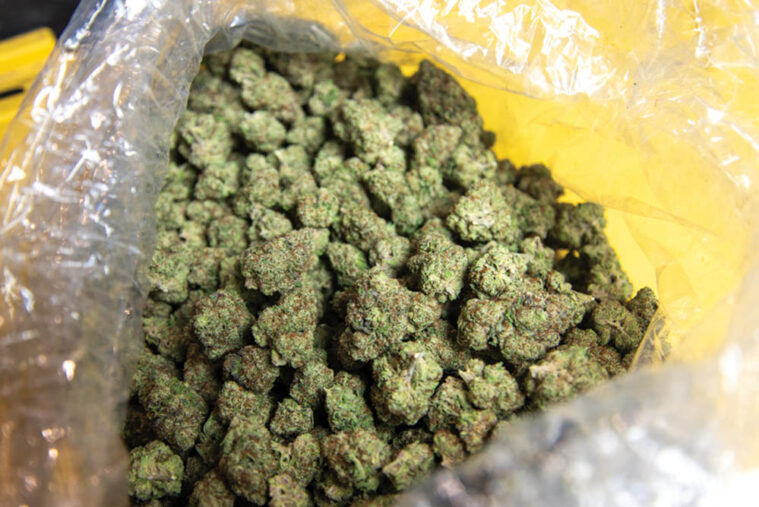
“We harvest only between 4 a.m. and 10 a.m., to preserve terpenes, and we de-leaf in the field by hand. We want to treat the material as best as possible while it’s cold out, and we aim to go from field to freezer in 30 minutes. That’s the name of the game,” Szkotak explained. “It’s taken a long time figuring out how this process works at scale.”
The assembly line from field to freezer ensures that the defoliated plants are cut and frozen within minutes to preserve terpenes and trichomes. It’s the fresh part of fresh frozen, with the addition of exceptional and natural inputs that make for top-shelf rosin.
“We stuck to our guns wanting to grow extremely clean Cannabis, which all starts with the soil health, which is the biology of the soil,” Szkotak explained. “We do tissue samples twice per crop, and test the soil multiple times per year. Our agronomist has advised us for five years to balance the plant and soil intake, performs sap analysis in pre- and early flower, and guides the plant science work to look at what minerals and nutrients the plants need, and he connects the biology into it. The earth here was a blank canvas, and we’ve turned it into living soil, and our nutrient use has gone down 80% to 90% through using plant science. That’s also why we cover crop, compost and work to have as many biologicals as we can get in the soil.”
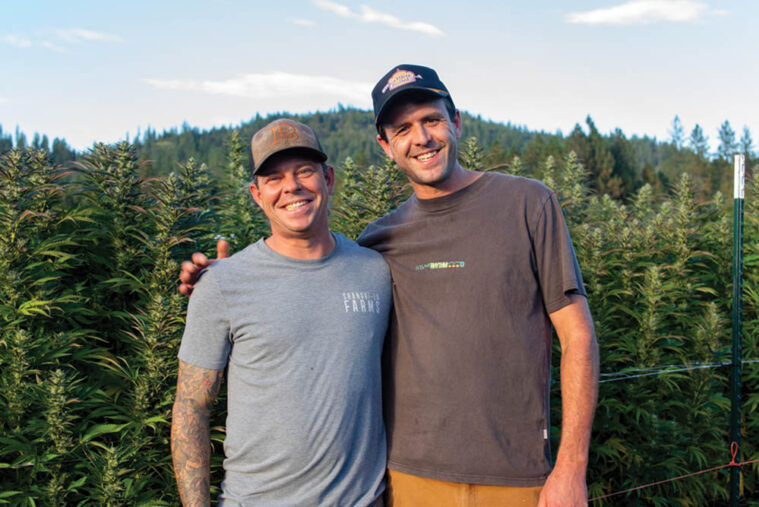
Even with the overall industry trend of more work for less per pound, passion drives the whole Shangri-La team to seek new and unique terps and keep showing up season after season to put new roots into the soil that they’ve invested a decade of work into.
“The weather, the risk — it makes every year unique, which is the cool part. No season is the same,” Burkholder said. “This has been an awesome season, weather-wise, and where we’re at as a farm, we’ve done a lot of work, and we’re proud of what we’ve accomplished.”